The wave of inflation between the final quarter of 2021 and the second quarter of 2023 has not yet been caught up by employees through additional pay. At present, the accumulated gap still stands at 7.6% to the detriment of employees. When adjusted for labour productivity growth, the gap rises to nearly 17%. This is the theoretical gap that has emerged on paper when comparing collective labour agreements, inflation and productivity. In reality, the gap is smaller, but there is undeniably a considerable difference between the price rises of recent years on the one hand and what people earn on the other.
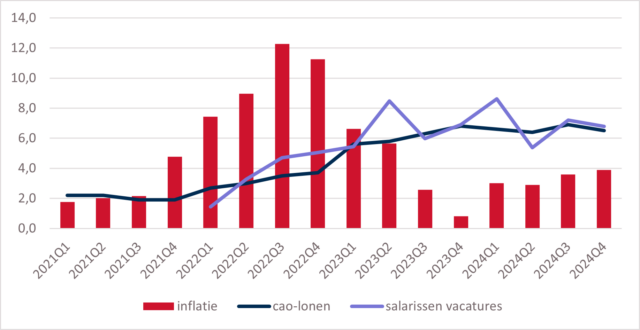 Source: CBS, edited by Intelligence Group[/caption]
The fact that the gap is smaller in reality is partly thanks to the enormous labour mobility of the past three years, with almost 2 million people changing employer each year (something that often comes with an additional pay rise). Energy allowances and the increase in the minimum wage also play a role, although the latter is also partly reflected in collective labour agreements. It is therefore likely that, at household level, income growth has been greater than that indicated by collective labour agreements or the average pay rise in job advertisements. But this will not be enough to fully close the 7.6% gap, let alone the 17% gap when productivity growth is included.
Read this article in full
Become a Werf& member for unlimited access to all articles, research and exclusive insights into the labour market.
No obligations Cancel anytime Secure payment

Intelligence Group
Intelligence Group: empowering recruiters to help them find the right talent Intelligence Group is een internationaal Data & Techbedrijf op het gebied van a…