A book is forever. Yet new books often reflect much of the spirit of the times. Which subjects are hot? What are the themes people in the profession are talking about? What is currently the topic of the day in society? A look at what is on the shelves in bookshops often says a great deal about it. So whilst we are still looking on this site for the must-read for recruiters in 2024 (you can vote until 16 July), we are also providing an overview of new books that are not on that list, but do say something about current trends. Which ones are they? And what can we learn from them?
#1. Technology calls
Theme: What is useful work? And how do we steer people towards technology?
 The staff shortage can partly be solved, says Josje Damsma. But then we must all start doing useful work. Because not every job is equally important, she argues. Is that true? And how do we get people into so-called useful work? Social entrepreneur Josje Damsma tries to encourage people towards technical professions and wants us to value work differently. In her book Not every job is equally important, with the provocative subtitle Let us turn all those rapid delivery drivers into solar panel installers, she explains how she envisions this.
#2. Factory work has not disappeared
Theme: Work we do not often (want to) see, but which is still important.
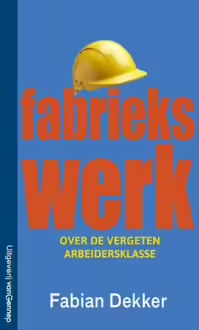 The book Undercover at work, in which journalist Jeroen van Bergeijk paints a harrowing portrait of the current labour market, recently won the important Brusse Prize. More or less in this category, you could place the book Factory work. About the forgotten working class , in which researcher Fabian Dekker highlights the ‘forgotten occupational group’ that, according to the author, society pays ‘far too little attention to (and not infrequently looks down on).’
‘The working class is still very much alive.’
In recent years, Dekker has also published books about the working lives of circus performers, night workers, the position of self-employed people, young people in the labour market and the impact of technological change on work. With his latest book, he mainly wants to show that the working class is still very much alive, how it gives meaning to daily work, what its main concerns are and what gap yawns between workers, managers and established politics (which, for example, seems only recently to have discovered the importance of vocational education).
#3. Courage in childcare
Theme: How enjoyable is working in childcare?
It is one of the sectors where staff shortages are still significant. Its vacancy rate is still well above 5%. But does that mean it is all doom and gloom in childcare? Not at all, because research by Randstad shows that around 100,000 people would be happy to retrain in this direction. The ministry is therefore busy devising all kinds of additional measures together with the sector to attract new employees.
But it probably starts above all with showing how enjoyable work in the sector is. And Daisy Kuipers is doing her bit, with a fine example of employer branding in the form of a book entitled Courage in childcare. A book featuring 37 interviews with all sorts of different people in this sector, for which Kuipers even travelled to sunny playgrounds in Curaçao and Bonaire. An example for other sectors where shortages are also still the order of the day?
#4. You can learn to rebel
Theme: Out-of-the-box thinking, innovation, creativity, non-conformity
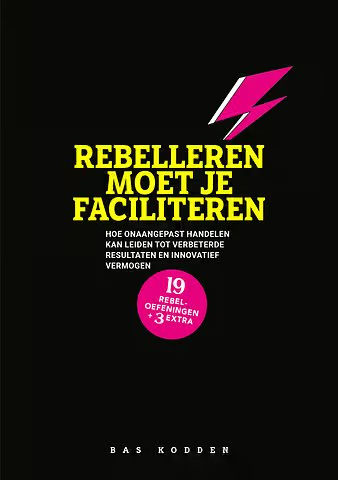
With his book The art of sustainable performance , Bas Kodden previously attempted to write the Dutch version of Moneyball . In his latest book Rebellion must be facilitated , the Nyenrode professor makes a passionate yet substantiated case for the importance of non-conformist behaviour in organisations. Because innovation comes from rebels. But you do need to be able to distinguish the good rebel from the bad one, in other words: the rebel from the saboteur. And that is where the recruiter’s work comes in, Kodden writes. Because during all those years of writing, he increasingly discovered: ‘We say we want out-of-the-box thinkers, but we breed conformists.’
‘You must cherish the best rebels if you want to continue innovating and improving.’
‘Good rebels may come across as a pain in the ass because of their non-conformity, but when you look closely, they turn out to pursue only what is good, to be respectful and to collaborate exceptionally well,’ says Kodden. ‘The best rebels constantly challenge the status quo, can escape social pressure and also question their own convictions. You must cherish that behaviour if you want to continue innovating and improving.’ Something every organisation says it wants, but does not always seem to dare to do.
#5. The hidden world of HR
Theme: The new power relationship between employer and employee
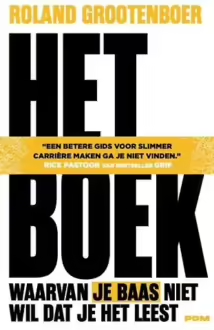
Perhaps it goes a little too far to call this one of the major social themes of the moment. The book your boss does not want you to read could perhaps be written every year. But on the other hand, it does say something about the spirit of the times when the former HR specialist at Google, Blendle and TransIP, among others, reveals his secrets. And especially because this book also addresses highly topical questions such as: how do you set your own boundaries? And: how do you stay balanced?
Important core message: it is no longer only the employer who can think ‘there are 10 others for you’.
Roland Grootenboer previously wrote Blendle’s well-known Employee Handbook , which went viral in Silicon Valley. In his new book, he not only provides ‘killer tips for a higher salary’, but also phrases that always come in handy (such as in a job interview). He also has a widely read newsletter (‘which your boss does not want you to read), with news and reflections on the HR profession. Its important message: it is no longer only the employer who can think ‘there are 10 others for you’. The employee can think that too. Only that employee has by no means always realised it yet.
#6. Learning how behaviour really works
Theme: Learning to understand (and influence) employee behaviour
‘Employee behaviour is extremely predictable, if you know how to look at it.’
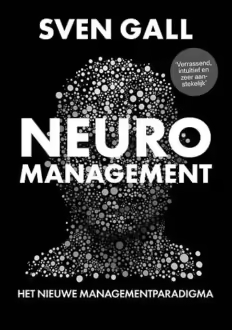
In that book, Gall also dispels a number of persistent misconceptions. For example, he explains that a clear mission and strategy do not automatically ensure that employees move in the right direction. And why data can actually make you lose control, when you expect the opposite. He also calls the annual cycle of appraisals and bonuses ‘nothing more than a means of punishing bad behaviour’. Do you want to get people motivated and moving? In this book, Gall explains what you should do instead.
#7. Making a difference with HR analytics
Theme: The data revolution within HR
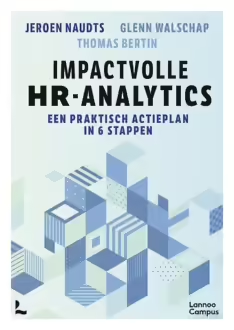
OK, the previous book made it clear that data do not always give you control. But at the same time, the potential of HR analytics is of course enormous. And data are increasingly readily available. In this recent book, 3 authors set out, in a step-by-step plan supported by various real-world cases, how you can make this work to your advantage. Lead author Jeroen Naudts also appeared on this site 2 years ago, with a then-new book, in which he tackled MBTI analyses, employee surveys and unstructured interviewing, among other things.
‘With a data-driven approach, you can fill vacancies more quickly.’
In the book he recently wrote with his Flemish colleagues Thomas Bertin and Glenn Walschap, he elaborates on this further, and the 3 show, for example, how data can predict employee departures, how the Port of Antwerp-Bruges used HR analytics as a compass for its recruitment, and also how Antwerp Hospital Network managed to fill its vacancies more quickly with a data-driven approach. Perhaps a little too Flemish for the Dutch reader, but nevertheless very insightful and helpful.
Read more in the recruitment library:
- With these 7 new books, recruiters can start the year well
- These 7 books should be on every recruiter’s wish list this year
- Which 7 new books can go on holiday with recruiters this year?
- Another 7 great new books for every recruiter’s bedside table
- 7 great recruitment books for in your pocket or under the tree
- These 7 new books can go in every recruiter’s suitcase
- The results are in… This is what you consider the must-read for recruiters
- What are the 7 best books for recruiters for the upcoming gift-giving month?
- These are the 7 best new recruitment books for this summer

Read this article in full
Become a Werf& member for unlimited access to all articles, research and exclusive insights into the labour market.
No obligations Cancel anytime Secure payment