It is not that organisations are doing nothing, or that they are unwilling to act. Yet they still struggle to demonstrate the returns on all their HR efforts, including recruitment. What effect do all those employer branding efforts have on attracting talent? Or the shift towards more skills-based working? The impact remains difficult to demonstrate, according to the second edition of the Sustainable HRM Monitor by the ImpactWork Foundation.
Last year, attracting talent was the top priority; it is now in third place.
The central finding of the report, based on research among 144 organisations, is that the principle of sustainable HRM has been widely embraced but remains insufficiently connected to day-to-day operations. Attracting enough talent again ranks high on the HR agenda in the survey: 47% place it among their top three priorities. Only continuous learning and skills development rank higher (56%). Last year, attracting talent was still in first place.
Talent on the agenda, plans in the drawer
What lies behind that supposed priority is striking, however. Last year, 72% of organisations that included talent in their definition of sustainable HRM said they had a detailed strategy for attracting it. This year, that figure has fallen to 53%. No other theme in the survey shows such a steep decline. For equal opportunities, the opposite happened: the proportion with a strategy rose from 49% to 60%, possibly influenced by the European pay transparency directive.

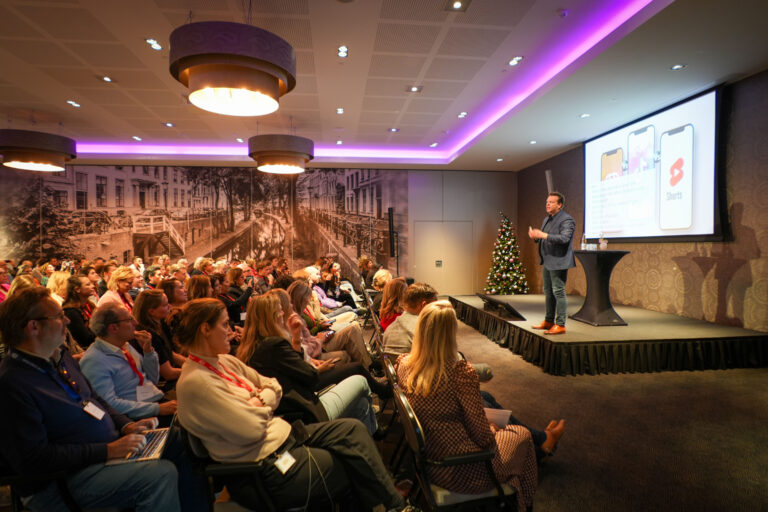
This is all the more remarkable because a strategy appears to yield the greatest returns in attracting talent. Organisations with a plan in this area rate their progress in attracting talent at an average of 3.86 on a scale of 1 to 5. Without a plan, the figure is 2.85. This difference is the largest across all the themes studied. Researcher Jildert Huitema (pictured above) cautions that cause and effect may be intertwined: those who see results may be more likely to formalise their approach in policy. But the pattern is the same for every theme, and it is repeated from the previous edition of the survey.
Measuring the cost of an unfilled vacancy
Why is there no plan? The most frequently cited obstacle is a lack of clear KPIs (39%), closely followed by insufficient priority (38%). ‘The findings show that sustainable HRM is not held back by a lack of ambition. It is held back by the figures and the importance attached to the issue,’ says Huitema. According to the report, the figures are usually available, but organisations lack a method for linking them and translating them into the language of senior management.
‘Sustainable HRM is not held back by a lack of ambition; it is held back by the figures.’
Respondents recognise this. ‘There is a clear lack of KPI tools to measure capacity and demand,’ says a respondent from a small consultancy. ‘That is where the greatest gains can be made in addressing labour shortages and ensuring a supply of qualified candidates.’ A respondent from a large organisation says: ‘HR is seen as a direct cost, and the returns that only come later are neither recognised nor measured.’

The report offers a number of starting points. For attracting talent, these include time-to-fill and the number of months vacancies remain open. In financial terms, this translates into lost revenue or production for each month a vacancy remains unfilled. For skills, an example is internal mobility as a percentage of all filled vacancies, with the recruitment costs saved for each vacancy filled internally as the return. For staff turnover, the focus is on the cost of replacing each departing employee: recruitment, onboarding and lost productivity.
Skills-based working: widely embraced, rarely practised
The second theme directly relevant to recruitment is working with skills. As many as 83% of respondents consider continuous learning and skills to be part of sustainable HRM. When it comes to working on the basis of what people can do rather than their job title, the picture is different. Some 34% have not yet started at all, and 21% are ‘in the preparatory phase’.
Only 5% say they have fully embedded skills-based working in their policies and systems.
Just over a quarter are experimenting in pilot projects or a few departments, 12% have introduced it more widely, and only 5% say they have fully embedded it in their policies and systems. Fewer than a third have a clear understanding of what working with skills means, and 58% consider the conditions needed to be inadequate or only fair.

According to respondents, the obstacles lie less with employees than with collective labour agreements, job evaluation methods and outdated job descriptions. ‘Skills are all well and good, but the organisation is not ready for them,’ says a respondent from a large organisation. ‘First, we need to lay the foundations for the job framework and job evaluation.’ A medium-sized healthcare organisation puts it this way: ‘A skills-based organisation is still a bridge too far at present, I fear.’
Start with recruitment, not the job framework
Nevertheless, the report also shows that a different approach is possible, and that recruitment is a logical starting point. A medium-sized industrial company says it has recruited entirely on a skills-based basis for seven years, without looking at CVs, experience or qualifications. The respondent lists the results: ‘All vacancies filled within two weeks, 99% of mid-level and senior positions filled through internal progression, and 40% of technical roles held by women. The change began with the selection process, not a systems project.’
Those who move to skills-based recruitment often see better matches and more internal mobility.
Several respondents cite the hiring manager as a decisive factor. ‘Thinking in the technical domain is still very traditional,’ says one. ‘As a result, the hiring manager must first change their behaviour before we can recruit on a skills-based basis.’ According to respondents, those who do take that step see better matches in recruitment, more internal mobility, less bias in selection and talent that previously went unnoticed.
Learning from those who leave
According to the report, there is also considerable scope for improvement when employees leave. Reducing absence and unwanted staff turnover climbed from sixth to third place on the HR agenda and is the theme most likely to have a detailed strategy (64%). Yet it scores lowest of all themes for satisfaction with progress: 3.00. Organisations that do see progress make managers responsible for turnover and absence and learn systematically from those who leave.

‘Start with the challenge that puts the most pressure on day-to-day work.’
According to Huitema, organisations do not need to solve everything at once. ‘The sector figures show that sustainable HRM only works when it reflects an organisation’s day-to-day reality. So start with the challenge that puts the most pressure on day-to-day work, make clear what difference you want to make and how you will know it is working,’ he says. ‘Only then does sustainable HRM become not a collection of separate initiatives, but part of how you run an organisation.’