All articles

Trends

How to make your job interviews more neurodiversity-aware

A job interview is far from a suitable selection tool for everyone. How can you make job interviews fairer and more inclusive for people with disabilities and people with different learning styles - and thus give everyone a chance?

How to make your job interviews more neurodiversity-aware

[private limit=”” roles=”werf_subscriber_paid”]

In recent years, it has increasingly been recognised that a job interview is certainly not suitable for everyone. As a result, the ‘winner’ of a selection round is often the person who is best at job interviews, and that is not necessarily the person best suited to the role. Moreover, many selection procedures leave little room for neurodiversity, people with disabilities or people with a different learning style. How can you respond to this better, so that everyone is given a fair chance and, as a recruiter, you can ultimately select the best candidate?

‘The next step is to help candidates think about what adjustments may be possible.’

To get answers to those questions, journalist Rebecca Knight cites two experts in Harvard Business Review: Russian Ludmila Praslova, professor of organisational psychology at Vanguard University, and Katie Bach, former nonresident senior fellow at the Brookings Institution. Both believe it is a good idea to adapt your traditional procedure to candidates. ‘What I see as the next step is not just asking whether someone needs adjustments, but helping candidates think about what adjustments may be possible,’ says Bach.

Read this article in full

Become a Werf& member for unlimited access to all articles, research and exclusive insights into the labour market.

Sign up now

No obligations Cancel anytime Secure payment

Related posts

All articles
How does political preference influence your selection? More than you might think…

Sustainability goes on your CV after Biden's victory, then comes off again after Trump's. American workers are adjusting their profiles in droves to match the political climate. And employers are rewarding that, even at the expense of quality. What does research say about political preference in recruitment?

Peter Boerman Peter Boerman Read article
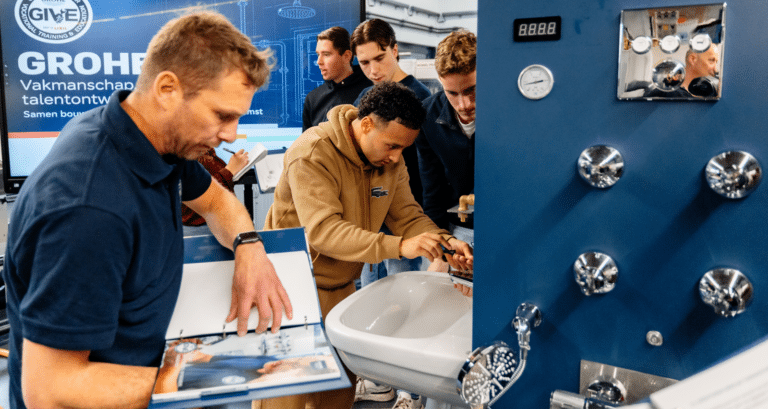
How the practical training room is increasingly becoming the answer to staff shortages

Yesterday, another large practical training workshop opened in Tilburg, where the installers of tomorrow are being trained. Organisations are increasingly turning to their own practical training schools. Will they succeed in addressing the shortages?

Peter Boerman Peter Boerman Read article
How spy glasses can infiltrate your recruitment processes too

There is a great deal of debate worldwide about 'smart camera glasses'. This is also, or rather increasingly, true in recruitment. After all, who is really answering your questions? And what can you do about it?

Peter Boerman Peter Boerman Read article

Altijd op de hoogte van de ontwikkelingen op de arbeidsmarkt?

Sign up for our newsletter and receive the latest updates, news and invitations to our events.