PostNL‘s parcel network is currently working at full capacity in the run-up to Black Friday, Sinterklaas and Christmas. Over the coming weeks, PostNL will continue to scale up and will temporarily need many additional staff. What does that mean for the recruiters who have to find all those people? Members of the Recruitment Leaders Network spent an afternoon behind the scenes at the small parcels sorting centre in Nieuwegein, hosted by Rutger Vos, a team manager in the recruitment team.
Some striking figures
First, here are some striking figures we learnt that afternoon:
- PostNL delivers around 1.2 million parcels a day (!). In the final quarter of the year, that can rise to 2.4 million per day.
- Some 20 million letters used to pass through the network every day; now the figure is around 6 million. That volume is shrinking by around 10% a year.
- The parcel delivery quality rate is 97%.
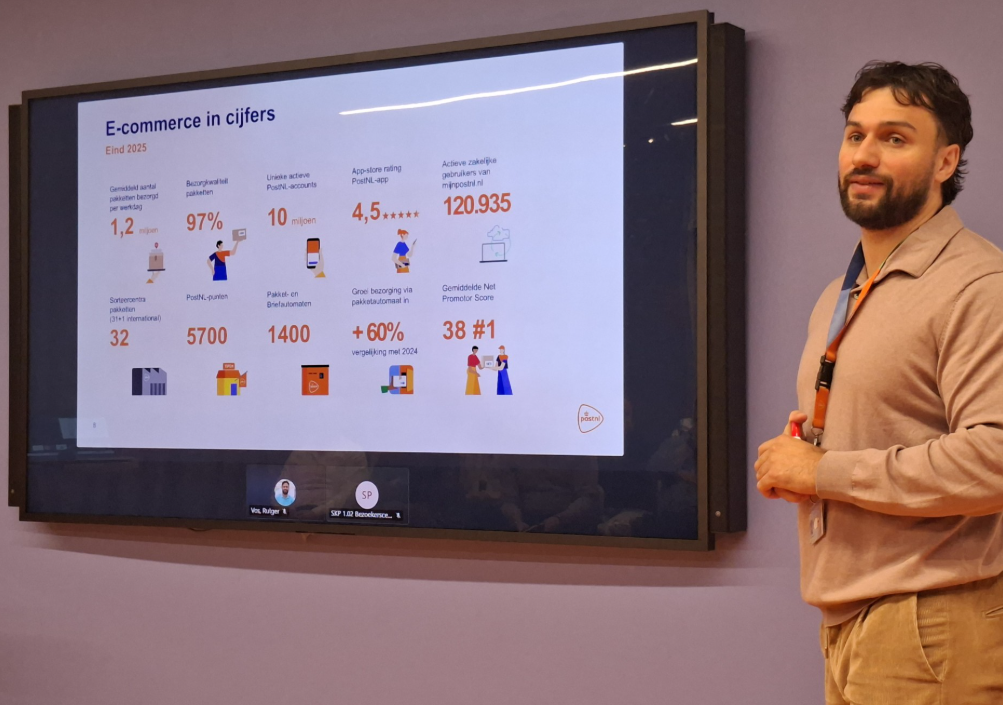
- PostNL has around 30,000 employees of approximately 100 nationalities.
- The group generates around €3.3 billion in revenue, but its profit is a modest €70 million to €80 million.
- Every night, 4,300 delivery routes are covered across the Netherlands. Every delivery worker receives at least one pre-sorted bag from Nieuwegein.
- At the sorting centre in Nieuwegein, 230 small robots move around the floor. On a busy night, approximately 80 people work there.
- The PostNL app is the most downloaded and most used logistics app in the Netherlands.
For the first time in 10 years, there are currently fewer vacancies for postal delivery workers than for parcel delivery drivers.
- Parcels from Asia, particularly from AliExpress and Shein, now account for around 20% of the volume at that location. The proportion used to be much higher.
- For the first time in 10 years, there are currently fewer vacancies for postal delivery workers than for parcel delivery drivers.
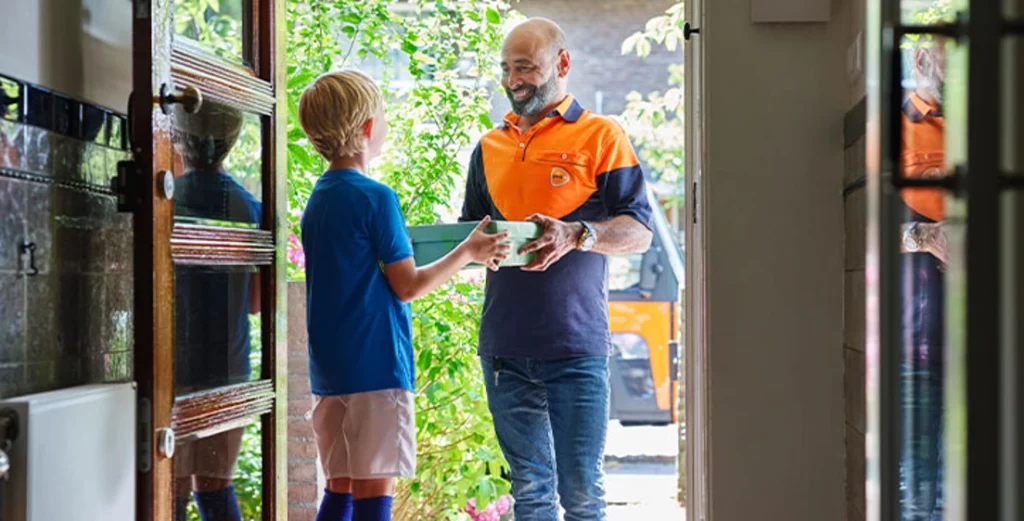
- Around 75,000 people a year apply for a role delivering post or parcels or for a job at a sorting centre, ‘enough to fill the ArenA about one and a half times over’. This results in around 6,300 hires a year, following 21,000 job interviews. Postal delivery roles are usually for 6 to 12 hours a week.
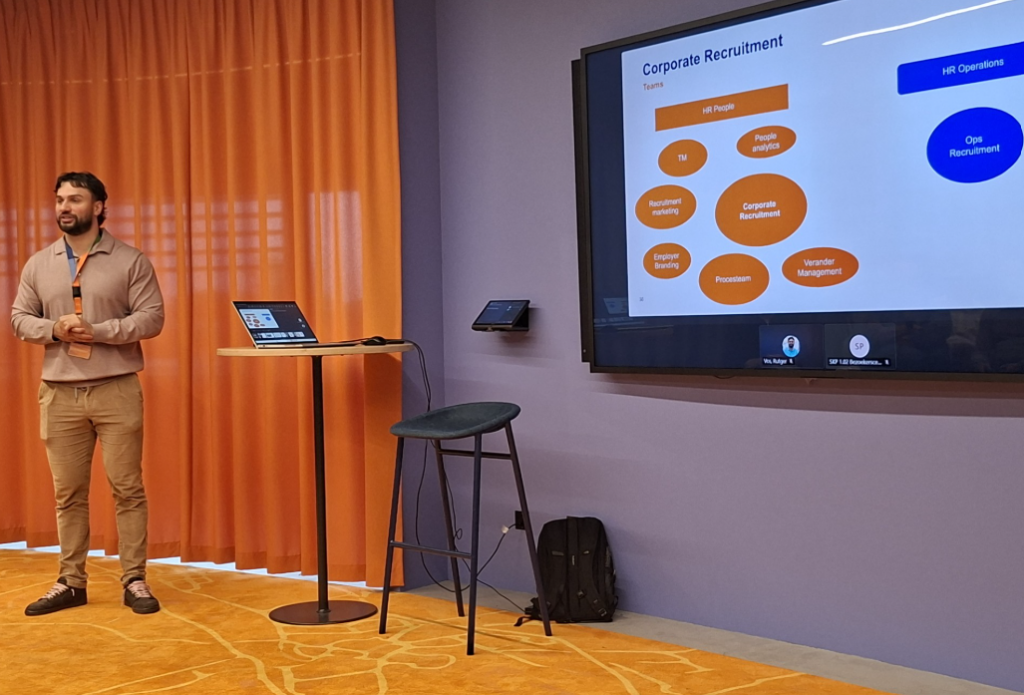
- The corporate recruitment team, which recruits for head office, has approximately 13 full-time equivalents. Its target for this year is 550 hires, and the current count is around 450.
- Around a third of corporate vacancies are filled internally.
- On average, a recruiter handles 10 to 12 vacancies and makes 30 to 40 hires a year.
- Around 500 applications were received for the trainee programme last year. Approximately 17 trainees were selected.
From volume to value
PostNL consists of three business units, Vos explained: e-commerce (parcels), mail (letters) and an international platform organisation that manages the logistics chain in around 200 countries without its own lorries or sorting centres. Each unit has its own challenge. Competition in parcels is fierce, and PostNL is now focusing firmly on value rather than volume.
Parcel lockers are playing an increasingly important role in future plans.
Parcel lockers are playing an increasingly important role in PostNL’s future plans. A parcel locker is cheaper and more sustainable than doorstep delivery, and fits with the shift from what Vos calls next-day delivery to best-day delivery. ‘Sometimes you simply don’t need a parcel the next day.’
Robots in the night
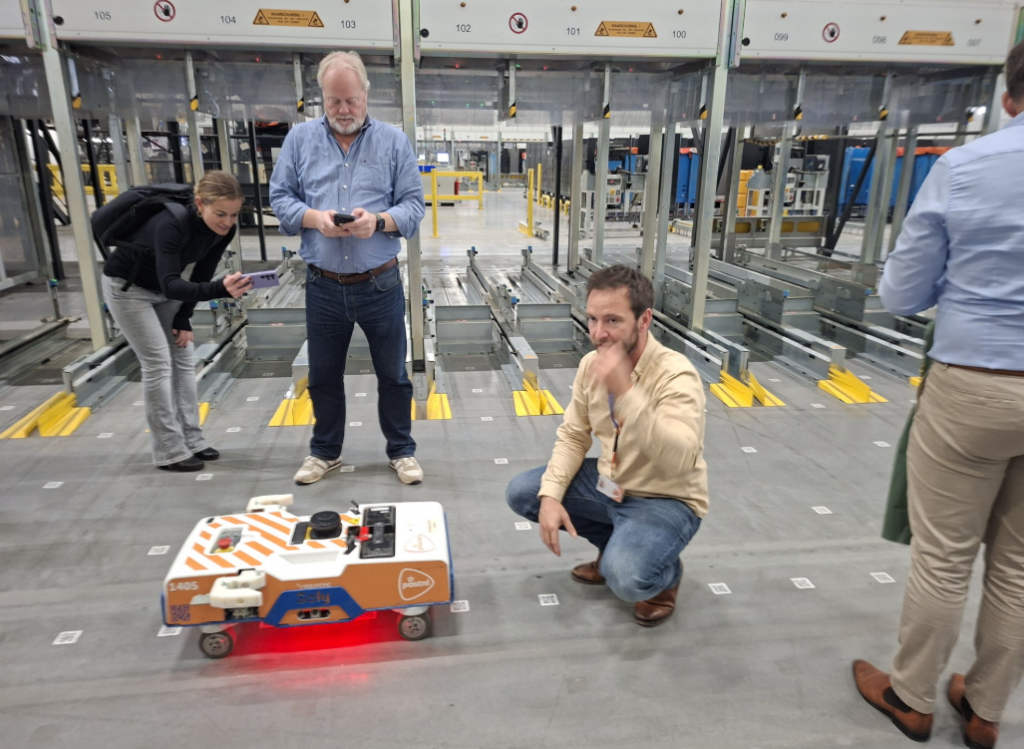
The tour then continued through the sorting centre in Nieuwegein, which the site manager described as something of ‘an odd one out in the network’. At 28 other locations, PostNL sorts by region in the evening and at night, and by route in the morning. Nieuwegein carries out both steps consecutively at night and delivers a fully sorted product: an orange bag full of small parcels for each delivery worker. With one scan, the delivery worker has all the parcels in their system.
Every day at 6pm, the first orders from online retailers arrive. Roll cages are then tipped over, robotic arms present parcels to cameras, and 230 small robots move across the floor, guided by QR codes. Until around 1am, they sort by destination; after that, by delivery route.
‘As a traditional postal company, we had to take a few knocks when we moved into robots and cameras.’
‘As a traditional postal company, we had to take a few knocks when we moved into robots and cameras,’ the site manager explains. For the first 18 months, there were quite a few bugs in the software. But now the system runs reliably, he says, in an otherwise almost deserted space. That is because the labour-intensive part comes at the end. At 2am, 15 people start at once to zip up and label the bags.
Internal candidates first, then external
After the tour, the discussion focused mainly on recruitment. Vos himself joined PostNL five and a half years ago, initially as an IT recruiter. ‘Back then it was mostly post and pray.’ Today, the corporate team has around 13 full-time equivalent recruiters, each with a specialism ranging from finance to data and infrastructure. ‘A recruiter needs to build knowledge internally and externally to be successful,’ Vos says, explaining the change. To cover absences, recruiters work with a buddy and hold a weekly kick-off meeting.
‘A recruiter needs to build knowledge internally and externally to be successful.’
Internal mobility is important at PostNL, he explains, and is also a responsibility of the recruitment team. Every vacancy is advertised internally for two weeks first, and where candidates are equally qualified, the internal candidate always takes precedence. Employees can indicate in the system that they are ready to move. PostNL uses agencies as little as possible. ‘We are proud that our recruitment team is strong enough to fill most vacancies ourselves and that we have the expertise in-house,’ says Vos.
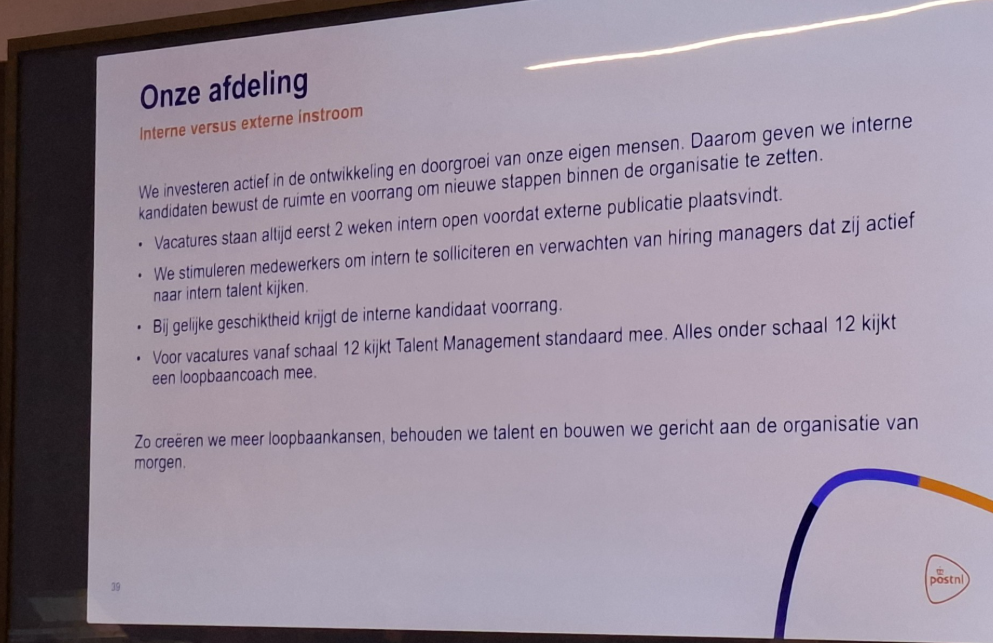
The trainee programme was revamped last year: recruitment starts earlier and there is one selection day with interviews and a case study. Last year, the team was still looking for trainees in September; this year, all places had been filled by May. Dropout during the two-year programme? There is hardly any.
An AI agent for every intake
PostNL is increasingly embracing AI-first working, Vos also said. This is reflected in recruitment, too. For example, all job advertisements are now written using a custom agent in Microsoft Copilot, incorporating the tone of voice and all collective labour agreement provisions, in Dutch and English. A job title assistant checks which titles are searched for most often.
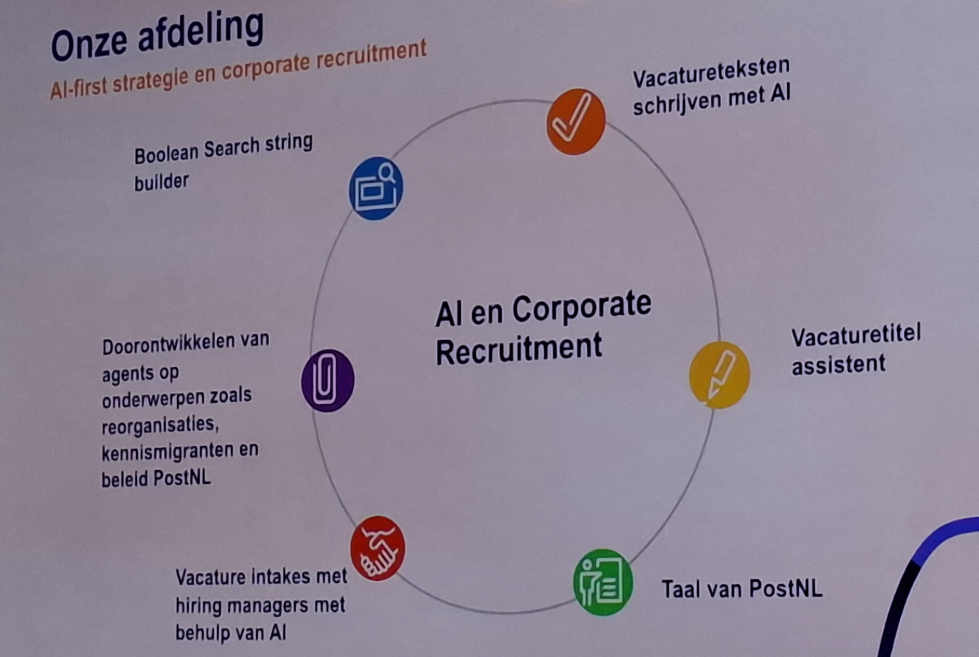
‘A strong start is essential to filling a vacancy successfully. We found that standardisation at this stage helps recruiters make clear agreements with the hiring manager from the outset,’ Vos says. ‘That is why an AI agent supports recruiters in drawing up an approach for each vacancy. The agent helps to record all recruitment agreements in a structured way, increasing the chances of successfully filling the vacancy.’
From postal delivery to parcel delivery
The operational side of the story came from recruitment marketing & candidate experience manager Jeroen Dotinga. Not so many years ago, PostNL hired 10,000 postal delivery workers a year, he said; last year, the figure was just 4,000. The switch to delivery within two days means fewer people are needed. As a result, for the first time in 10 years, there are currently fewer vacancies for postal delivery workers than for parcel delivery drivers.
Campaigns are now proving so successful that the budget can be reduced…
The recruitment campaigns are also working so well – so many applications were received – that the budget could be reduced. ‘I don’t think I’ve ever experienced that before,’ he says. But more applications do not automatically mean better applications. Within a day of a campaign starting, hundreds of extra applications come in, whilst the hire rate falls. Many candidates drop out because of the working hours, location or number of hours, according to Dotinga.
A model that predicts vacancies
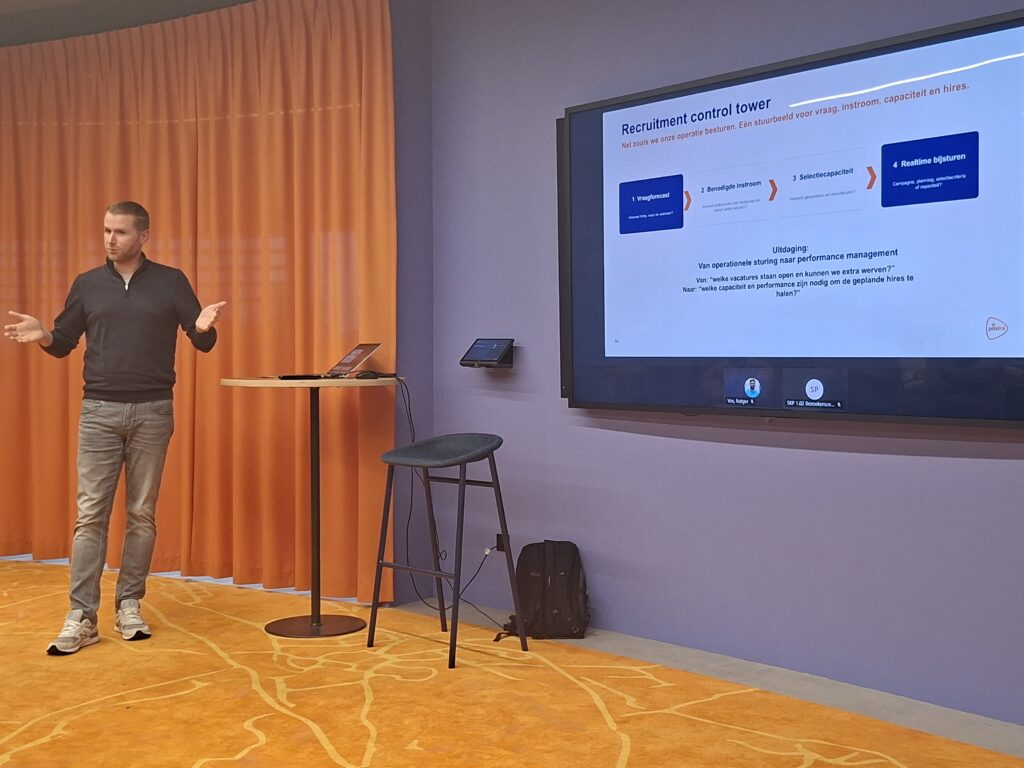
Since the beginning of this year, PostNL has been using a predictive model. Based on HR data, it determines where a postal delivery vacancy will arise, taking into account factors such as the lengths of routes in a neighbourhood, expiring contracts and staff turnover. As a result, recruiters now receive a list of vacancies just once a week, rather than individual requests throughout the week.
‘If a vacancy keeps going on and offline, your campaign algorithms have to learn what works all over again each time.’
By closely tracking the recruitment funnel figures, vacancies are now also taken offline automatically as soon as there are enough qualified candidates. ‘We have calculation rules and know, for example, that after 10 applications the vacancy can be closed.’ Dotinga admits, however, that he has a love-hate relationship with the automatic unpublishing system. ‘If a vacancy keeps going on and offline, your campaign algorithms have to learn what works all over again each time.’
Charlie the chatbot
The more than 200 small robots in the sorting centre were undoubtedly the stars of the afternoon. But another star was Charlie, the AI chatbot from Scotty that PostNL launched in 2023 to carry out the initial screening of postal delivery workers. Within a few minutes of an application, Charlie sends a WhatsApp message, and the candidate chooses whether the screening takes place via WhatsApp or by phone. Suitable candidates are immediately booked in for a video call with a recruiter.
A lot has changed since then: Charlie now runs on an LLM, can hold a normal conversation and, for example, looks for another vacancy nearby if the first one is not suitable. Postal delivery workers cycle to work on their own bicycles, so candidates need to live within a radius of around 5 kilometres.
‘Speed can boost conversion, or kill it if you don’t get it right.’
According to Dotinga, speed is the most important factor in conversion. ‘It can boost conversion, or kill it if you don’t get it right.’ Charlie therefore now schedules the first interview at the earliest available time, often as soon as the next working day. Whereas interviews used to be scheduled within four days, they are now scheduled within four hours. Soon, Charlie will also send reminders to reduce no-shows, and candidates will be able to reschedule their interviews.
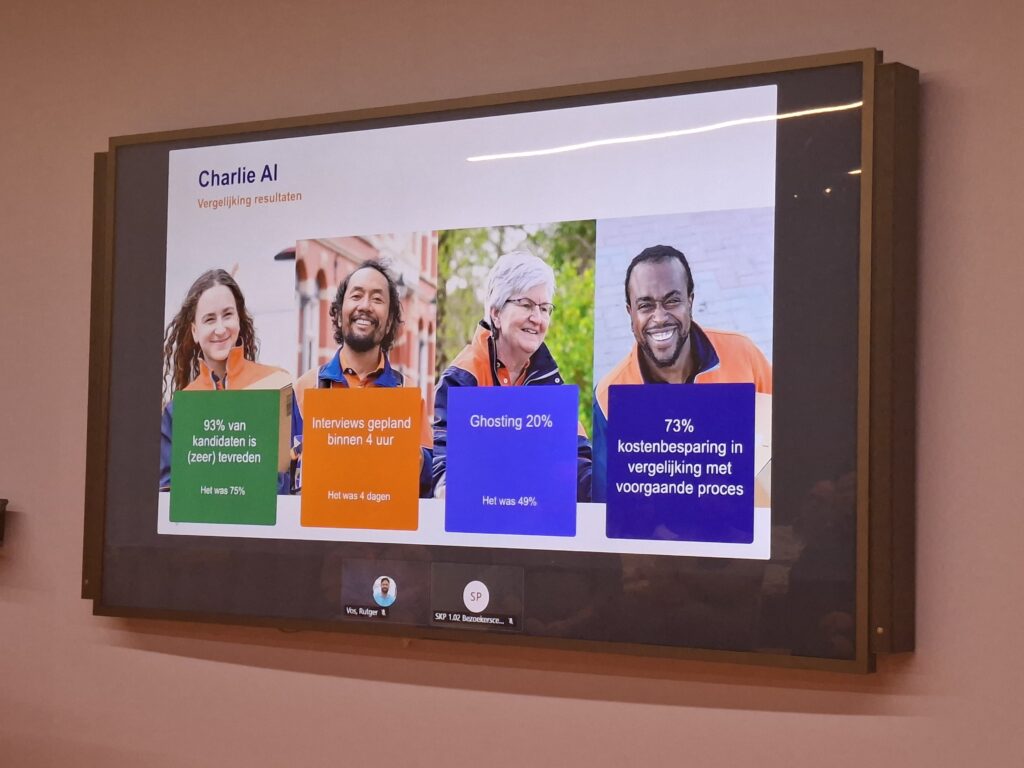
Candidates are also overwhelmingly satisfied with Charlie, Dotinga says. ‘I would therefore like to bring him to the front of the process, so that candidates can simply ask Charlie questions on the careers site.’ But things have not reached that stage yet. ‘Hopefully it won’t be long, though,’ he concludes.
Read also
Related event
Arbeidsmarkttrends 2027-2030
We zijn uitverkocht. Maar goed nieuws! Arbeidsmarkttrends 2027-2030 is volgeboekt. Goed nieuws: op 28 januari 2027 organiseren we een tweede editie, met dezelfde sprekers en hetzelfde programma. Zorg dat je er alsnog bij bent. Bekijk de editie van 28 januari Al jaren geven de beste sprekers en specialisten een arbeidsmarktupdate en een doorkijkje naar de […]
Odido