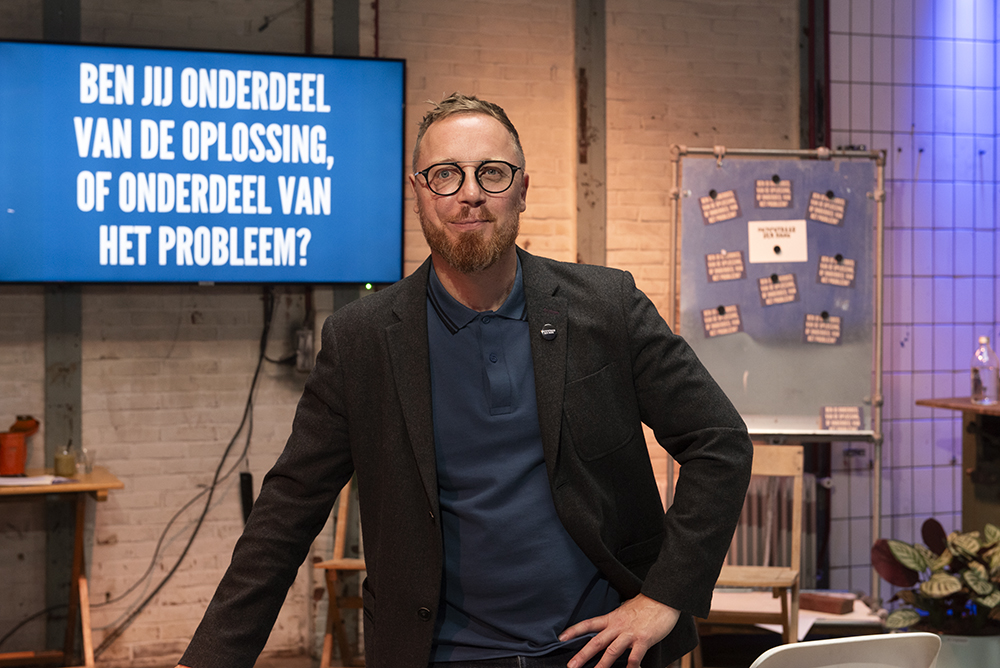
For years, he cycled through the neighbourhoods that the rest of The Hague barely visits. The rough edges, the outskirts, the back of the city that often remains anonymous and invisible behind its stately façades and political façade. Many people live there with stories that need to be heard, Boy Zandbergen noticed. But the system in which they are trapped works against them rather than helping them move forward, saw the founder of Invisible The Hague, an organisation that uses experts by experience to introduce people in the ‘system world’ to a world that is literally just around the corner, but which they often do not really know at all.
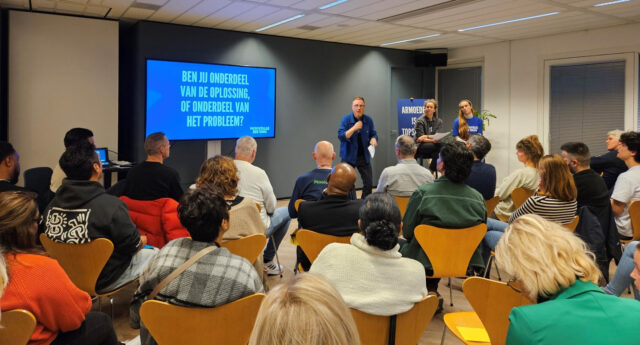
‘Change? There was often no room for it. No money, no time.’
Zandbergen once worked in the social sector himself, but soon encountered the limits of the system. ‘Together, we kept people going round in circles. They wanted to move forward, but were trapped by rules and protocols. Change? There was often no room for it. No money, no time,’ he recalls. Time and again, his ideas met closed doors. It ate away at him. ‘I became angry, withdrew, made bad choices. Until I realised: I need to approach this differently.’
Read this article in full
Become a Werf& member for unlimited access to all articles, research and exclusive insights into the labour market.
No obligations Cancel anytime Secure payment