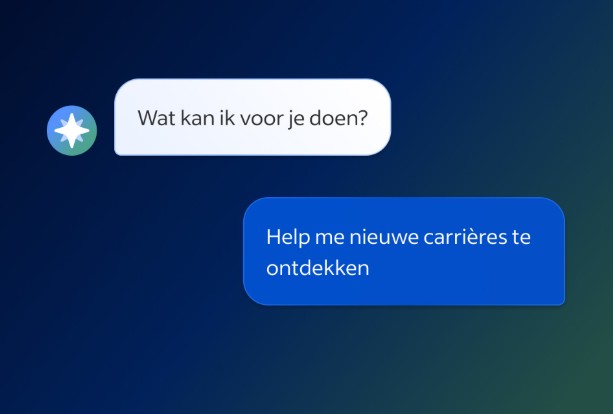
Research by job platform Indeed shows that a fairly large number of people are willing to make a move to an entirely different sector. Almost 8 in 10 workers in the Netherlands (79%) can imagine moving to a so-called shortage sector. At the same time, many of these people do not really know where to begin in taking such a step. Indeed now aims to help these people, among others, with A.I. career coach Career Scout. The tool shows which career paths match someone’s skills, interests and goals. Users can use it to discover suitable roles, tailor their CV for a specific role and practise with a simulated job interview.
35% of young people in the Netherlands say they will eventually have a job that does not yet exist.
The Indeed research shows, among other things, that 21% of Dutch people say they will eventually have a job that does not yet exist at all. Among young people, that percentage is as high as 35%. It also shows that although many workers say they are open to a career change, financial uncertainty (31%), age (26%) and uncertainty about which roles match their skills (20%) still hold them back from actually making the move.
The labour market is shifting
In the research, employees also fear for the future of their current job, seeing the impact of artificial intelligence (24%), economic uncertainty (23%) and increasing workload (18%) as their biggest concerns. Due to an ageing population, technological developments and the rise of A.I., the labour market is changing profoundly. Many respondents expect to change sector completely at least once in their career (16%). A quarter (25%) even think that their career path will change continuously.
A quarter think that their career path will change continuously.
However, the biggest barrier does not appear to be the willingness to change jobs, as this is often present, but the lack of insight. For example, 56% say they want to better understand which jobs match their skills, and 44% say they would feel more confident about making a move if it were clear which career paths are available. The need for support is therefore considerable: 39% of workers say they are open to an (A.I.) career coach who helps them discover new career opportunities. This is precisely the need that Indeed says it wants to address with Career Scout.
Exploring paths
With Career Scout, which was launched in the US last year, jobseekers can, for example:
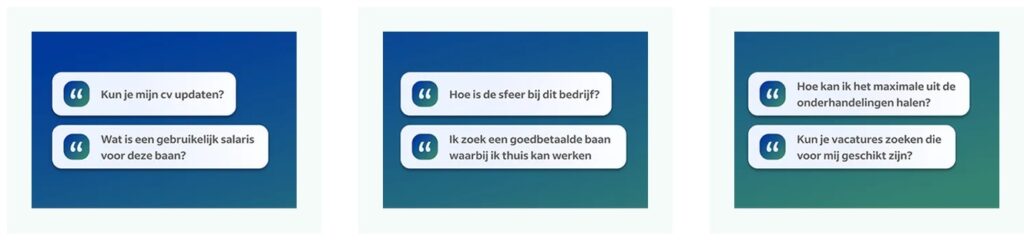
- explore personalised career paths through a chat conversation that match their skills and interests, including roles and directions they may not yet have considered themselves;
- see why certain careers are a good fit for them and discover what they could earn in a new role;
- search for vacancies more easily by chatting with Career Scout, refining vacancies based on their goals and finding jobs that match their interests;
- research companies before applying, for example in terms of salary, culture, company size and employee experiences;
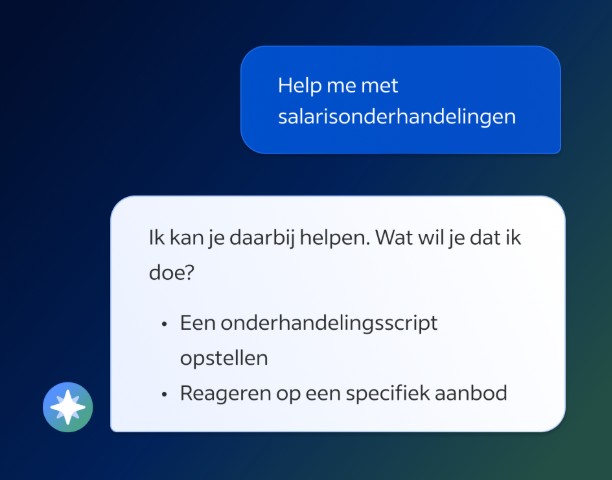
- prepare thoroughly for salary negotiations;
- build confidence through a simulated job interview tailored to the role; you receive concrete feedback that you can put into practice immediately.
‘The labour market is becoming increasingly fragmented.’
‘The labour market is becoming increasingly fragmented,’ says Stan Snijders, Managing Director of Indeed Benelux. ‘Within sectors, roles are shifting, new positions are emerging and differences in opportunities between professions are growing. As a result, it is becoming increasingly important for workers to know which skills they have and where else these are valuable. With Career Scout, we want to help them discover these opportunities and then support them through every step towards that new job. This makes personal career guidance accessible to a larger group of jobseekers.’
Read also

Indeed
Op Indeed vinden meer mensen een baan dan waar dan ook. Indeed is de nummer 1 vacaturesite (SimilarWeb, totaal aantal bezoeken, juli 2024), niet alleen in ons l…