

One of the biggest misconceptions about the flexibilisation of work is that it would be desired and encouraged by working people. Both the temporary employment sector and platform companies do everything they can to keep this myth alive. But it is a myth. The driving force behind flexibilisation is a short-sighted, shareholder-value-driven form of entrepreneurship, in which as much as possible must be saved on labour costs. And this form of entrepreneurship has been given a freer hand by the government in the Netherlands than in other countries.
It is a myth that workers would also want more flexibilisation.
Because of the major policy trauma of high and persistent unemployment in the 1980s, ‘jobs, jobs, jobs’ has been the motto of every government since. And this has always included ‘fewer rules’, and thus: even more flexibilisation of the labour market. Because ‘more jobs are better’, even if they are flexible.
Control ≠ flexibilisation
When formulating labour market policy, the government is also extensively lobbied by all stakeholders. In the Netherlands, this happens through the polder model, with employers’ organisations and trade unions in consultative structures that we call ‘the polder’. My conclusion is that employers’ organisations (including employment agencies and platform companies) have been considerably more successful than trade unions over the past 40 years. As a result, the myth that the flexibilisation of work is a deep desire of working people has endured. Even though all relevant research shows that working people genuinely prefer a permanent contract to a temporary one.
All relevant research shows that working people prefer a permanent contract to a temporary one.
And that working people would like more control over their working hours and schedules, and over ‘how’ they do their work? On the latter: it is true that people choose to work as self-employed workers for this reason, because many employers, for example in healthcare and education, have long failed to give their employees sufficient control. But that is really something different. It is a desire for more control and autonomy, not so much for the flexibilisation of work and the employment relationship.
Surge pricing
One of the leading scholars in this field in the US is David Weil. In a recent article, he writes about the business model of platform companies such as Uber and Lyft. Essentially, they make a profit by determining both the prices for taxi passengers and those for taxi drivers ‘algorithmically’, based on historical journey data. For taxi passengers, this means the well-known ‘surge pricing‘: journeys with Uber and Lyft become outrageously expensive when demand is very high, for example after a stadium concert or football match.
Journeys with Uber and Lyft become outrageously expensive after a stadium concert or football match.
For taxi drivers, it means that Uber and Lyft use the informational advantage they have to offer drivers a fare that is ‘just’ enough to accept the journey, but never higher. These two algorithmic pricing systems are deliberately deployed separately in order to maximise the platform company’s profit. This comes after Uber and Lyft were able to operate at a loss for years thanks to the availability of shareholder money, allowing them to drive existing taxi companies out of the market. Apparently, it can now be profitable, solely by actively minimising drivers’ pay.
‘Take it or leave it’
All this time, it was also in Uber’s and Lyft’s interest to maintain that their taxi drivers were self-employed entrepreneurs. Because with self-employed entrepreneurs, you can make arrangements about the price time and again. These are not really ‘negotiations’, but a ‘take it or leave it‘ offer each time to accept a journey or not. And you cannot do that with employees. That is why Uber and Lyft have an enormous interest in continuing to claim that their drivers would rather do nothing than drive for them flexibly (as entrepreneurs).
Uber and Lyft have a strong interest in claiming that their drivers would rather do nothing than drive for them flexibly.
At the same time, they do everything they can to ensure that these entrepreneurs do not organise themselves into something resembling a trade union or otherwise start to resemble employees. This is all perfectly understandable from the perspective of a researcher of the capitalist system, but the preference for flexibilisation almost always comes from entrepreneurs and employers. Not from working people.
About the author
 Ronald Dekker is an independent labour market expert and a ‘practical thinker’ at RoDeO Labour market intelligence.
Read also
- Ronald Dekker: ‘Can the information problem in the labour market be solved?’
- Is Thomas Piketty the new John Maynard Keynes (and will we soon be working much less)?
- Ronald Dekker on ‘practical thinking’ and ‘impractical doing’
- How the four-day working week can also be a magnet for municipalities
- How this dairy company received 25% more applications
Related event
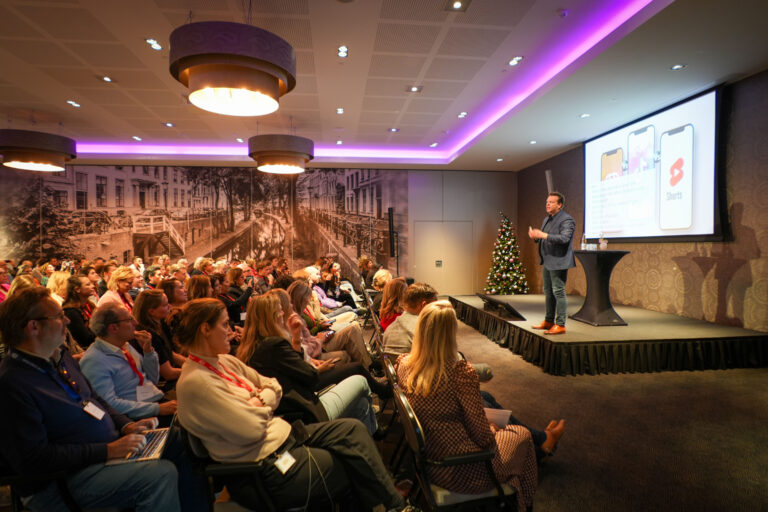
Arbeidsmarkttrends 2027-2030
We zijn uitverkocht. Maar goed nieuws! Arbeidsmarkttrends 2027-2030 is volgeboekt. Goed nieuws: op 28 januari 2027 organiseren we een tweede editie, met dezelfde sprekers en hetzelfde programma. Zorg dat je er alsnog bij bent. Bekijk de editie van 28 januari Al jaren geven de beste sprekers en specialisten een arbeidsmarktupdate en een doorkijkje naar de […]
Odido