Anyone hoping to work in South Korea’s finance sector has always had to get through the first selection round: a written multiple-choice exam known as the NCS. But that procedure is under review, as South Korean banks and insurers are catching more candidates cheating with AI and smart glasses, reports BigGo Finance, citing industry sources.
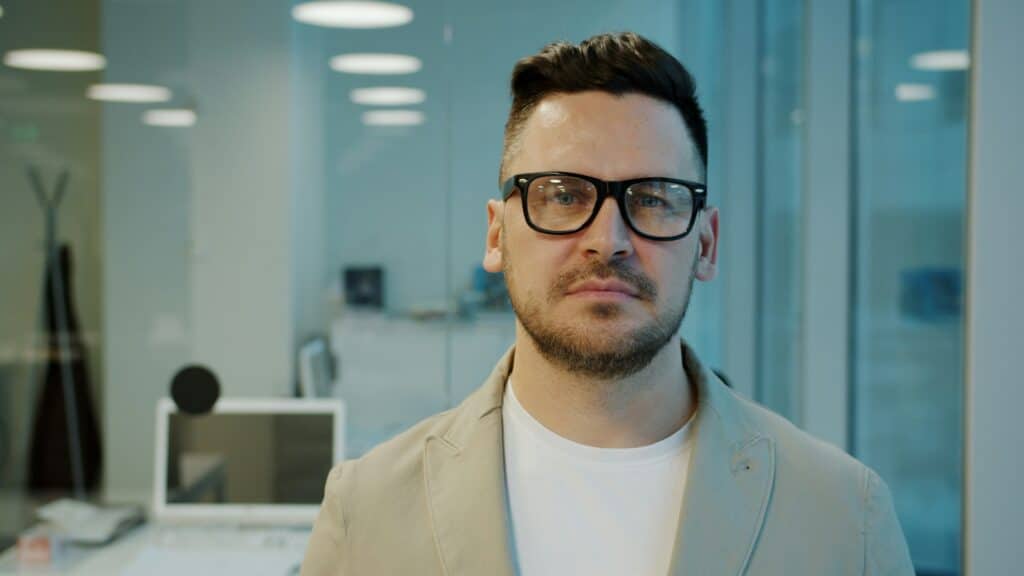
In South Korea, an increasing number of job applicants are being caught using smart glasses for assistance.
From this year, Hana Bank is checking all candidates who wear glasses to see whether they are smart glasses. Anyone caught cheating could lose their pass certificate or even their job and will be barred from future exams. KB Kookmin Bank conducted full checks at its entrance exam in October, Woori Bank and NH NongHyup Bank restrict electronic devices, and IBK deploys 2 invigilators per room, plus 1 extra for every 3 rooms. The bank is also considering equipment that jams signals. KDB and the Export-Import Bank now have their exams administered by specialist recruitment agencies with trained invigilators.
Are video interviews the answer?
Other employers are trying a more radical solution: making the test itself immune to AI assistance. Shinhan Bank, for example, is introducing video interviews and reducing the weighting of the NCS component to 50%. It is also introducing a ‘fit test’ with situational judgement questions that have no correct answer. ‘By introducing a test without correct answers, we have reduced concerns about AI cheating,’ a spokesperson says.
‘By introducing a test without correct answers, we are reducing concerns about AI cheating.’
Hyundai Marine & Fire Insurance has scrapped its written exam altogether and now recruits exclusively through personality tests and presentation and debate rounds. Phones and laptops are collected beforehand. ‘Because judgement and responses must come in a fraction of a second, cheating with AI devices is not easy,’ the insurer says.
A wave of incidents
The banks are not alone. In May, 2 candidates were caught using AI glasses for the first time in South Korea during the TOEIC, an English language test commonly required in job applications. Their scores were invalidated and they are barred from taking the test for 4 years, reports The Korea Herald.
In May, 2 candidates were caught using AI glasses for the first time in South Korea.
Meta launched its AI glasses in Korea on 25 May. Shortly afterwards, the public prosecutor’s office in Gwangju charged a man in his 40s who had used AI glasses in an exam for fire safety engineers, the first criminal case of its kind in the country. An invigilator noticed light reflecting off his lenses. According to BigGo, candidates wearing smart glasses were also caught during Korea Exchange exams in June and Korea Financial Investment Association exams in July. A candidate sitting an accountancy exam admitted cheating with a microcamera and generative AI.
From Taipei to the SAT
Examples are also mounting outside South Korea. In June, National Taiwan University disqualified a medical school candidate who wore smart glasses beneath a large pair of frames and was dressed in a hoodie despite the heat. The invigilator found the glasses were ‘burning hot’ from use.
And in October, more students were caught during essay exams at Seoul’s Yonsei University and the University of Seoul, prompting the Korean Ministry of Education to announce that it would report such cases to the police in future. In the United States, the College Board has banned smart glasses during the SAT since March 2026, even if they have prescription lenses. Anyone who needs such glasses must take them off or return on another day wearing ordinary glasses.
Applicants and HR both want a ban
The debate, however, is increasingly shifting from the exam room to the job interview. A Korean survey by HR technology company Supercoder found that 81% of job applicants and 92% of HR managers believe AI glasses should be banned during interviews. But how exactly do you do that?
51% of candidates fear an unfair disparity between those who wear AI glasses and those who do not.
Candidates are chiefly concerned about fairness: 51% say they fear an unfair disparity between those who wear AI glasses and those who do not. HR teams have a different priority: 67% are most concerned about company or personal data being leaked. The survey questioned 478 job applicants and 348 HR managers. According to the article, some large companies are already banning all AI devices from their interview rooms.
A camera at the table
Meanwhile, the market for smart glasses is growing rapidly: in 2025, EssilorLuxottica sold more than 7 million pairs of the Ray-Ban and Oakley glasses it makes with Meta, compared with around 2 million in 2023 and 2024 combined. In the US, 59% of 3,000 managers surveyed by Checkr said they suspected candidates of using AI to misrepresent themselves. A technology recruiter told Built In that he spotted a candidate doing so when he saw AI-generated text reflected in their lenses.
It could make an employment contract open to challenge. But first you have to prove it…
Concerns are also growing in Europe. Writing in Personalwirtschaft, German commentator Frank Strankmann questioned whether hidden AI assistance in a job interview is clever or deceptive. He cited the Even G2 and Ray-Ban Meta as examples. In his view, anyone who claims skills during an interview that they do not actually possess is edging towards ‘fraudulent misrepresentation‘, which could make an employment contract open to challenge. But first you have to prove it…
Read also
Related event

Arbeidsmarkttrends 2027-2030
We zijn uitverkocht. Maar goed nieuws! Arbeidsmarkttrends 2027-2030 is volgeboekt. Goed nieuws: op 28 januari 2027 organiseren we een tweede editie, met dezelfde sprekers en hetzelfde programma. Zorg dat je er alsnog bij bent. Bekijk de editie van 28 januari Al jaren geven de beste sprekers en specialisten een arbeidsmarktupdate en een doorkijkje naar de […]
Odido