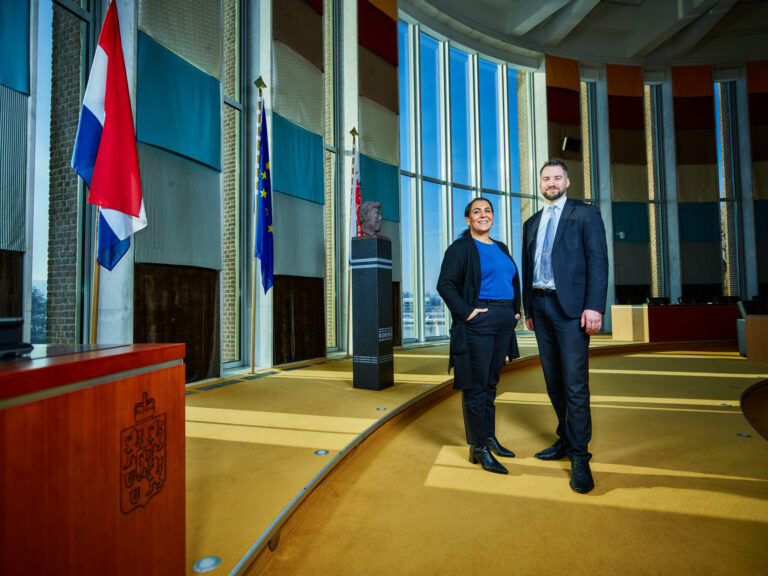
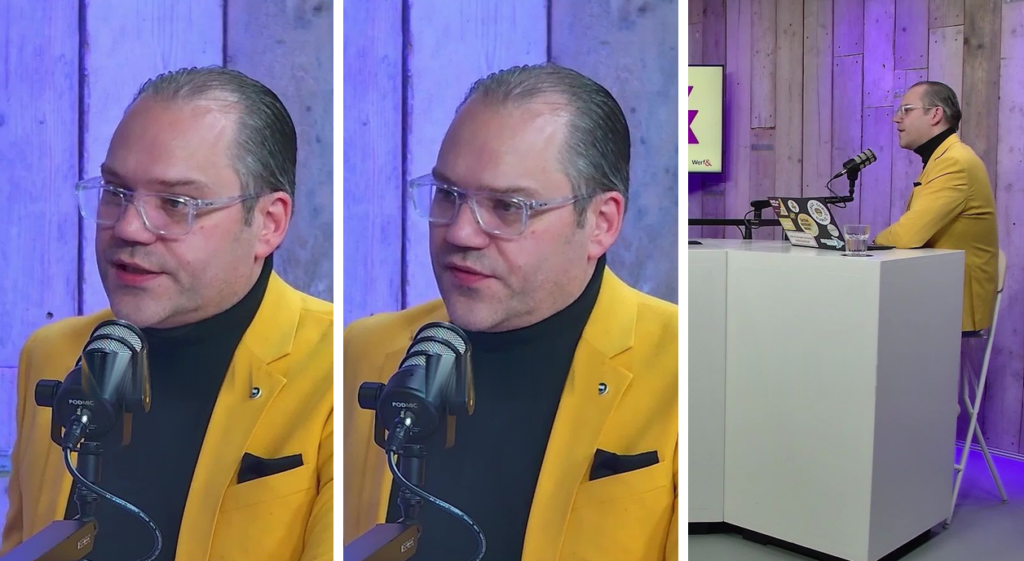
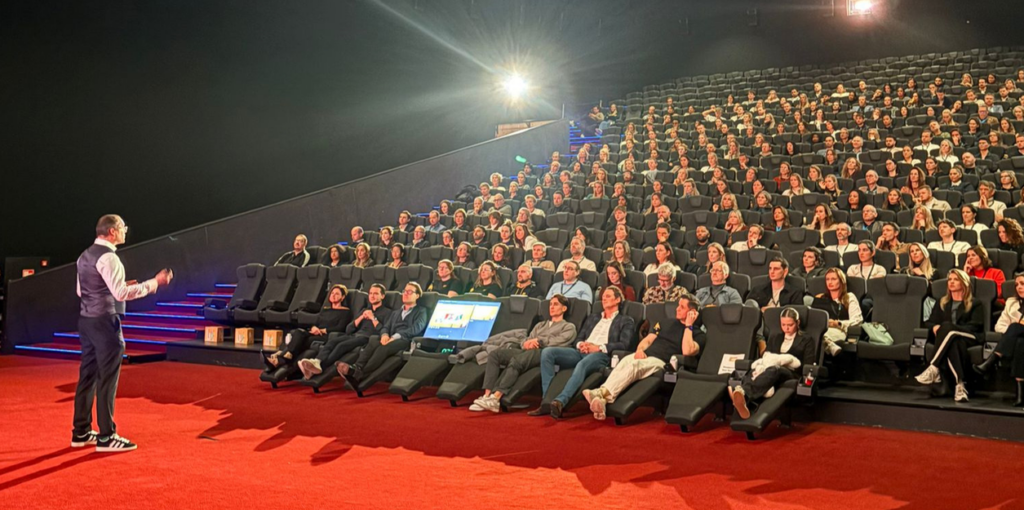
For 25 years, he has worked in the recruitment world with evident enjoyment, from his first placement to his current role hosting BNR at Work, the Recruitment Unicorns in Pathé tour and his work with Stichting Guruz. In the latest Monkey Rock podcast, presented by Tjesca Honnef-Kuytenbrouwer (EN HR solutions) and Geert-Jan Waasdorp (Intelligence Group), he argues for a more prominent place for recruitment in the boardroom, greater appreciation for vocational education and training, and smart solutions for training skilled professionals. And AI? He believes it can take over a great deal of work, but not the essence of recruitment.
It all began for him behind the bar at a skittles centre. Arjan Elbers was just 12 when he earned his first guilders there. How much exactly? He has no idea. ‘I think I just got a few guilders at the end of the evening. They were simply slipped into your pocket.’ But more important than the money, he recalls, was how much he enjoyed it. Walking around, talking to people, being surrounded by a bit of bustle: he loved it.
As a recruitment consultant, he knew he had found his calling: ‘This is my world…’
After studying facilities management, he stayed in hospitality for a few more years. Then the working hours began to take their toll and he went looking for something more commercial. And, he thought, perhaps something a little quieter too. In 2001, he took a job as a recruitment consultant at employment agency Content. He still remembers his first placement precisely: a young woman who started an office-based role at a small installation company in Helmond. ‘I was so proud!’ Within a week he knew he had found his calling. ‘This is my world.’
From running harder to planning smarter
A quarter of a century later, Elbers has made quite a name for himself. He has started businesses, addressed thousands of people and advised countless recruitment organisations. He is consistently driven by the same conviction: good recruitment can move an organisation forward, provided the profession is given the space to think strategically.
‘Recruiters always run very hard. And when things get difficult, we run even harder.’
He believes recruiters are naturally strong service providers who enjoy solving problems. But their commitment can too often mean that their focus remains on today’s vacancy, he says. ‘Recruiters are very service-minded people who run very hard. And when things get difficult, we run even harder.’
Using energy differently
Elbers says he sees plenty of opportunities to use that energy differently. Instead of immediately launching a new campaign or reaching for the latest AI application whenever there is a shortage, he advocates asking broader questions: how many people will we need over the next 3 years? When should we start recruiting? Which sources work and how can we organise the process intelligently?
‘Start with a proper recruitment plan for once. You don’t even have one in place.’
Good job adverts and employment conditions remain important, he says. But a sound plan makes all those efforts much more effective. ‘This is simply about strategic process management’, he says. Perhaps less spectacular than the latest tool or campaign, but that is precisely where he believes there is much to be gained.
Recruitment deserves a seat at the boardroom table
A plan alone is not enough, however. ‘It also requires recruiters and talent acquisition leaders who have the courage to bring their insights to the boardroom table.’ Not just answering the question of who is needed tomorrow, but also helping to determine which people will move an organisation forward next year and beyond. Elbers challenges recruiters not only to keep running, but also to engage in strategic discussions more often, even when those discussions raise uncomfortable questions.
‘There are very few talent acquisition leaders who lead. We do have a great many TA managers.’
Elbers believes thinking ahead is essential, especially now that some employers are receiving a few more applications again. A temporary breathing space should not be a reason to lose sight of long-term challenges. ‘That is the greatest risk. That you think: it will all work out again.’ His advice to TA leaders is therefore as simple as it is ambitious: make sure talent is a permanent item on the board’s agenda. Not as an isolated staffing issue, but as part of every significant business decision.
He cites Janine Vos, who, according to Elbers, expressly requested a seat in the boardroom when she took up her role as the person responsible for people at Rabobank. After all, for every strategic decision, someone must be able to ask what it means for the people who have to do the work. ‘People and talent are always critical. You can make the best plans, but it always comes down to the people who have to carry them out.’
‘Talent is critical. You can make the best plans, but it is always the people who have to carry them out.’
And HR and recruitment? He believes they need to function much more as 1 whole. ‘I don’t understand why organisations still so often treat attracting, developing and retaining employees as separate worlds.’
Retirees as mentors
Elbers is just as outspoken when the conversation turns to mbo, the Dutch system of secondary vocational education and training. He calls vocational education ‘gold’, but also believes the Netherlands still treats it far too casually. Take healthcare. Staff shortages are enormous, yet training opportunities are limited because employers do not provide enough placements. The reason? There is no time to supervise students. For Elbers, that is ‘the world turned upside down’. ‘The whole healthcare sector is on fire and we have no placements left. That is madness, of course.’
‘The whole healthcare sector is on fire and we have no placements left. That is madness, of course.’
His solution is as simple as it is inventive: bring retired professionals back into the workplace. Not to fill gaps in the rota, but to teach young people the trade. That way, overstretched employees do not also have to take on the full supervision of placement students, trainees and career changers. And experienced colleagues’ knowledge is not lost as soon as they retire. ‘Look at the people who have worked at your healthcare institution for 20 years. And bring them back.’
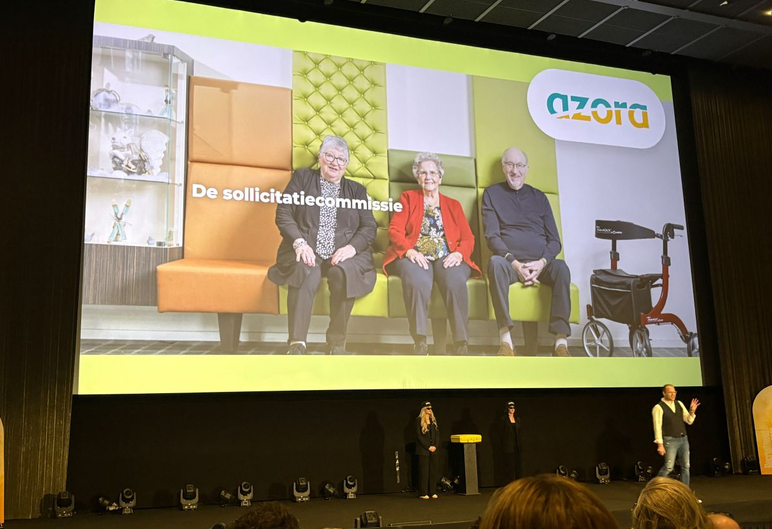
At a refrigeration company, he once saw how 2 retired employees were brought in to train new refrigeration engineers. Production could continue whilst the company also worked on bringing in new skilled workers. He believes this solution could be applied in many more sectors. After all, anyone who does not make time to train new people today is creating their own staff shortage tomorrow.
Vocational education deserves a leading role
But the lack of placements is only 1 side of the problem. According to Elbers, the other side is ‘deeply rooted’ in society. Parents try to push their children towards havo or vwo, the more academically oriented Dutch secondary education tracks, whilst many practical occupations offer excellent employment prospects. ‘All the mums and dads say: vocational education is wonderful, but not for my child.’ Elbers believes the Netherlands spent years convincing itself that it should primarily be a knowledge economy. Thinkers were given greater importance than makers. And now there are enormous shortages in engineering, healthcare and other practical occupations.
‘All the mums and dads say: vocational education is wonderful, but not for my child.’
With Guruz Elbers is trying to change that himself. The non-profit organisation produces online guest lectures with experts on subjects such as the energy transition, hydrogen and new technologies. The lessons are then made available free of charge to vocational education institutions. ‘It is the best thing I have ever done.’ The aim goes beyond getting students interested in occupations with good prospects: it is also about making visible the knowledge, innovation and opportunities behind those occupations.
AI takes over tasks, not recruiters
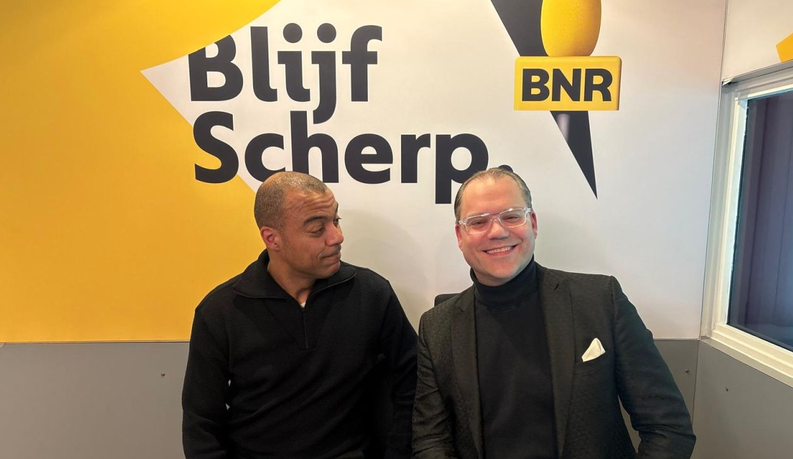
And then, of course, there is AI. Will this technology turn the recruitment profession completely upside down in the coming years? Elbers takes a measured view. Asked, ‘Is recruitment about people, or can you automate it away?’, his answer is immediate. ‘By far the easiest question. Recruitment is about people.’ That does not mean he underestimates the impact of AI. On the contrary: he believes technology will take a huge amount of work off people’s hands. Recruiters will become more productive, processes will become faster and fewer people may eventually be needed to fill the same number of vacancies.
‘By far the easiest question. Recruitment is about people.’
But he believes the essence of the profession remains intact. Take an initial discussion with a hiring manager. A good recruiter does not simply accept a vacancy brief, but asks further questions. Why is someone needed? What problem are you trying to solve? Are these really the right competencies? And should the vacancy be filled in the way the manager envisages at all? According to Elbers, that is precisely the work you cannot simply leave to a bot. The recruiter remains the link between supply and demand, but must develop from an executor into a fully fledged strategic partner to the business.
Please, no personal chemistry
Does that mean human gut instinct will continue to be decisive? Elbers says he hopes not. He is irritated by hiring managers who mainly look for candidates with whom they feel a personal connection. He therefore likes to ask them a challenging question: who has actually ever trained to become a hiring manager? Usually, no hands go up. Yet those same people make decisions about candidates’ futures every day, often based on personal preferences.
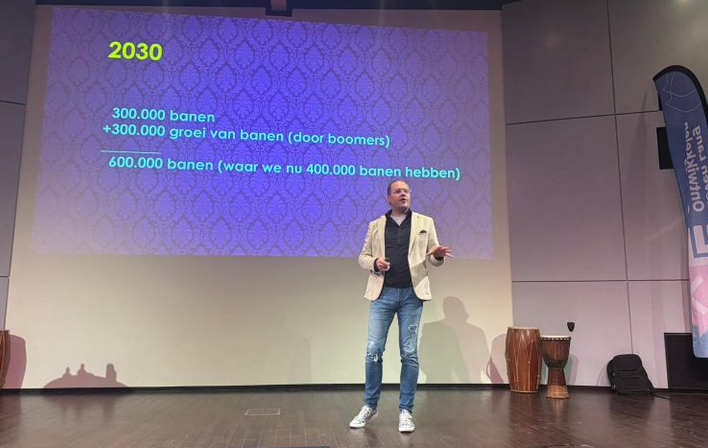
‘You are not looking for a new romantic partner. You are looking for a colleague. You are not looking for a clone of yourself.’
For Elbers, the message is clear: if someone objectively has the right qualities for a role, a lack of personal chemistry should not be a decisive objection. He believes that, especially if AI gives recruiters more room to focus on the human side of the profession, it becomes important to organise that people-focused work more professionally too.
As a minister, he would head straight to education
Suppose he became minister of social affairs and employment tomorrow? He knows exactly where he would start: with a fundamental approach to aligning education with the labour market. He believes the education sector is not sufficiently encouraged to train people for the occupations the Netherlands actually needs. In his view, funding primarily rewards attracting students, rather than the social or economic value of their eventual career choices.
‘The first thing I would do, on that very same day, is run to the minister of education, culture and science.’
He therefore wants the education and social affairs ministries to work much more closely together and students to be more actively encouraged to choose occupations with good prospects. In healthcare, engineering, construction, ICT, cybersecurity and defence. The same idea keeps returning: talent is not an afterthought, but the starting point. Whether it concerns recruiters, employers, education or government, Elbers sees the greatest opportunities when parties look ahead earlier and take responsibility together. And his greatest career achievement? He believes that is still to come…
The 5 takeaways
What were the 5 takeaways from this podcast?
#1. A strong recruitment plan makes efforts more effective
Campaigns, job adverts and AI are more effective when they stem from a multi-year plan. Map future staffing needs, recruitment sources and lead times so that recruitment can not only respond quickly, but also plan ahead with purpose.
#2. TA leadership starts with a strategic discussion
Recruitment can do more than fill vacancies. Taking talent seriously as a prerequisite for growth and continuity means giving it a permanent place in the boardroom and bringing HR and recruitment together as 1 whole.
#3. Retirees can help bring in new talent
No time to supervise placement students or career changers? Bring in experienced, retired employees as mentors. This preserves professional expertise, eases the burden on staff and creates room to train new talent.
#4. AI automates tasks, but not the essence
Technology makes recruiters faster and more productive, but it does not replace substantive discussions with the business. Recruiters add value by understanding genuine staffing needs, offering critical advice and connecting people.
#5. Tackle shortages at the source: education
‘The Netherlands cannot afford to continue underestimating vocational education. Educational institutions, employers and government must work together to promote occupations with good prospects, provide enough training places and improve alignment between education and the labour market.’
Read and listen also:
- Walter van Ruijven: ‘Showing more courage is what our profession needs’
- Ida de Kock (Applied Medical): ‘Don’t be afraid as a recruiter, just step into your role’
- Claudia van Triest (Nedap): ‘We should not just find people, but develop them too’
- Jasper Keijner (VDK Groep): ‘Recruiting only for today, not for the future, is such a waste’
- Dionne Mooijer (CompaNanny): ‘Nothing is more powerful than a team’s working atmosphere’
- Wouter Koolmees and Mascha van der Heijden (NS): ‘Recruitment is something the entire organisation must commit to’
- All Werf& podcasts
The Monkey Rock
Ontdek de nieuwste inzichten, trends en inspirerende verhalen over recruitment en employer branding.