Finns Henri Nordström and Tommi Siro founded Jobilla in Helsinki in 2015. The company began as a digital headhunter that used social media to reach people who were not actively looking for a new job. It has since become an international platform that, for example, ran more than 8,000 campaigns in over 50 countries in 2024. Investors including Juuri Partners, Trind VC and the Finnish government agency Business Finland have invested millions in it in recent years, including 6 million euros in August 2024 alone.
‘We use data to make campaigns as relevant as possible.’
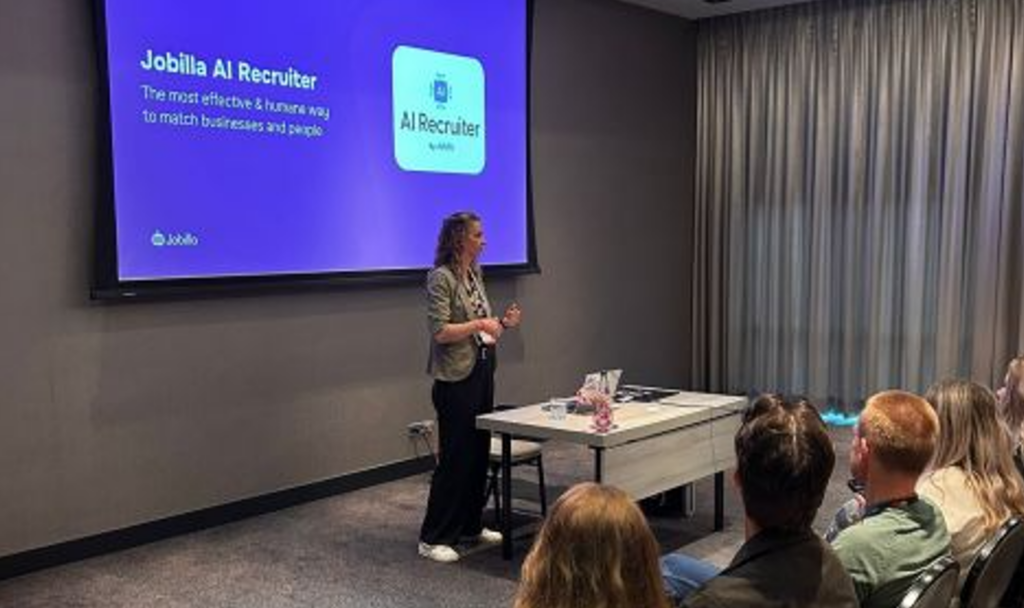
Jobilla has had its own operating company in the Benelux region since late 2022, with Selma Stevense-Bakker at the helm. She grew the Dutch operation from a one-person business to a team of 14 in 18 months. Its latest product is Jobilla AI Recruiter, which brings together the lessons learned from more than 45,000 recruitment campaigns to date. Using a job description, employers can quickly create their own advertisements, landing pages and application flows, aimed at both active and passive candidates.
A logical next test
The recent pilot with Intelligence Group was a logical next test: what happens when that technology is also given up-to-date target audience insights from Giant? ‘We use data to make campaigns as relevant as possible,’ says Stevense-Bakker (pictured). ‘Intelligence Group’s external labour market data helps us find the precise messages that motivate a target audience to act.’
For the pilot, each participating organisation received 2 campaigns for the same recruitment need. The first used the vacancy information and Jobilla’s standard approach: AI-assisted campaign creation, social targeting and an accessible candidate journey. In the second, Jobilla added insights from the Giant data dashboard, focusing particularly on the target audience’s most important attraction factors.
Measuring the difference
Both versions ran for 2 weeks, each with a media budget of 500 euros. The set-up remained as similar as possible; the data mainly changed the emphasis. Which message appears at the top of the social media advertisement? What does a candidate see first on the landing page? Which benefits of the job are given extra weight? This allowed the contribution of richer target audience information to Jobilla’s technology and campaign expertise to be measured with reasonable accuracy.
| Organisation | Recruitment need | Without data | With Giant data | Difference |
|---|---|---|---|---|
| Accountancy firm in Zeeland | Finance role | 4 | 13 | +225% |
| Large government organisation | Technical / blue-collar role | 15 | 32 | +113% |
| Large installation company | Installation / security technician* | 11 | 16 | +45% |
| Total | 30 | 61 | +103% |
For a finance role in Zeeland, Giant showed that salary and financial terms were major considerations. Salary was therefore given a prominent position in the version using data. The result: 13 candidates, compared with 4 for the vacancy without Giant data. That naturally raises a question. As an employer, do you primarily want candidates who respond to salary? Or, despite what the data says, do you deliberately choose the attraction factors ranked third and fourth?
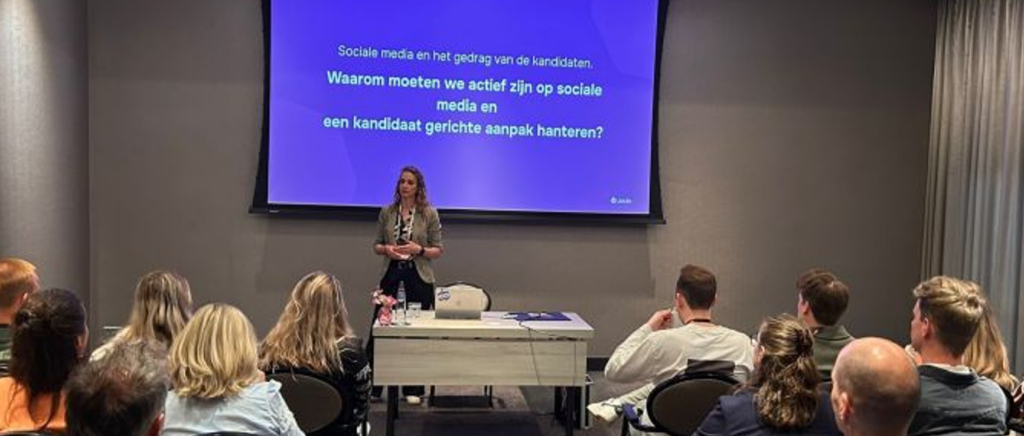
According to Jobilla, this illustrates exactly what the platform can do: not only generate more responses quickly, but also deliberately tailor the campaign to the type of candidate an employer is looking for. ‘The beauty of it is that you combine data and psychological knowledge,’ says Stevense-Bakker. ‘Candidates see the information that appeals to them sooner. As a result, they are also more likely to feel that the message speaks to them.’
No hire yet, but 3 continuing clients
The pilot has not yet resulted in an actual hire, but it did demonstrably generate more and more relevant responses. One organisation found its desired candidate, but the candidate could not be persuaded to leave their current employer. A second invited suitable candidates for interviews. The third was still following up at the time of the interview. Notably, however, all 3 organisations decided to continue with Jobilla after the pilot.
‘It is now clear what a difference good labour market data can make.’
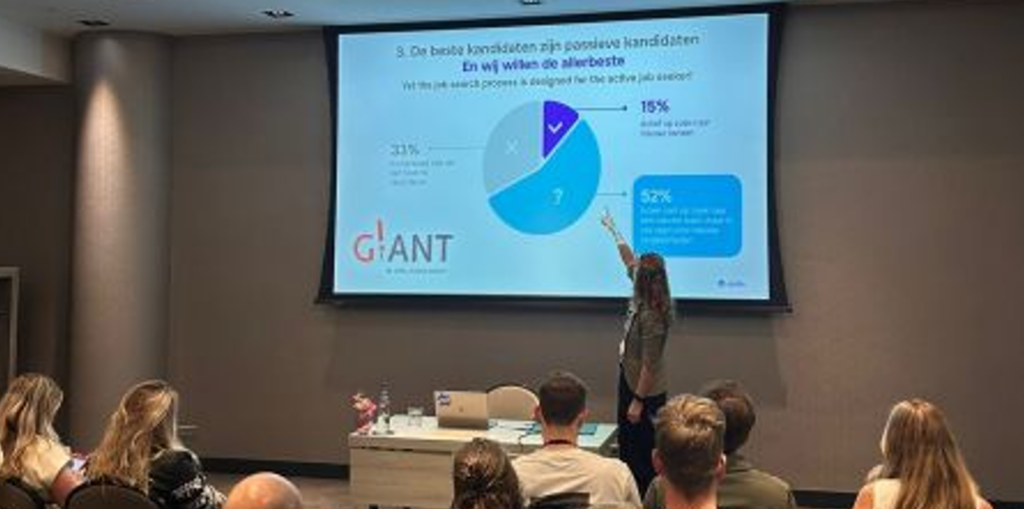
For Jobilla, the pilot confirms the platform’s direction: knowledge previously held by recruitment marketers is increasingly being incorporated directly into the software. Organisations that use both Giant and Jobilla still have to add target audience insights manually to AI Recruiter. The two parties are exploring how that data could be fed directly into the campaign workflow in future.
One of the pilot organisations, for example, has already asked when such an integration will be available. ‘This pilot was important for us to show our product team, too, what a difference good labour market data can make,’ says Stevense-Bakker. ‘The results give us every reason to develop that combination further.’
Read also
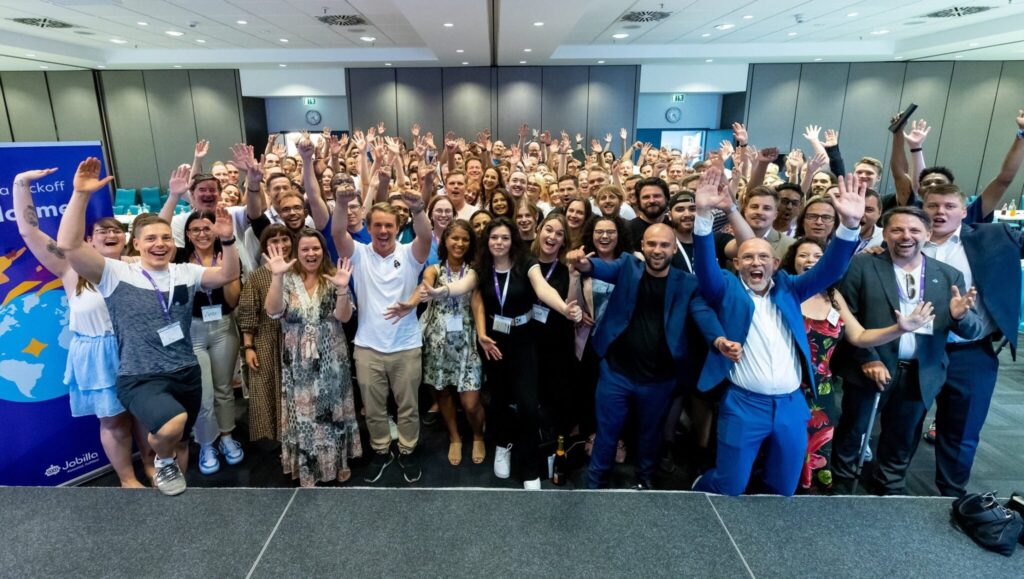
Related event
Intelligence Group – Eindejaarsactie 2026
Weet waar je doelgroep zit en wat ze willen Krijg 15 doelgroepanalyses in Giant en betaal er slechts 10. Alleen van 1 november tot en met 15 december 2026. Deze actie is maar 100 keer beschikbaar, dus wacht niet te lang.

Intelligence Group
Intelligence Group: empowering recruiters to help them find the right talent Intelligence Group is een internationaal Data & Techbedrijf op het gebied van a…