‘A major and growing social problem is the tightness in the labour market. From engineering to public transport, from education to healthcare, from hospitality to horticulture – the acute shortage of staff is felt everywhere.’ This is how King Willem-Alexander put it in this year’s Speech from the Throne. And a problem that is felt everywhere can, of course, also be expressed in money. But how much money exactly? That is another question. What are the social costs of labour market tightness? How much does a vacant position actually cost? What value could we have added that is not being added now? And does that outweigh the salary costs saved, and if so, how?
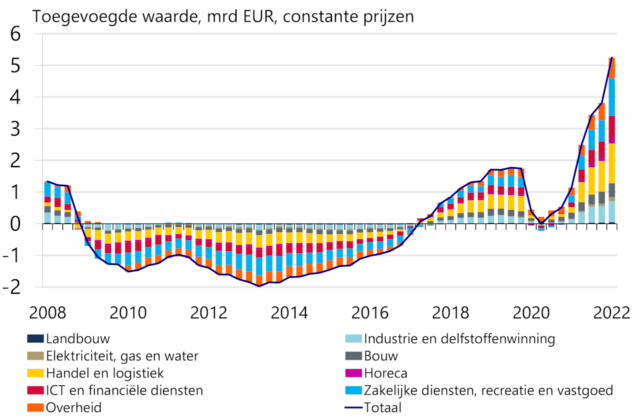
Such social costs and benefits are notoriously difficult to calculate for the labour market. But that does not mean no attempts are made. The Rabobank did so 2 years ago, for example, using, in its own words, ‘some rough assumptions and calculations’. The bank first looked at how the Dutch economy would function without staff shortages. The bankers assumed that all vacancies would be filled by people who are currently not working, and that these people would be just as productive as those already active in a particular sector, and would work the same number of hours on average.
Read this article in full
Become a Werf& member for unlimited access to all articles, research and exclusive insights into the labour market.
No obligations Cancel anytime Secure payment