The rules of the labour market are changing. To name a few examples: salary transparency, AI in recruitment, skills over qualifications, the four-day working week. Research by Indeed among nearly 1,400 Dutch employers and employees shows that why people change jobs and what they expect from an employer differs enormously by age group. Gen Z in particular views work differently, according to the report. This could have implications for how organisations recruit, reward and retain people, the researchers say.
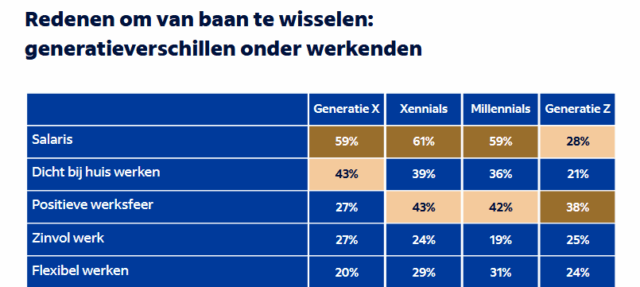
For Gen Z, workplace atmosphere is number one.
Whilst salary remains the main reason for the average employee to change jobs, for example, Gen Z sees things differently. For them, workplace atmosphere is number one. A remarkable shift that shows the youngest generation of workers has different priorities. Their wishes also differ when it comes to employment benefits. Whilst older generations mainly value a thirteenth-month bonus and pension schemes, Gen Z focuses on learning and development budgets. They want to grow, not stand still.
AI in the workplace
The optimism among the youngest generation is also striking: 84% of Gen Z rates the labour market positively. Among xennials (born between 1977 and 1983), this falls to 62%, and among millennials and Generation X to 57%. Gen Z stands head and shoulders above the rest, a difference of 27 percentage points compared with Generation X. Do we become more critical as we get older?
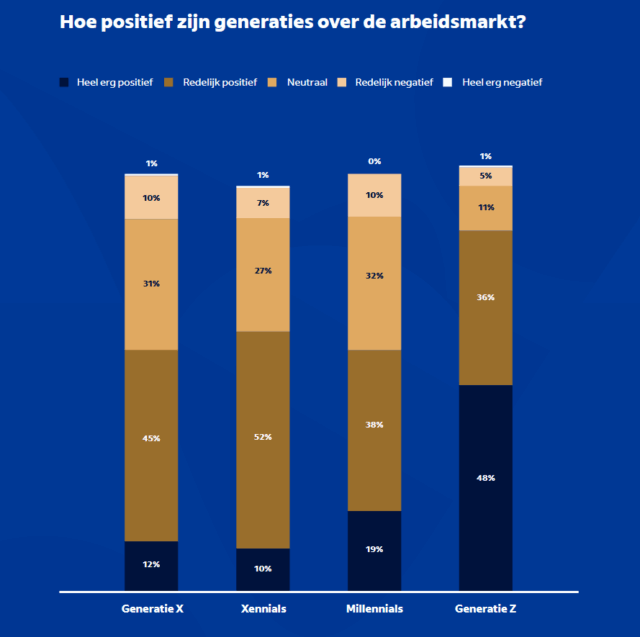
Do we become more critical as we get older?
The gap becomes even more visible in AI use. Half of Gen Z (50%) says, for example, that they use AI at work at least two to three times a week. For Gen X, this is just 27%. But it goes beyond work-related tasks alone: 52% of Gen Z also uses AI when applying for jobs, for example, from drafting cover letters to receiving help during interviews. For employers, this raises questions. How do you deal with candidates using AI during online assessments? And more importantly: how do you ensure your own recruitment process keeps up with the times? Currently, 40% of employers use AI for recruitment, for example to search talent pools and support data-driven decision-making.
The four-day working week
There is surprisingly broad agreement among respondents on the four-day working week. Of all employees, 71% think a shorter working week benefits their productivity. Among Gen Z, this is as high as 89%. Employers are also predominantly positive: 69% say they see benefits in the concept. Employers and employees therefore both see potential. With 71% of employees believing in productivity gains, ‘we will get less done as a result’ is no longer a strong argument.
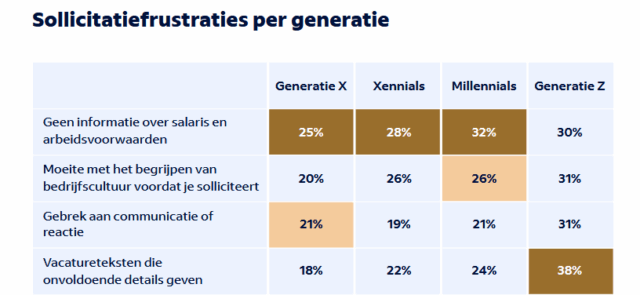
Nearly half of applicants drop out if they do not receive an offer within two to four weeks.
The figures also clearly show that different generations have different needs. This offers opportunities: those who tailor their employment conditions and communication to their target group can stand out in the labour market. The research also provides insight into the obstacles during the application process. Nearly half of applicants (49%) drop out if they do not receive an offer within two to four weeks. The biggest frustrations: no salary information in the vacancy, unclear job requirements and lack of communication.
Skills-based recruitment
The report also shows where we stand when it comes to skills-based recruitment. 67% of employers have at some point hired someone without the required qualification. And that aligns with what workers want: 70% prefer skills-focused vacancies. The most essential skills for the next 10 years? AI skills, communication and adaptability.
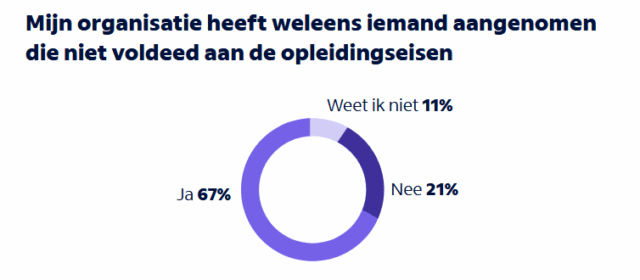
For a quarter, management is not convinced by skills-based recruitment.
However, barriers remain, according to the research. Of employers, 36% say qualifications are required for their vacancies. Another 36% indicate they lack knowledge of skills-based recruitment, and for a quarter, management is not convinced. An interesting paradox: we sometimes already practise skills-based recruitment, but still find it difficult to truly let go of what we have always done.
Read more?
Ready to get started? The full report combines data with concrete action points. Download your free copy here.
Recruiting in 2026
Want to know more?
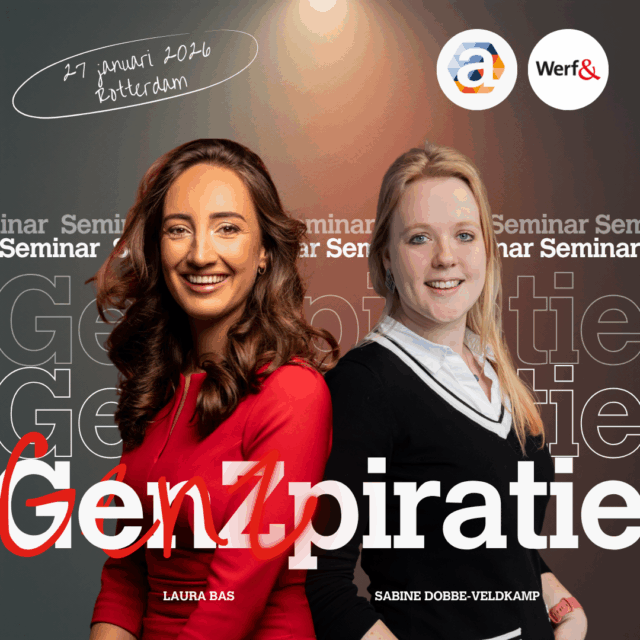
Want to know more about Gen Z? On 27 January 2026, experts Laura Bas, data specialist Sabine Veldkamp and NS will teach you all about reaching Gen Z through authentic stories and short videos in Rotterdam.
Read more?

Indeed
Op Indeed vinden meer mensen een baan dan waar dan ook. Indeed is de nummer 1 vacaturesite (SimilarWeb, totaal aantal bezoeken, juli 2024), niet alleen in ons l…