On the one hand, labour market tightness continues to cause persistent and major staff shortages in vital public sectors such as healthcare, education and safety. At the same time, the number of civil servants is also continuing to grow, which employers say further increases pressure on the overall labour market. In short: a great deal is happening in the labour market for non-commercial sectors. And although the differences between them are of course immense, some parallels can still be drawn, as became apparent at a recent Labour Market Trends Session for the government, held at the offices of Intelligence Group in the heart of Rotterdam.
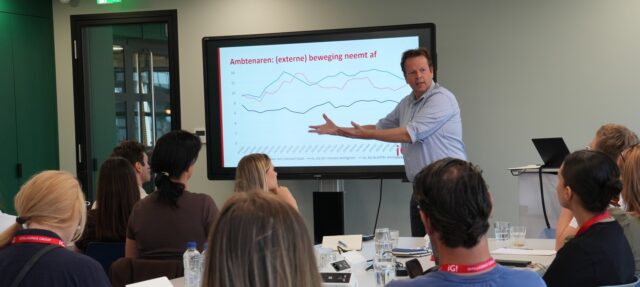
The government is increasingly developing into a safe harbour, Intelligence Group director Geert-Jan Waasdorp noted in his opening remarks: people deliberately choose it because of the apparent security and established employment conditions, such as flexible working hours and sometimes complete freedom in the number of days worked from home. But that security also has a downside, according to Waasdorp: both internal and external mobility are below the national average across virtually all parts of government. And internal mobility in particular can be an important solution to scarcity, he explained.
Read this article in full
Become a Werf& member for unlimited access to all articles, research and exclusive insights into the labour market.
No obligations Cancel anytime Secure payment