Rewarding employees with shares, so that they can genuinely benefit from a company’s potential success? It remains an exception in the Netherlands. Despite concerted efforts by, for example, the SNPI, the Dutch centre of expertise for financial participation, the idea has yet to truly gain traction.
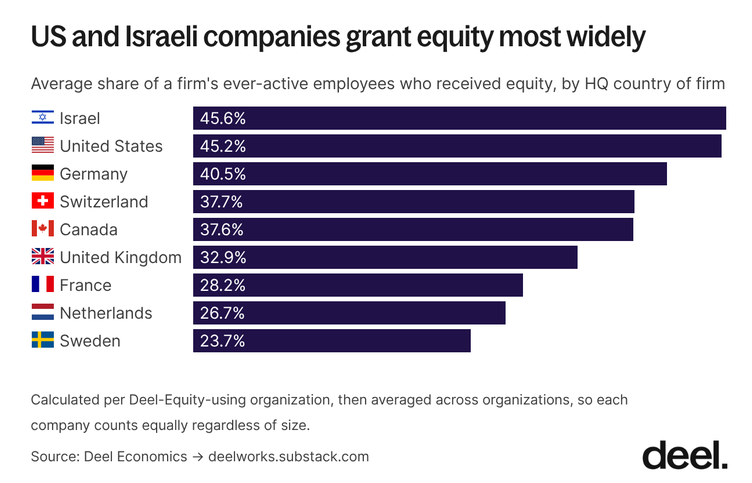
This is also evident from recent data from international HR and payroll platform Deel, based on anonymised figures from more than 8,000 employees in almost 100 countries who received shares or options through the platform. At Dutch companies using Deel Equity, an average of 27% of employees have received shares or options. In Germany, that figure is 41%, and in the United Kingdom it is 33%. American (and Israeli) companies lead by a considerable margin, at more than 45%.
Labour shortages play a role
The difference is striking, as the shortage of scarce technical and commercial talent in the labour market is just as acute in the Netherlands as elsewhere. Yet Dutch employers are less quick to use share-based remuneration as a tool for retaining people. This is probably not so much due to reluctance or culture, but rather to tax and practical obstacles that are simply less significant in other countries.
Read this article in full
Become a Werf& member for unlimited access to all articles, research and exclusive insights into the labour market.
No obligations Cancel anytime Secure payment
Related event

Arbeidsmarkttrends 2027-2030
We zijn uitverkocht. Maar goed nieuws!Arbeidsmarkttrends 2027-2030 is volgeboekt. Goed nieuws: op 28 januari 2027 organiseren we een tweede editie, met dezelfde sprekers en hetzelfde programma. Zorg dat je er alsnog bij bent.Bekijk de editie van 28 januariAl jaren geven de beste sprekers en specialisten een arbeidsmarktupdate en een doorkijkje naar de arbeidsmarkt van de […]
Odido