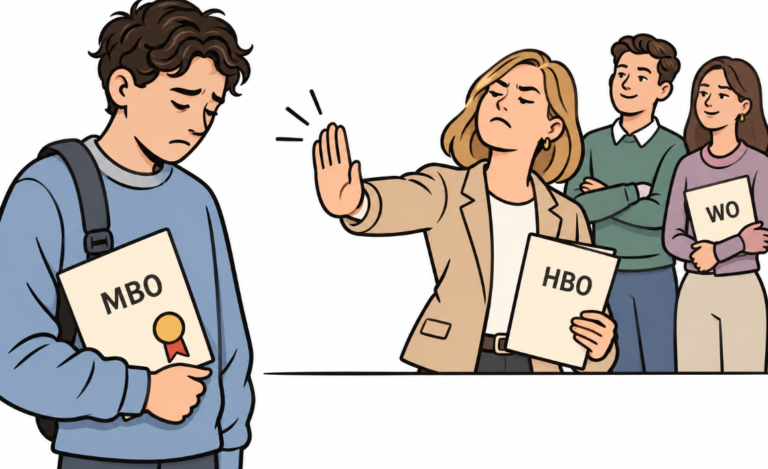
The labour market has recently entered somewhat calmer waters. Following the severe shortages of 2022, unemployment has risen slightly, but still not by very much. And with almost 10 million people in work, labour force participation remains at a record level: never before have so many people had paid employment. Despite the predominantly gloomy outlook in the world of commercial recruitment, it can be said that the labour market is performing well across the board. There is even renewed attention today to recruiting quality, something that has been under some pressure in recent years.
The mental health of employees is the elephant in the room.
Beneath all that ‘good news’, however, lies a major cause for concern. Consider the almost 250,000 people receiving Wajong benefits, or the WIA, which has grown to around 600,000 people, or the more than 400,000 people receiving social assistance benefits. Add 4% unemployment (200,000 people receiving unemployment benefit), and 1 in 7 people are at home receiving benefits. That amounts to around 1.5 million people from the Dutch workforce. But we have not even mentioned the elephant in the room yet: sickness absence. And in particular: the mental health of employees.
Read this article in full
Become a Werf& member for unlimited access to all articles, research and exclusive insights into the labour market.
No obligations Cancel anytime Secure payment
Related event
Leergang Strategisch Recruitment | UITVERKOCHT
Ben je klaar om je recruitmentcarrière naar een hoger niveau te tillen? De Leergang Strategisch Recruitment biedt je de perfecte mogelijkheid om je kennis te verdiepen en je professionele groei te versnellen. Als ervaren recruiter of recruitmentmanager ontwikkel je strategische inzichten en vaardigheden die je een sterke en leidende gesprekspartner maakt voor het management. Je […]
Rotterdam