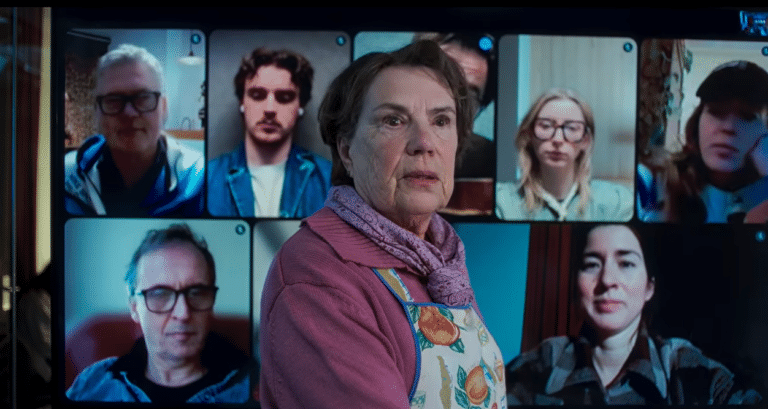


I spent a very long time at school. That is how I usually describe the fact that I am highly educated, partly because the term ‘highly educated’ has become somewhat tainted in recent years. The distinction, intended to be neutral, between people based on their ‘highest qualification obtained’ had, according to many, become a value judgement: highly educated would be ‘better’ than less educated.
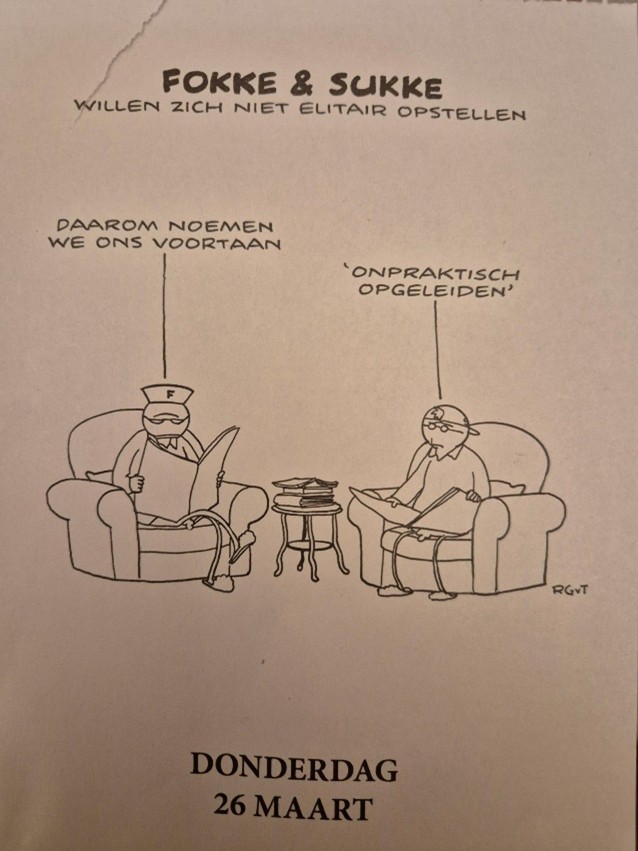
That is why, in today’s public debate about the labour market, we no longer speak of highly versus less educated people, but of ‘practically’ and ‘theoretically’ educated people. This new distinction has the advantage that theoretical is not always better than practical. In fact, there are entire groups of people who claim that ‘practical’ is truly much better than ‘theoretical’. This also suggests that theoretically educated people are rather ‘impractical’, and there is quite a lot to be said for that.
Doing or thinking?
Higher education is much less focused on ‘doing’ than on ‘thinking’. So, a majority of young people now leave the education system with the idea that they should mainly think carefully about things. Whilst employers in the labour market mainly have things ‘to do’. That is what we call ‘work’.
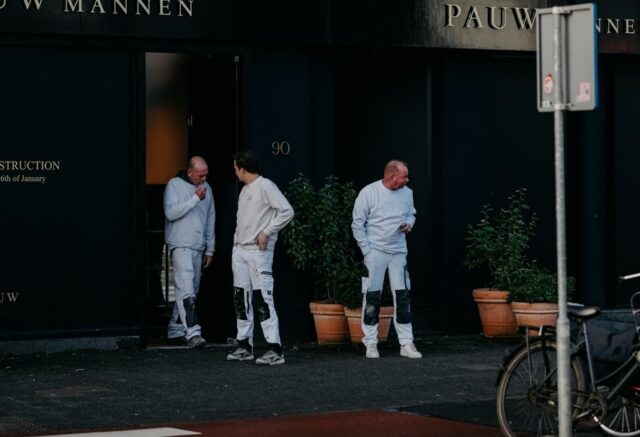
In most sectors, ‘thinking’ is never the primary process.
There are a number of sectors (universities, research institutions, public policy) in which ‘thinking’ is work, and I have felt very much at home in those sectors for almost 30 years. But even in those sectors, actual ‘work’ must be done, in other words: things must be done. Teaching has to be delivered, memoranda written, research conducted, etc. In most sectors, however, ‘thinking’ is never the primary process. Tomatoes need to be picked, buildings painted, pigs slaughtered, parcels delivered, steel produced, lithography machines built, loans granted, hair cut, patients helped, older people cared for, bread baked, etc.
Doing and thinking
That ‘doing’ in the primary process cannot, of course, happen without ‘thinking’ either. Even relatively simple work such as picking tomatoes is easy to do incorrectly if you do not think carefully about it, for example by picking tomatoes that are still completely green, meaning they do not ripen and cannot be sold. But as a rule, you can perfectly well leave that thinking to the doers in the primary process.
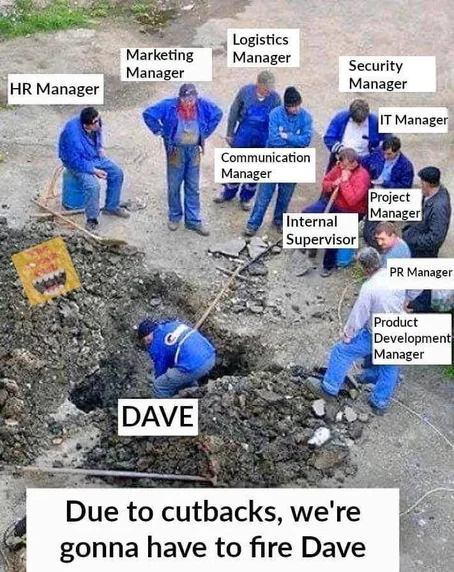
Recruitment and selection, HR, and also management and accounting are examples of ‘doing work’ that supports the primary process. Candidates need to be sought, job interviews conducted, training arranged, people managed, invoices sent, debtors chased, etc. Colleagues in the primary process do not always experience this work as ‘supportive’. Doers also always like to complain about managers, HR hobbies and the finance department, especially when these burden them with (administrative) tasks that do not clearly contribute to the primary process.
Oh dear, strategists
It gets even worse when ‘thinkers’ are appointed in the secondary process, with titles such as ‘strategic adviser’ or ‘strategist’. More often than not, it is completely unclear what such a role adds to the primary process. It is certainly a good idea to consider how an organisation should deal with changes in the outside world, but I have the impression that many organisations nowadays allocate a great deal of staffing capacity to it. And this trend is partly fuelled by a continuous stream of young people from higher education, who see ‘thinking’ as the most important task and ‘doing’ as something more suited to people who have not spent as long at school and/or have not been as successful there.
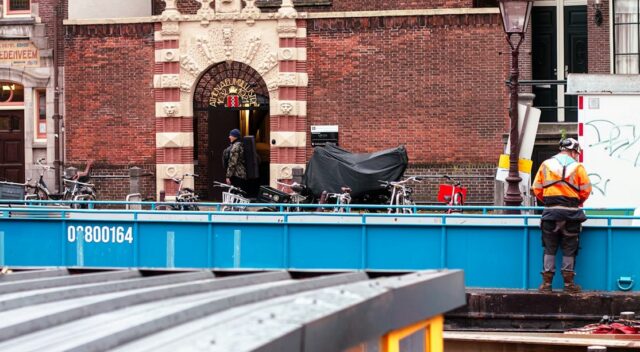
And in my view, this goes wrong in two ways. First, there are simply (far?) too many people in an organisation occupied with the question of ‘how it should be done’, without actually contributing to the primary work that needs to be carried out. Second, all those thinkers even get in the way of the doers with well-intentioned but irrelevant advice. And the doers become frustrated by this because they both know very well how to do their work and often have very good ideas about how it could be done even better. But their opinion is rarely sought.
Division on the workplace
In many workplaces, a division can be seen between the thinking (supporting, managing) people and the people who ‘do’ the real work. Some managers still think they can manage without in-depth knowledge of the primary process and, moreover, do not allow their employees to properly brief them in this area. HR business partners do not always do what the people ‘on the shop floor’ ask of them when filling vacancies because ‘they have thought it through carefully’, and sometimes even assume that the workplace must align with the talent strategy they have devised.
Thinkers too often get in the way of doers. It can be different.
Thinkers too often get in the way of doers. It can be different. Let us think about it together. And then do better. Both thinkers and doers will benefit from that.
About the author
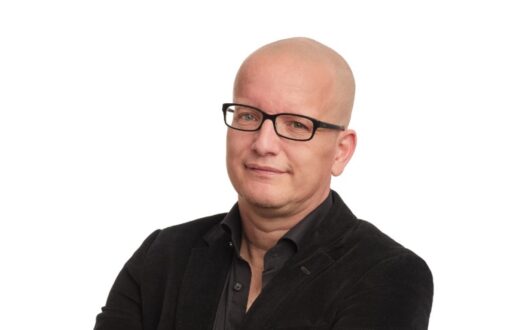 Ronald Dekker is an independent labour market expert and a ‘hands-on thinker’ at RoDeO Labour market intelligence.
Want to know more?
View the full programme for the Recruitment & Care conference on 21 May in Utrecht here.
Recruitment & Care
Read also
- Ronald Dekker: ‘Can the information problem in the labour market actually be solved?’
- ‘Job losses for young people due to AI? There is not yet any reason to panic’
- This was the month in recruitment: 7 things that caught our attention in December 2025 (with podcast!)
- Why we are heading for ‘Jobs Chaos’ in 2026 (and no, it is not an apocalypse)
Related event
Strategisch Recruitment in de praktijk
De tweedaagse voor de strategische praktijk onderbouwt met de laatste innovaties, data, en modellen In de hedendaagse wereld van schaarste, tekorten en ‘de war for talent’ binnen talent acquisition is een strategische kijk en aanpak van recruitment essentieel. Deze tweedaagse training ‘Strategisch Recruitment in de praktijk’ biedt je de handvatten om recruitment naar een modern […]
Rotterdam