The Talentpool Community asked nearly 200 respondents: ‘Imagine: you have applied for a job at a company. To what extent does the situation below influence the likelihood that you will become/remain a customer of this company in the future?’ The research shows a clear difference between two scenarios:
- Rejection without follow-up
When candidates are rejected without any further action, 34.1% indicate that there is a (very) small chance that they will want to become or remain a customer of the company concerned in the future.
- Rejection with active referral
When candidates are actively referred to, for example, another employer after being rejected, this percentage falls to 21.5%.
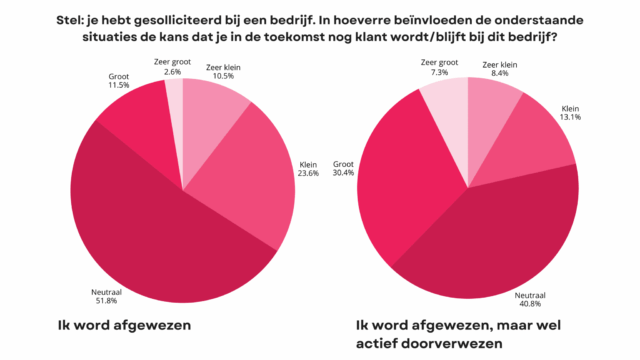
The difference? The number of candidates who indicate that they do not want to become or remain a customer falls by almost 37%, purely by referring them elsewhere after a rejection. Conversely, the number of people who consider the likelihood of becoming or remaining a customer to be (very) high rises from 14.1% to no less than 37.7%, almost a threefold increase. ‘You reject one person for a role, but you influence far more than just that one applicant,’ says Yente van den Bosch (The Talentpool Community). ‘Candidates take their experience with the entire organisation with them, not only in their own decision to become a customer, but also in what they share with others.’
Read this article in full
Become a Werf& member for unlimited access to all articles, research and exclusive insights into the labour market.
No obligations Cancel anytime Secure payment


The Talentpool Community
Matchingtech én afgewezen kandidaten: zo wil The Talentpool Community de arbeidsmarkt transparanter maken.