She herself lived and worked in the Netherlands for 20 years. But around 8 years ago, she had the opportunity to return to her native Sweden with her husband Guido, initially to set up an office of Undutchables, as an international extension of a Dutch recruitment concept focused on all of Scandinavia, later developing into their own agency Beyondo, which helps Dutch companies become successful in Sweden. What did Karin Björkman Tendijck learn during that time about the international labour market? And about both our own and the Swedish way of recruiting?
> What is it like to start out on your own in Sweden?
‘A unique opportunity. Of course, I already knew the culture, spoke the language and had years of experience in recruitment and relationship management in the Netherlands. It felt like coming home, but in a new professional context. Fortunately, the initial collaboration with Undutchables provided a solid foundation. It was a valuable period in which we learned how the Dutch recruitment model translated to the Swedish market, and in which we also discovered that you cannot always transfer a formula one-to-one. Sweden requires a different approach, partly because of different legislation. At first this seemed like a limitation, but it proved to be an opportunity.’
> What do you mean by that?
‘We saw that more and more Dutch companies were not only looking for international talent, but specifically for local Swedish professionals. They wanted to know how to build a team in Sweden, how to find the right people and how to avoid losing months to cultural differences or legal pitfalls. This is how Beyondo came about, in close consultation with Undutchables: an independent agency focused on supporting Dutch companies as they take the step into Sweden. We literally and figuratively speak their language. We understand where Dutch companies are coming from, and we know how things work here.’
> What do you recruit for?
‘We help companies here recruit local talent. We recruit Swedish- and English-speaking professionals who are not only a good fit in terms of expertise, but also align with the Dutch corporate culture. Think: multilingual candidates with the right mindset and work ethic. We also advise on Swedish employment law, contract types, terms and conditions of employment, and cultural expectations – so that you are both compliant and attractive as an employer. And we can help set up a local team that works in and for Sweden. From the first hires to building a sustainable, well-functioning organisation.’
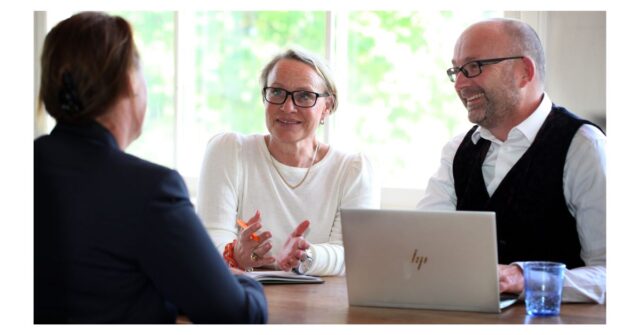
‘One of our target groups consists of so-called homecomers.’
‘Like Undutchables, with whom we still have close contact, we work with internationals, but in Sweden. However, because the Swedish market is increasingly asking for Swedish-speaking candidates, this can sometimes be a challenge. One of our target groups therefore consists of so-called homecomers, in other words Swedes who have lived abroad and now want to work in Sweden again. Very often, they face an uphill struggle to reintegrate because their network is no longer up to date. But the majority of our assignments come from Dutch companies wanting to establish themselves in Sweden. For them, we can and want to be a one-stop shop and guide them through a successful entry into the Swedish market.’
> Can’t Dutch companies do that themselves?
‘Expanding internationally sounds attractive, but in practice it is often more complex than expected. Organisations often think that the Swedish market resembles the Dutch one, but there are quite a few pitfalls. You do not have to do it all yourself. With a partner who knows the market, you avoid mistakes, save time and build success more quickly. Through our network, we can guide the process of registering a local entity, including practical matters such as administration, payroll processing and legal structure. And we can connect you with relevant partners, experts and professionals in Sweden – people we know, trust and work with ourselves.’

> Can you name a few differences?
‘Think of communication styles. Swedes and Dutch people are both known for their direct communication style, but in Sweden it is more often accompanied by a degree of tact, which minimises confrontation or discomfort. Softening your communication is essential. Often by not stating your opinion directly, but by asking questions. Also important is the concept of ‘Jantelagen‘, the idea that you should never think you are better than anyone else, and that people are called out if they do. A flat hierarchical structure is in any case a typical feature of Swedish corporate culture. Decision-making processes generally take place collaboratively, with an emphasis on team input and consensus.’
‘In Sweden, business deals are often done around the coffee machine and over lunch!’
‘Swedes also value competence and expertise. Demonstrating skill in your field is important for earning respect and trust. When you take part in informal situations, such as fika (coffee breaks) or lunches, you begin to understand the informal yet integral nature of Swedish corporate culture. These informal interactions offer insight into communication styles and play an important role in building relationships. In the Netherlands, business discussions often take place in formal meeting rooms, but in Sweden, business deals are often done around the coffee machine. People here find it very strange to quickly eat a sandwich at your desk!’
> And in terms of recruitment?
‘In Sweden, job titles are extremely important. The title you choose not only influences the type of candidates you can attract, for example, but also plays a central role in opening doors. A title also determines a candidate’s level and what potential remuneration structure they can use. Swedes often prefer two-page CVs to personal cover letters. However, it is also customary to begin with a six-month probationary period to assess the candidate’s suitability within the organisation. In Sweden, it is also a standard part of the recruitment process to look not only at qualifications, but also at personality and soft skills.’
Want to know more?
Want to know more about employing international staff? Or would you simply like to join the conversation with everyone who matters in this field? Register now for the Internationalisation of the labour market conference on 27 November 2025:
Also read
- Daniëlle Rodijk (OTTO Work Force): ‘Without migration, our country really comes to a standstill’
- Gert-Jan Segers on labour migration: ‘Unfortunately, I see a great deal of denial about the problems’
- How the pro-migration lobby is also gradually making itself heard more and more
- Number of labour migrants in the Netherlands rises to 1.7 million, far more than officially known
- About the growing market for freelance internationals (and how they can help solve your staff shortages)

Undutchables Recruitment Agency
Undutchables Recruitment Agency; Your partner for international staff As the world gets smaller, your need for a globally competitive business grows. You seek a…