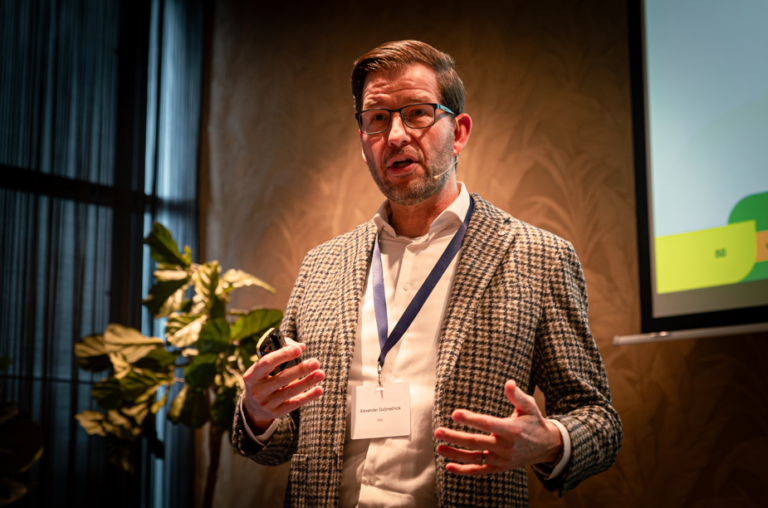
The Netherlands, a country of immigration? In reality, labour migration has been declining across the board for years. Moreover, the Netherlands is becoming less popular among labour and highly skilled migrants from all over the world. Marjan Stoit is particularly concerned about the decline in highly skilled migrants, further compounded by political measures to restrict this flow even more. ‘There is still an enormous shortage in the labour market. So welcome people to the Netherlands. That is important for the economy. And I would say to businesses: look at international talent. If the role can be filled by an international, that is always an asset.’
‘If the role can be filled by an international, that is always an asset.’
As commercial manager at Undutchables, which has built its reputation on recruiting internationals already in the Netherlands, Marjan Stoit knows what she is talking about. On 27 November, she will discuss the subject in greater depth at the Internationalisation of the Dutch labour market 2025 conference in The Hague. Above all, she wants to emphasise the positive message there: to show just how international the Netherlands has become in recent years, how we all benefit from that, and that there is little point in retreating behind the dykes and trying with all our might to deny or curb migration.
High hopes
She watched with dismay as the Netherlands fell from fifth to ninth place on internationals’ wish lists in recent years. ‘But fortunately, we are still very attractive,’ she says. ‘And of course I hope that remains the case. I have high hopes that a new government will recognise this too. International talent is simply needed, especially given the huge shortages. The future is still very international. My message is therefore: embrace international talent, because it is still less visible than other talent.’
‘Embrace international talent, because it is still less visible than other talent.’
According to her, part of that invisibility is due to traditionally Dutch employers still finding it difficult to properly assess the value of foreign qualifications and work experience. This is why she also believes in more skills based recruitment, so that quality talent can be brought in and placed. A great deal is possible in this regard, particularly with the support of A.I., she notes. ‘We see that in practice. For example, it already saves us so much administrative work that we can spend longer speaking to candidates in person. And therefore place them with suitable employers more effectively.’
Up and running
Of course, this does require employers to be open to internationals. ‘I always like to point out that if Dutch language proficiency is not immediately required for a role, you should certainly consider an international. They are often especially motivated. And ultimately, there is nowhere they will learn Dutch as quickly as in the workplace. Perhaps they do not quite fit the profile of your vacancy yet. But then I say: look at the skills they do have, and get started with them. If you make them feel welcome, you will see in practice that they are often productive and up and running very quickly.’
‘Diversity simply leads to more innovative ideas; that has been proven.’
A smooth recruitment process, extensive onboarding, support with relocation, housing, Dutch lessons: recruiting internationals often involves rather more than recruiting people born in the Netherlands. But Undutchables provides support in all these areas, Stoit stresses. And, she makes clear, you get a great deal in return. Especially if, as a Dutch company, you want to do business internationally. ‘They bring different perspectives, different work experiences and different ideas. That is why it is so good to deploy them strategically. Diversity simply leads to more innovative ideas; that has been proven.’
Vacancies in Dutch
An increasing number of well-educated internationals now live in the Netherlands, and they can add value for employers, she observes. ‘Some companies are still at the beginning of the process. They wonder, for example: what about the lunch table, where everyone speaks Dutch? That is why we also offer language lessons. But at the same time, you can see that English is no longer a barrier for almost anyone. Yet employers often still advertise their vacancies only in Dutch. I think that is a shame. It excludes a very large group who are suitable but will not apply.’
‘Many employers still advertise their vacancies only in Dutch. I think that is a shame.’
Despite this, and despite the political tensions surrounding the subject, Stoit sees that the Netherlands fortunately still has many things well organised when it comes to the labour market for internationals. The favourable expat scheme, our quality of life and attractive cities, the orientation year for foreign graduates, the good international education for the children of highly skilled migrants: it all ensures that we remain quite attractive internationally.

‘For example, I was pleased this week by the news that Eli Lilly is going to expand in Katwijk. That gives me renewed hope. Fortunately, many things are also better organised here than in other countries. We just need to put that in the spotlight again. Because I still believe that those who want to embrace the future embrace international talent.’
Want to know more?
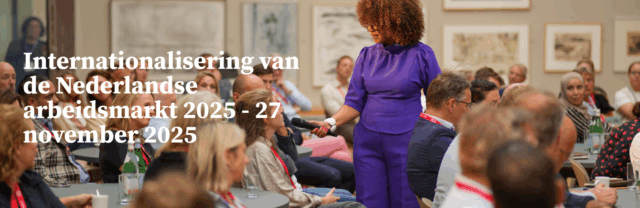
Want to know more about employing international staff? Or would you simply like to join the conversation with everyone who matters in this field? Register now for the Internationalisation of the labour market conference on 27 November 2025:
Internationalisation
Also read

Undutchables Recruitment Agency
Undutchables Recruitment Agency; Your partner for international staff As the world gets smaller, your need for a globally competitive business grows. You seek a…