Fridays are quiet in Leusden, at the AFAS office. No emails, no appointments. The office is even closed. Since January, the software developer’s more than 700 employees have worked only 4 days a week, while retaining their salaries. And that is proving to work as hoped, reports independent research by renowned cultural anthropologist Jitske Kramer. Employees not only experience more energy, focus and balance, she says. Productivity has also remained steady and the company’s turnover even rose by 11% in the first months of the 4-day working week.
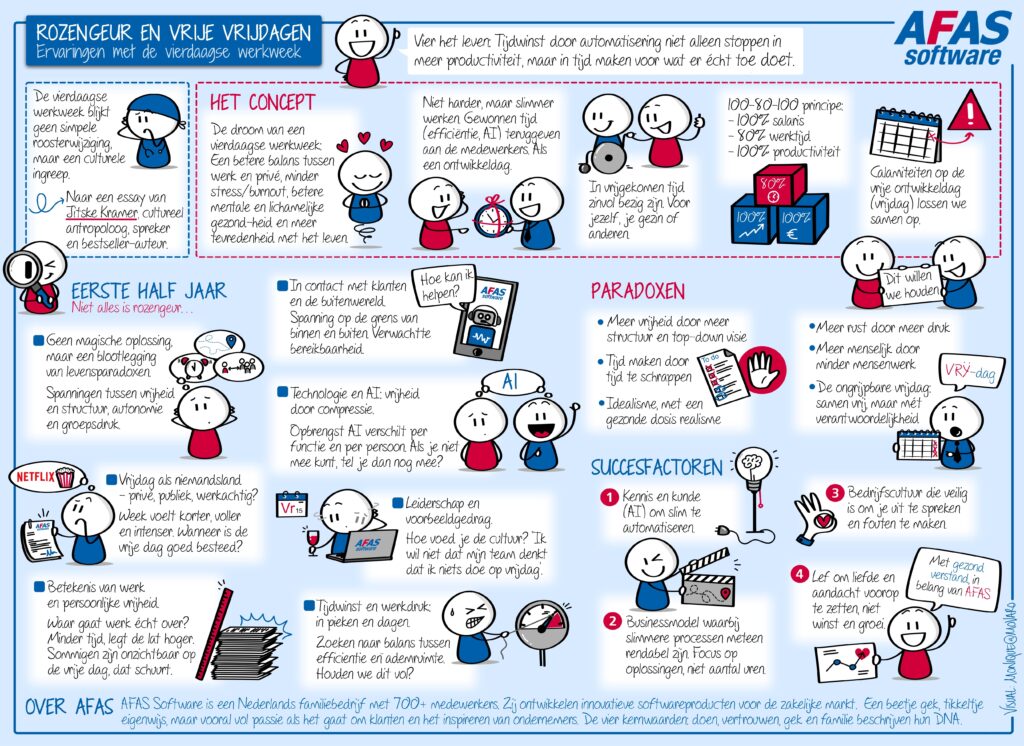
The week becomes shorter and more intensive, but also more manageable, according to Kramer. Employees say they make more conscious choices, cut unnecessary tasks and consequently experience greater balance. Or, as HR director Britt Breure puts it: ‘It is precisely through fixed working days and everyone having Friday off together that more freedom is created. People are more critical of their diaries, stop doing unnecessary tasks and feel more balanced. You would wish that for everyone.’ The software company will decide in November this year whether to continue the 4-day working week and, if so, in what form. But the early signs are positive in any case.
Read this article in full
Become a Werf& member for unlimited access to all articles, research and exclusive insights into the labour market.
No obligations Cancel anytime Secure payment