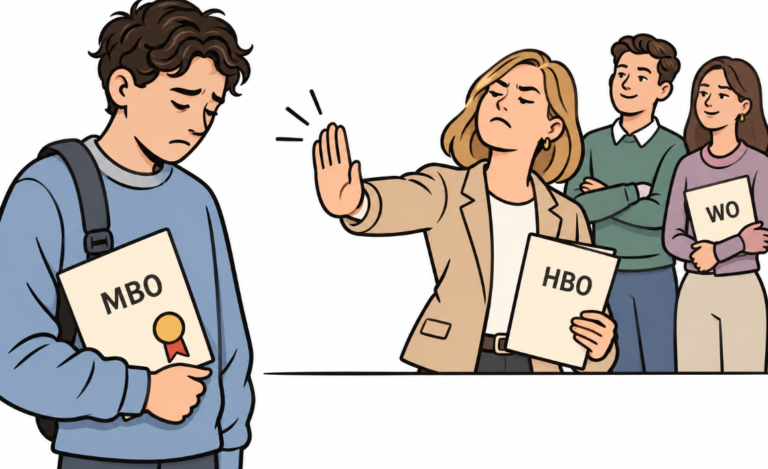
When are you junior, mid-level or senior in the labour market? Is it based on age, years of work experience, years of relevant work experience, the number of hours worked or billed, or perhaps the number of certificates you have obtained? Are you allowed to call yourself an expert, (super) specialist, or professional, or are you one simply because you fit into that pay scale? When are you who you say you are? And when is it mainly an attractive marketing job title, such as senior vice president?
Often, ‘senior’ is mainly a marketing job title, such as senior vice president.
Apart from the question of whether you may use these terms in, for example, labour market communications in the context of ‘age discrimination’, HR and recruitment jargon is full of terms similar to junior, mid-level and senior. On the one hand, it is mainly an indication of skills and experience, more so than an indication of age. Although we cannot deny that ‘junior’ almost always refers to younger people who have only just entered a particular profession, and the term ‘senior’ in the labour market is reserved for people who have accumulated more flight hours. Although in one profession you can become senior within just a few years (whether or not you call yourself that), whilst in other fields this can take decades.
Read this article in full
Become a Werf& member for unlimited access to all articles, research and exclusive insights into the labour market.
No obligations Cancel anytime Secure payment