The still outgoing cabinet wants to introduce an additional tax from 1 January 2027 on all business lease cars that are not fully electric. It means employers will have to pay no less than 12% additional tax on the list price of a non-electric lease car. It is the latest blow to a secondary employment benefit that was once very popular, but is increasingly being restricted nowadays. Whether it concerns petrol cars or electric models, the benefit for employees has long ceased to be as great as it once was, and leasing is even becoming increasingly expensive.
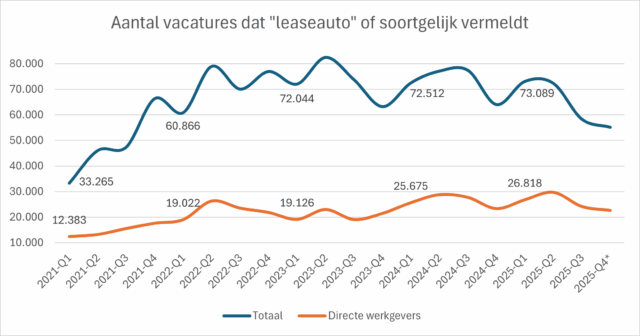
This is also reflected in job adverts. Whilst there was a sharp rise from 2021 in the number of vacancies promising a lease car or ‘company car’, reaching more than 80,000 per quarter on one occasion, this had fallen to around 55,000 by the end of last year. Even relative to the simultaneously declining total number of vacancies, this decline remains substantial. In other words: the number of vacancies with a company car is falling faster than the number of vacancies without one. Notably, the decline is mainly visible among labour market intermediaries, such as secondment agencies. Among direct employers, the decline is (as yet) less pronounced.
Read this article in full
Become a Werf& member for unlimited access to all articles, research and exclusive insights into the labour market.
No obligations Cancel anytime Secure payment
Related event

Leergang Recruitment
Dé recruitmentopleiding van NederlandNa de eerste 29 succesvolle opleidingen, start op 15 maart alweer de 30e editie van de Leergang Recruitment. Recruitment is een vak! Een vak waarin je succesvol wordt als je de basisprincipes kent en leert beheersen. In deze praktische opleiding recruitment van 2 x 2 dagen leer je wat recruitment is, hoe […]
Rotterdam