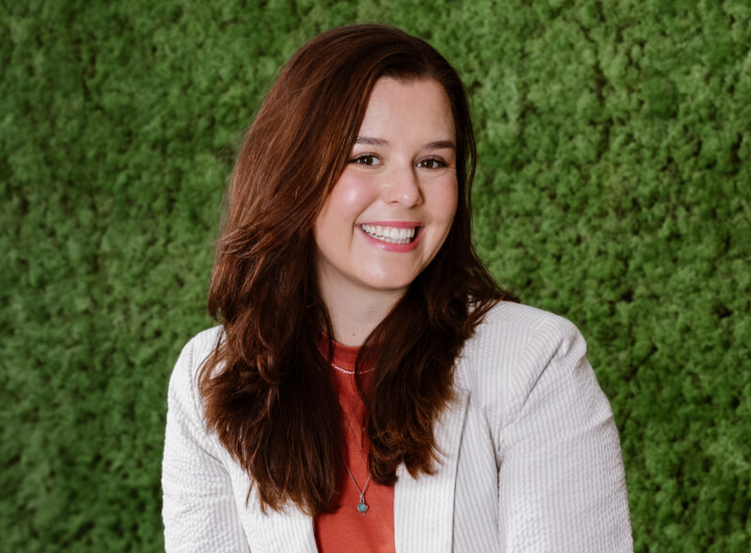
At primary school, a classmate once asked her what she thought would be worse: being deaf or blind. ‘Actually quite an unfair question’, Mirjam Koornneef reflects. But she chose: being blind. ‘Because then I could at least keep singing.’ The childhood question has often stayed with her since then. For example, it led her to become a buddy for lonely deaf people, do voluntary work with deaf children in Brazil and later establish a community centre for deaf people in Rotterdam.

Mirjam Koornneef graduated with a ‘sensory city tour’ of Rotterdam for blind people.
Later, through art school, she focused more on people with a visual impairment, including creating poetry and a children’s book, an adventure story that highlights the strengths of people with a disability and has since also been adapted into a play for primary schools. She graduated with a ‘sensory city tour’ for blind people, and in 2019 founded the Ogen en Oren Tekort foundation, to make art accessible to people with disabilities through volunteers. Or rather: ‘people with a sensory superpower’, as Koornneef increasingly came to realise, and as she began to call them.
Read this article in full
Become a Werf& member for unlimited access to all articles, research and exclusive insights into the labour market.
No obligations Cancel anytime Secure payment
Related event
Leergang Strategisch Recruitment | UITVERKOCHT
Ben je klaar om je recruitmentcarrière naar een hoger niveau te tillen? De Leergang Strategisch Recruitment biedt je de perfecte mogelijkheid om je kennis te verdiepen en je professionele groei te versnellen. Als ervaren recruiter of recruitmentmanager ontwikkel je strategische inzichten en vaardigheden die je een sterke en leidende gesprekspartner maakt voor het management. Je […]
Rotterdam