Exactly when this will happen is still somewhat unclear. But the Job Description Generator, which Indeed has been using internationally for some time, will soon be coming to the Netherlands too, Talent Strategy Advisor Alvera Lubbers revealed during a recent podcast, recorded during Werf& Live. ‘I do not have a date for it, but it is coming, yes. We will then be able to advise employers much more on writing job advertisements, on which skills they can or should not mention, so that they can expect more, or better-matched, candidates.’
Indeed’s Job Description Generator tool combines the company’s own AI with GPT from OpenAI. This should not only produce quickly created, attractive job descriptions but also create a shift towards a more skills-based labour market, the company states, by providing potentially required skills, competencies, behaviours and potential performance objectives when writing the texts, drawing on its own many years of experience with other job advertisements.
‘Improving matching’
‘We are indeed now making that transition,’ Lubbers says in the podcast. ‘We are looking at how we can change from a traditional job board into a party that can improve the matching between candidate and vacancy. For example, by encouraging candidates to enrich their profiles as much as possible by listing their skills. We also ask them questions about their skills during their job search, so that we can link them better to suitable vacancies. That is then green or red. And red means they do not yet possess it, but may want to develop it in the future.’
‘If you simply take a job advertisement from the drawer, you will no longer find the right talent.’
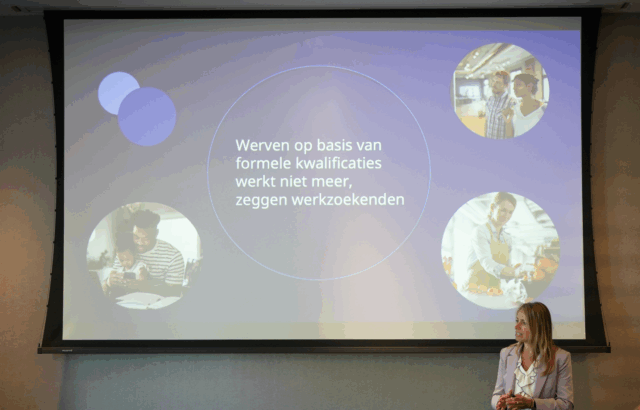
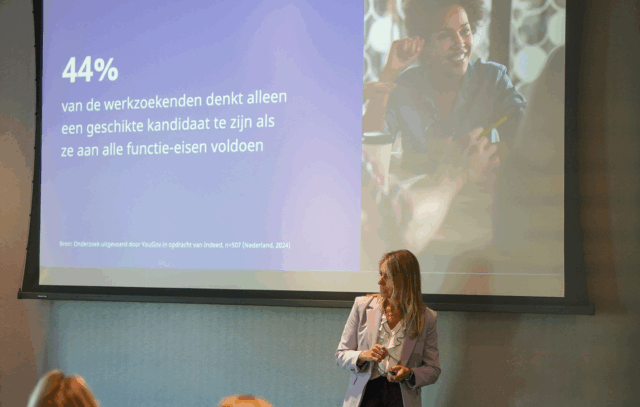
The traditional process of bringing supply and demand together in the labour market is working less and less well, according to Lubbers, who also gave a presentation on the subject that afternoon. ‘The solution to the tight labour market does not lie in CVs and qualifications, but in recognising genuine skills,’ she said. She also explained how skills-based recruitment can help your organisation attract suitable candidates and strengthen your employer brand. ‘If you simply take a job advertisement from the drawer, you will no longer find the right talent,’ she says in the podcast.
From flexible to driven
This week, Indeed also issued a press release that, surprisingly, even made it into De Volkskrant. It shows, among other things, that flexible is by far still the most commonly used word in Dutch job advertisements, followed by terms such as driven, impact and proactive. Not particularly clearly defined skills, then. ‘We see that employers do not yet often take the step of making it genuinely specific,’ said Stan Snijders, Managing Director of Indeed Benelux. ‘Empty buzzwords and clichés do not contribute to a complete and appealing picture of the department where people will be working.’
‘We still see that so many unrealistic requirements are being set.’
This is precisely where Indeed believes it can help, according to Lubbers. ‘We want to help employers think about it: which essential skills are genuinely needed for that vacancy? It also means that internally you have to cast the net much wider: okay, but what does that vacancy actually involve? I think it is much more important for talent to see realistic skills and job requirements. We still see that so many unrealistic requirements are being set. Too often, people are still looking for a jack of all trades.’
Situational questions
It is time that we really start looking at the labour market differently, Lubbers emphasises once again. ‘Because at the moment, we can clearly see that employers are not finding the talent they are looking for.’ And jobseekers also often still struggle to find the right vacancies, she observes. But according to her, Indeed is working extensively on that too. For example, by offering vacancies that match your search history, or vacancies you have previously clicked on. ‘So we are increasingly enriching your profile in order to show you the right vacancies.’
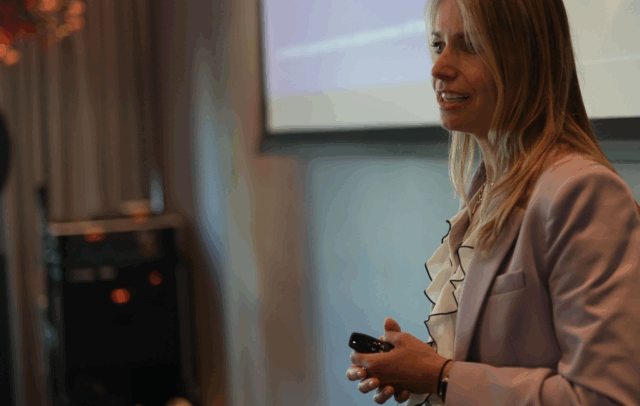
‘We are increasingly enriching your profile in order to show you the right vacancies.’
Indeed does not yet have tools to actually validate those skills, she says. ‘That is up to the candidate. Work it out: what am I actually good at? What would you like to develop further?’ The company does increasingly advise employers to respond to this too. ‘For example, we recommend not asking standard questions, but rather situational questions. Tell us, how would you respond if…? So it is much more about the candidate: okay, what genuine skills are there, instead of looking purely at education and experience? That way, we can actually start seeing much more of the talent we do not currently see.’
Read also
- How LinkedIn and Indeed dominate the European job board market (but not everywhere…)
- Erik Broeder (Goals): ‘Organisations with a strong employer brand can stay on course much more effectively’
Indeed
Op Indeed vinden meer mensen een baan dan waar dan ook. Indeed is de nummer 1 vacaturesite (SimilarWeb, totaal aantal bezoeken, juli 2024), niet alleen in ons l…