Absenteeism is currently one of employers’ biggest cost items, and at the same time a driver of scarcity and labour market shortages. The average absence rate stands at 5.8%, some 16% above the long-term annual average of 5.0%. This equates to around 80,000 people who are currently ill above the average, and who, if they were working, could alleviate many of the sharp edges and shortages in the labour market, particularly in healthcare and education, for example.
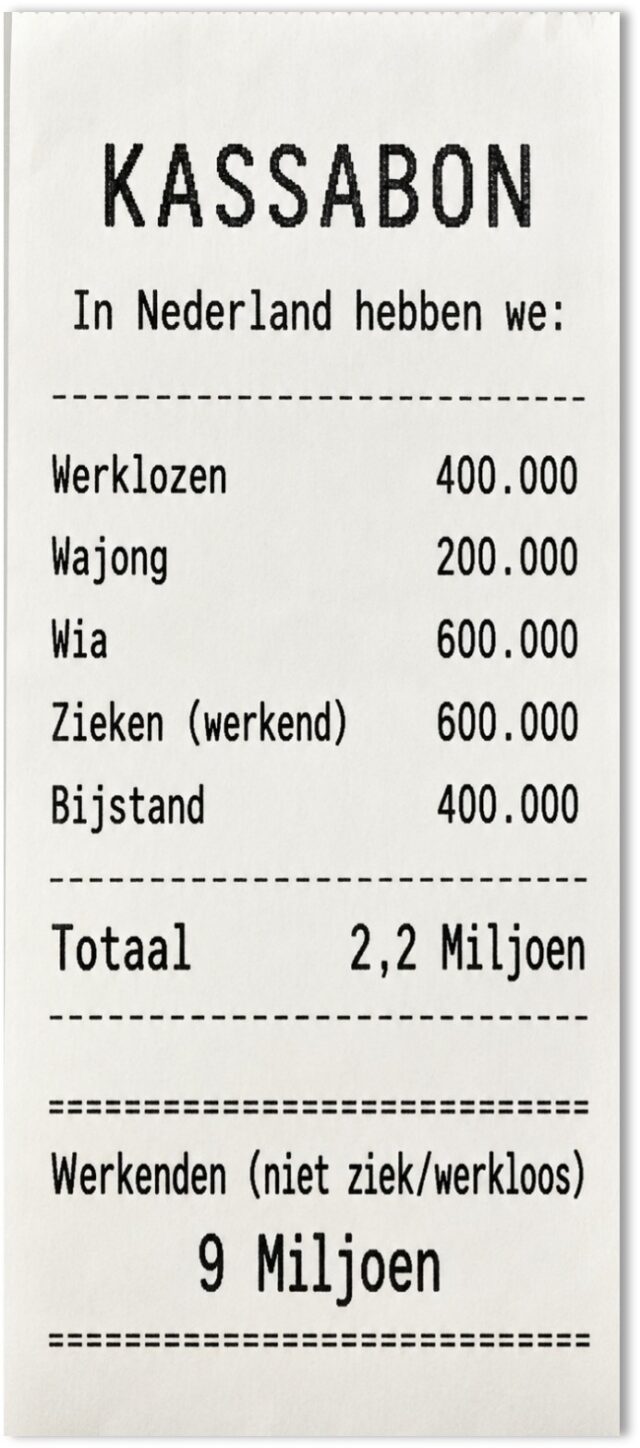
Every day, 1.4 million people are ill or incapacitated for work and therefore not working.
And that regular sickness absence of almost 600,000 absence days per day is separate from the more than 800,000 people unable to work receiving WIA and Wajong benefits (and separate again from the 800,000 people receiving social assistance and unemployment benefits). Put differently: every day, around 1.4 million people who are, or could be, part of the workforce are ill. This is a major concern, as the number is growing and all labour market parties (employers, employees, government) want to prevent it. Former Prime Minister Ruud Lubbers said 30 years ago: ‘The Netherlands is ill’. Today, he would no longer say ‘The Netherlands is ill’, but rather: ‘The Netherlands is seriously ill’.
Read this article in full
Become a Werf& member for unlimited access to all articles, research and exclusive insights into the labour market.
No obligations Cancel anytime Secure payment
Related event
Arbeidsmarkttrends 2027-2030
We zijn uitverkocht. Maar goed nieuws!Arbeidsmarkttrends 2027-2030 is volgeboekt. Goed nieuws: op 28 januari 2027 organiseren we een tweede editie, met dezelfde sprekers en hetzelfde programma. Zorg dat je er alsnog bij bent.Bekijk de editie van 28 januariAl jaren geven de beste sprekers en specialisten een arbeidsmarktupdate en een doorkijkje naar de arbeidsmarkt van de […]
Odido