The labour market in the Netherlands is increasingly becoming the preserve of highly educated people. According to Statistics Netherlands (CBS), in 2023 around 36% of the Dutch workforce consisted of people with a higher professional education degree or a university degree, whereas 40 years ago such highly educated people accounted for only one-third of that share of the population. Demand for them is also high and is expected to continue rising, particularly in engineering, healthcare and business services, reports a new study by the UWV.
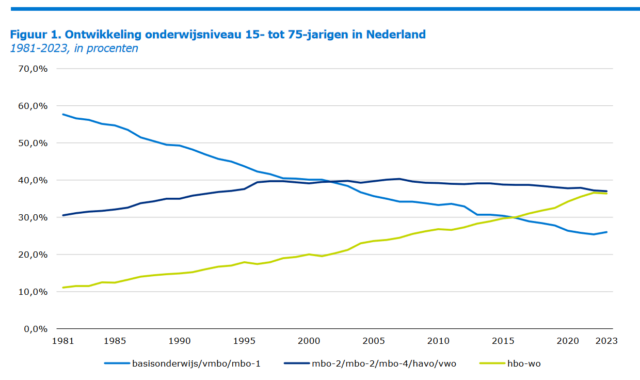
The UWV’s annual list of promising occupations now includes 115 professions at the so-called occupational level 4, the level involving ‘highly complex specialised tasks’, which generally requires higher professional or university education. Due to shortages in these professions, people with a higher professional or university degree can quickly find a job with attractive terms and conditions, according to UWV researchers.
1 in 3 vacancies for highly educated people
This can be seen, for example, among the average of almost 164,000 Dutch people receiving unemployment benefit. In 2023, almost 2 in 3 people (63%) whose unemployment benefit had ended were in work shortly afterwards. However, this percentage was considerably higher among higher professional and university-educated unemployment benefit recipients: 68%. Just over half (55%) found a new job within the first six months after becoming unemployed. And almost 1 in 3 new vacancies is at the highest occupational level. A total of 1.4 million vacancies arose last year. Of these, 30% (426,500 vacancies) were for a role at occupational level 4, compared with 26% in 2016. The labour market is now tight or very tight for all occupational groups at this highest occupational level, according to labour market information adviser Saskia Willems.
Read this article in full
Become a Werf& member for unlimited access to all articles, research and exclusive insights into the labour market.
No obligations Cancel anytime Secure payment