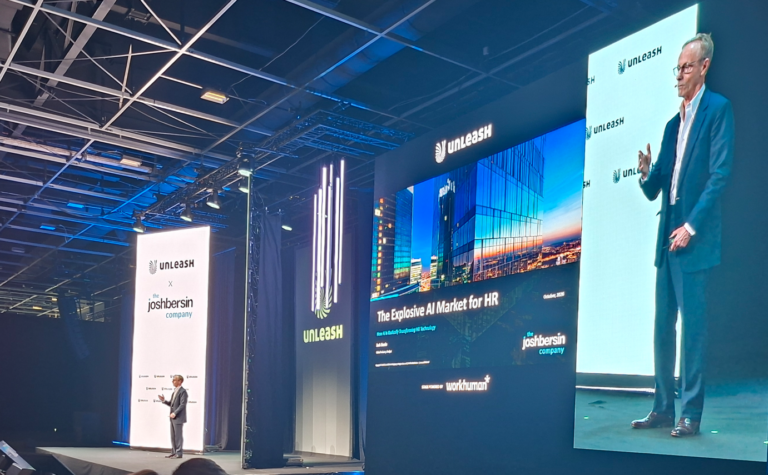
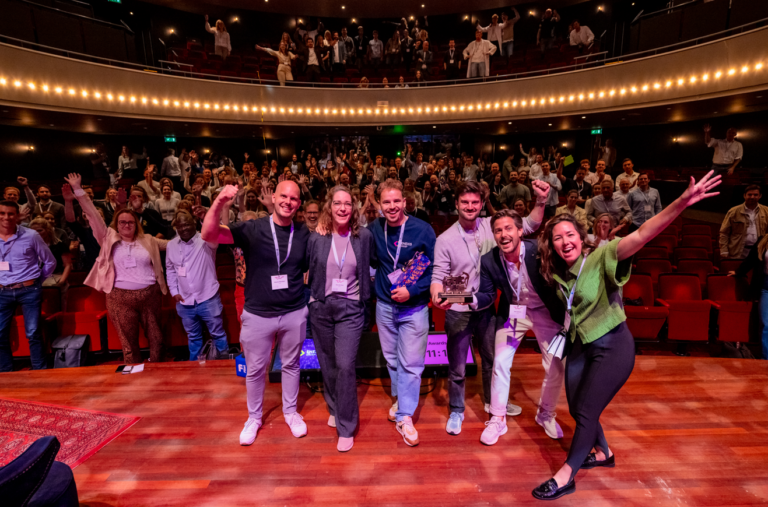
How many candidates still experience ghosting? Stan Snijders (photo above) starts out cautiously. Could it be more than 20%? Almost all hands in the packed Fabrique in Utrecht are raised. Could it be more than 30%? More than 40%? Gradually, the number of raised hands decreases somewhat. Until the managing director of Indeed Benelux eventually reaches 70%. ‘Anyone perhaps more than 75%?’, he asks then, with a half-laugh.
‘Before many companies send a response, half of the applicants have already dropped out.’
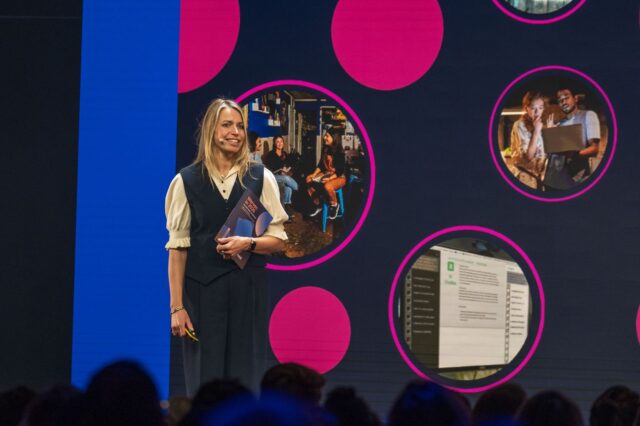
Almost nobody dares to raise their hand now. Yet that would be more accurate: it is precisely the right percentage. Or at least: the percentage of candidates who receive no response after applying, as recent research by Indeed shows. And if a response does come, it often takes a great deal of time too. An average of 2 to 4 weeks, as Alvera Lubbers (photo) had shared with the audience a little earlier that afternoon. A period after which half of applicants have already dropped out.
A shockwave
Both figures sent quite a shockwave through the room. We may all talk a great deal about the candidate experience, but in day-to-day recruitment practice there is still very little evidence of it, as the accompanying research report makes clear. Yet we would do well to pay it more attention, as became clear during this third edition of Indeed’s FutureWorks event in the Benelux. After all, the tight labour market is not going away any time soon either, as economist Mathijs Bouman said in his opening remarks. ‘Talent is becoming increasingly scarce.’
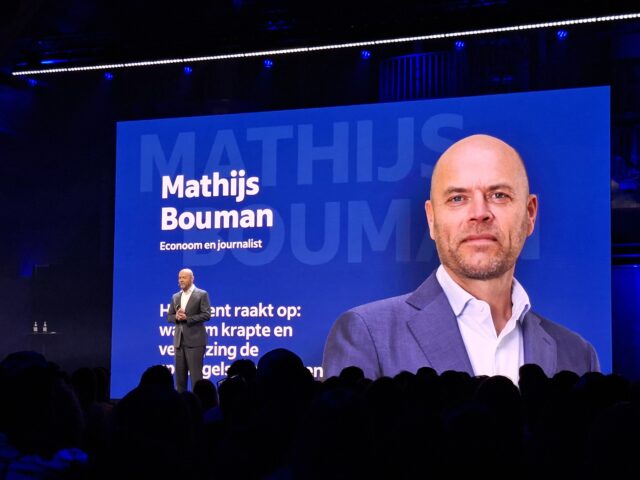
‘Talent is becoming increasingly scarce.’
On the one hand, that is good news for the many recruiters in the room, he says. ‘The more difficult the labour market, the more work there is for people who still have to make it work.’ And, he adds: it is of course also something of a luxury position. ‘Because mass unemployment is naturally much worse than a tight labour market.’ But still, there is certainly work to be done, he stresses, even now that it may appear a little easier to find people again.
‘Dream: a labour budget’
This is already evident in the coalition talks, according to Bouman. ‘The document presented contains quite a lot of good things. But something is missing: the labour market. Even though everything is connected to it. Defence, sustainable energy, housebuilding: they all come up against the hard reality of the labour market.’ It is even the first time in history that the bottleneck lies more with the people available than with the money available, he notes. ‘If we want more soldiers, what are we going to do less of? And as a government, you do not want to place too great a demand on the labour market either. Because then businesses can no longer grow.’
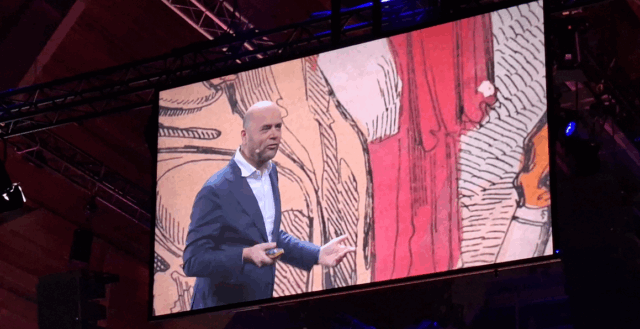
‘We need to become more aware that we live in a time of scarcity.’
His dream? That on Budget Day, we are presented not only with a financial budget, but also with a ‘labour budget’: who is going to do all the work? Where will we find them? And if that is not possible, what will we prioritise on that basis? But it is ‘not entirely exogenous’, he immediately adds. ‘The government can also steer the supply of work. That is my appeal too. We need to become more aware that we live in a time of scarcity. And therefore need to divide the available number of workers. Perhaps that is even more important than the money available.’
An optimistic outlook
Bouman, who will also be speaking next Tuesday at the Labour Market Trends Event, offers an optimistic outlook for 2026 at FutureWorks. Consumption is growing, businesses will invest again, and unemployment will remain low next year too, at around 4.0%, he says, referring to CPB figures. ‘That means perhaps a slightly less extremely tight labour market, but this will remain the case for the rest of the century. And there is virtually no readily available untapped labour potential left. So the tightness? It will never go away. Almost everyone works now. Labour participation has risen nowhere in Europe as sharply as it has here.’
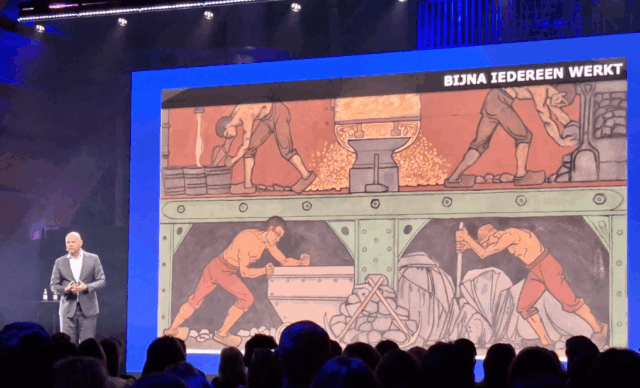
‘Young people without a basic qualification are unfairly pigeonholed.’
And above all, do not think that many groups can still be added easily, he stresses. Well, perhaps among ‘young people without a basic qualification’. ‘They are not really seen as employable. But I think they are unfairly pigeonholed. It is an interesting group, to whom you can offer many more opportunities. They really need recruiters who give them confidence as well as a first job.’ And he also sees opportunities at the other end of the age pyramid, among pensioners. ‘They are interesting too’, he says with a smile. ‘They are flexible, you can dismiss them just like that, and you do not have to continue paying their wages when they are ill.’
Skills first
Which immediately brings him to 1 of the 3 major trends Indeed wants every visitor to take away from this event: alongside the EU Pay Transparency Directive, and the rise of A.I. in the workplace, above all the growing focus on skills-based recruitment. If you truly get to work on that, major improvements are still possible, Bouman also believes. ‘The whole skills-movement is still quite theoretical at the moment’, he observes. ‘But I think it will be the only way ultimately to get everyone into work.’
‘The whole skills-movement is still quite theoretical at the moment.’
And A.I. will help with that too, he expects. ‘I think assessing people, that whole diffuse idea of skills and competences, is really just pattern recognition. And there is plenty of data to train these kinds of tools on. There are many people about whom we know a great deal. There is enormous potential there to move away from the obsession with diplomas that we still have in the Netherlands. We will have to train it properly so that this A.I. does not become racist or sexist. We must beware of bureaucratic muck.’ But if that succeeds, a better-functioning labour market is on the horizon, he concludes.
Want to know more?
 Read the full Indeed research report, ‘Recruiting in 2026’, here:
Also read
- 6x Mathijs Bouman on labour market tightness: ‘This will remain an urgent issue for decades’
- A.I. use by employers and candidates is increasingly diverging
More Mathijs Bouman?
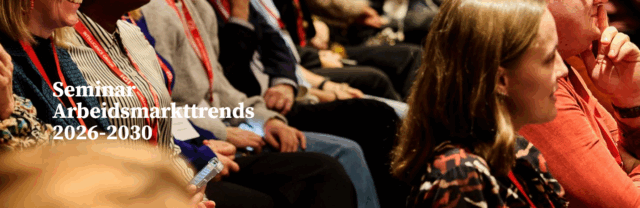
Want to hear Mathijs Bouman speak in person? There is another opportunity next week!

Indeed
Op Indeed vinden meer mensen een baan dan waar dan ook. Indeed is de nummer 1 vacaturesite (SimilarWeb, totaal aantal bezoeken, juli 2024), niet alleen in ons l…