The care planner who starts every morning by filling a rota full of gaps. The nurse who is not allowed to decide for herself when she works. And the healthcare organisation that spends tens of millions on external hires, whilst internally there are people who would be happy to work extra shifts – if only they were asked. These are situations that Chief Marketing Officer Joost van Dijk recognises from his daily practice. And they are precisely the situations that led him 2 years ago to thoroughly reposition ‘his’ company Aethon.
‘We changed direction a little.’
‘To help healthcare organisations better, we adapted and expanded our services,’ he reflects matter-of-factly. But what he goes on to describe can only be called a far-reaching transformation: from a traditional temporary employment and secondment agency into what he calls a workforce orchestrator, underpinned by a technological platform that maps the entire staffing chain – from permanent employees to external self-employed workers and other flexible workers. It enables organisations to become their own ‘internal employment agency’, often saving millions of euros in the process. ‘Because once you have this in place, you need to hire far less externally. You can genuinely recoup that investment within a few months.’
Three columns, one blind spot
The core of his argument is surprisingly simple. Every healthcare organisation has three layers of staff: a permanent workforce, an internal flexible pool and external hires. But in practice, the middle layer is systematically ignored, with organisations often moving directly from the first to the third layer. ‘What you see at many organisations is that if they cannot manage with the permanent workforce, they immediately call the employment agency. We are also a major and valued player in that field. But I would actually like organisations to become more skilled at being the employment agency themselves.’
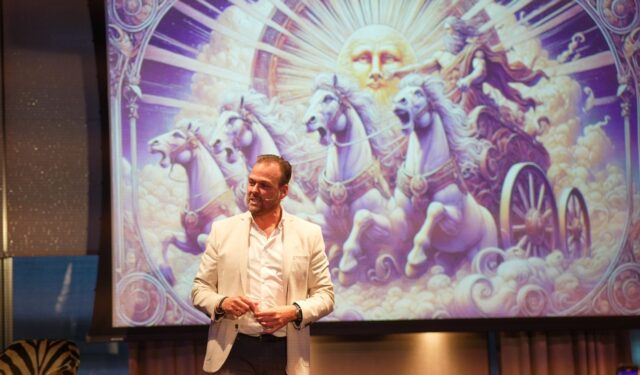
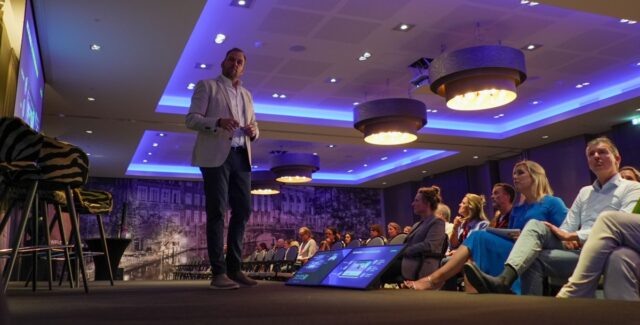
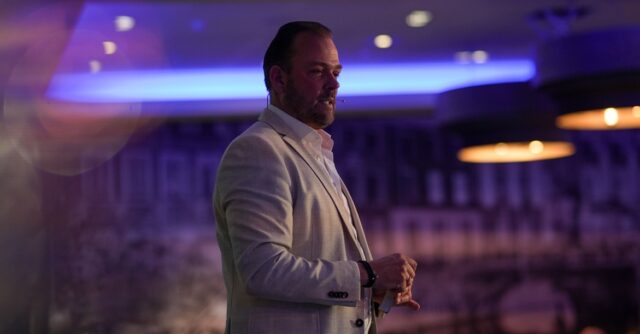
Joost van Dijk, at Werf& Live last year
‘I would like organisations to become more skilled at being the employment agency themselves.’
That internal flexible pool, he says, can often be much larger than organisations realise, but it is usually organised far less effectively too. ‘Sometimes I see flexible pools of 120 people managed by 10 recruitment consultants. That simply cannot be cost-effective.’ The result: on the one hand, you employ people who are barely deployed, whilst on the other hand expensive external staff are hired because the rotas still need to be filled. ‘A lot of flexible staffing, including peak demand and sickness cover, is actually quite predictable. In healthcare and childcare too. If you have a grip on that information, you can organise it very well internally.’
Using your strengths
The solution Aethon offers, and which the company is attracting increasing interest in, links existing planning systems to a central workforce platform. ‘The rota for your permanent workforce is passed directly to the platform. The platform also knows the availability of your internal flexible pool. Only if that is not enough do you come to us for any external hires. This allows you to use your own strength as an employer, save hugely on costs, and immediately become much more attractive to candidates.’
‘If you have a grip on your information, you can organise flexible staffing very well internally too.’
The real problem many healthcare organisations have, according to him, is not the unpredictability of demand but the fact that data are fragmented across systems that cannot communicate with one another. ‘For example, we see a home care organisation and a residential care organisation that together form one group, yet they have two planning systems and know little about each other. Location X has a surplus of people, location Y has a shortage. They do not know that they can exchange that workforce.’ His platform does bring that information together. And with the help of A.I., the system also learns to provide increasingly proactive advice.
Trapped by the protocol
Van Dijk gives a concrete example: a healthcare organisation advertises a shift from 7 to 10 in the morning, but no one responds. ‘But I can see in the system that I do have availability from 8 to 11. So with A.I. I can make a kind of counter-offer: we have too few people for this shift, but an hour later and for an hour longer, I do have people available. Are you willing to adjust your shift?’
That does require willingness on the client’s side to let go of fixed protocols. But it is better than being unable to provide anyone at all, he says. ‘If I were to ask my mother in a nursing home: would you like to be washed in the morning or in the evening? I have someone available in the evening, but not in the morning. Then I know what the answer would be. Of course she just wants to be washed; it does not always matter to her when. But in the care system it now has to be between 7 and 7:30. Well, then you have a shortage of people. So the protocol in healthcare also keeps them trapped. We need to learn to deal with that differently.’
Millions back into healthcare
He talks about clients that initially spent 80 million euros a year on external hires and are now saving 10 to 15% through the new approach. ‘That means you are quickly talking about savings of 8 to 12 million euros. That is money you can put straight back into healthcare.’ But according to him, the gains are not just financial. ‘The benefit is not simply that the rotas are filled. You are much better able to make accurate staffing calculations and optimise workforce levels properly. And you can offer your employees a much more enjoyable, varied job.’
‘The benefit is certainly not just that all rotas are filled.’
He also describes how dynamic pricing can play a role in making difficult-to-fill shifts more attractive. ‘We have looked at its effect on the attractiveness of shifts. Shifts with evening or night allowances, or shifts that are less popular, can be made more attractive by adjusting the rate or offering a bonus. Then you see that you can still fill your rotas.’ There may not be much scope to vary salaries in healthcare, but loyalty schemes can help: employees who work a number of shifts can earn points to exchange for products. ‘That helps enormously in mobilising people.’
Pluryn: a courageous director
This Thursday, Joost van Dijk will be on stage at the Recruitment & Healthcare event alongside André Brand, director of healthcare organisation Pluryn. A ‘courageous director’, according to Van Dijk. ‘Because Pluryn had quite a challenge in virtually all 3 columns – permanent staff, internal flexible staff and external hires. High turnover, high absence rates, an internal flexible pool that was not yet functioning well, and rapidly rising costs for external hires. In response, we set up Pluryn’s internal flexible pool, including recruitment and onboarding.’
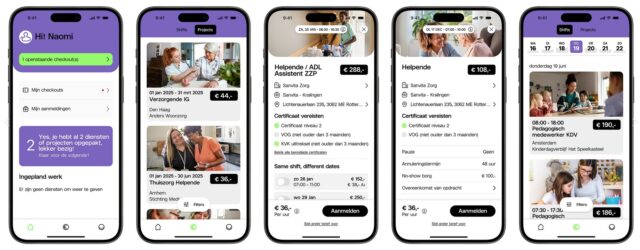
Pluryn supports clients who can no longer find help anywhere else. Working there is elite sport, says Van Dijk, who has ‘deep respect’ for the people who work there, and also immediate understanding of how difficult it is to consistently find enough qualified people for the work. ‘With our modern Aelio app, we now push shifts to everyone who is authorised and competent for them, so that they can schedule their own working week. We developed a dedicated employer brand for employees who consciously choose to work in intensive care, with a much trendier visual identity, to appeal to people who deliberately choose this elite-sport environment. You do need to know what you are getting into. But you have the same rights, the same obligations – and a flexible way of fulfilling them.’

Centralised external hiring
At the same time, external hiring was centralised through a Managed Service Provider arrangement, he explains. ‘If you work with 12 locations and each of those locations already has 12 suppliers, then you already have 144 variables. You quickly become ineffective. If you centralise that – through one agreement, one rate, and suppliers checked for qualifications and authorisation – then you know you are hiring in the most efficient way.’
The philosophy: not less flexibility, but smarter flexibility.
Behind the technology and the figures lies a philosophy that fundamentally challenges the dominant thinking in the labour market. Not less flexibility, but smarter flexibility, in Van Dijk’s words. ‘Many organisations are currently not listening sufficiently to what the labour market wants. If we do not give people what they want, they simply leave. The biggest problem in healthcare is not inflow, but outflow. Turnover. It is just as high in childcare, because many organisations simply do not listen enough to the needs of those professionals.’
Higher productivity
If you do, however, a great deal is often possible, he notes. ‘If you give people the opportunity to work when it suits them, you find that it takes less and less effort to fill rotas. The productivity of the internal flexible pool then suddenly rises enormously. That pool grows too, because you are simply a more enjoyable employer. And your permanent employees start working extra hours, because they think: hey, what those flexible workers do looks quite good to me too. I would not mind working a bit extra this week either, because I do not have the children anyway.’
‘We can even share internal flexible pools between companies.’
His ambition extends beyond the healthcare sector. Education, childcare and public administration are also on the agenda. ‘We have now completed the first pilots at a municipality, where you can also ask: do you always need a permanent employee, or can you share them within a region?’ In Limburg, 5 healthcare organisations are now working together to manage a shared workforce. ‘That is naturally extremely difficult. But it has succeeded there because there are directors willing to do it. Our platform helps connect those 5 organisations. We can even share internal flexible pools between companies.’
No one excluded
He is aware of the scale of the ambition and the investments required. ‘We are now the biggest climber in the Flex Top 100. But we are not shouting it from the rooftops.’ Because all that growth also requires a constant flow of new employees at Aethon, he says. The healthcare division alone needs around 4,000 care workers each year, childcare needs more than 1,000, and public administration another 750.
In that search, he excludes no channel. And one of the channels that consistently delivers well is Werkzoeken.nl, he says, alongside Google Ads, Indeed and social media. That was not always the case. ‘We worked with them once before, 4 or 5 years ago. It did not go entirely as we wanted at the time. But they have improved enormously in their performance and in how involved they are with us. They monitor the market closely and proactively come up with advice. As a result, it has become a serious channel for us, with strong results, not only in terms of volume but above all in terms of quality. They bring in increasingly strong leads, and we also see that they stay with us for longer. In that way, it is not just a job board where you gain visibility.’
Want to know more?
View the full programme for the Recruitment & Healthcare conference here.
Recruitment & Healthcare
Read also
- How Werkis tries to help every person find suitable work
- How the Netherlands’ second-largest vacancy platform now wants to become the best known too
- Aethon raises 9.6 million from Endeit Capital to tackle staff shortages
- Joost van Dijk: ‘The time for flexibility is now. But you need to organise it differently’