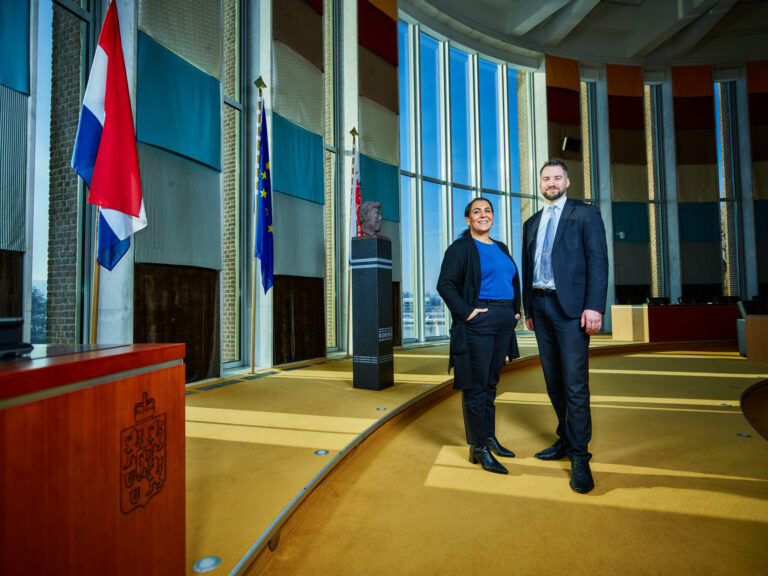
‘As more women enter a profession, its status and average salary fall.’ Japke-d. Bouma said this recently at a recruitment event, and it has stayed with me ever since. Regardless of what you think of it: American research from 2009 tracked professions between 1950 and 2000 and found that, over a period of 50 years, it repeatedly occurs.
The value assigned to a profession is therefore largely a matter of perception.
This also applies to highly educated work. When more women started working as biologists, salaries in that profession fell by 18 percentage points. Although the work itself had not changed, how it was valued did. So the value assigned to a profession is largely a matter of perception.
Education and childcare
This pattern is also evident in the Netherlands. In 1995, for example, roughly equal numbers of men and women still worked in education. In 2023, almost 30 years later, we can see that this composition had changed to one-third men and two-thirds women. In the health and welfare sector, more than 80% of jobs are held by women. In childcare, this figure is even higher: more than 9 in 10 employees are women.
Read this article in full
Become a Werf& member for unlimited access to all articles, research and exclusive insights into the labour market.
No obligations Cancel anytime Secure payment
Related event
Masterclass Employer branding
Neem een voorsprong met een sterk werkgeversmerk. Om nieuw talent binnen te halen én om te verbinden met jouw huidig talent. Ontdek in 1 dag alle ins & outs over employer branding. Van ontwikkelen tot uitbouwen. Duurzame voorsprong creëren op de arbeidsmarkt?In de krapper wordende arbeidsmarkt maakt een sterk werkgeversmerk het verschil. Maar hoe bouw je […]
Rotterdam