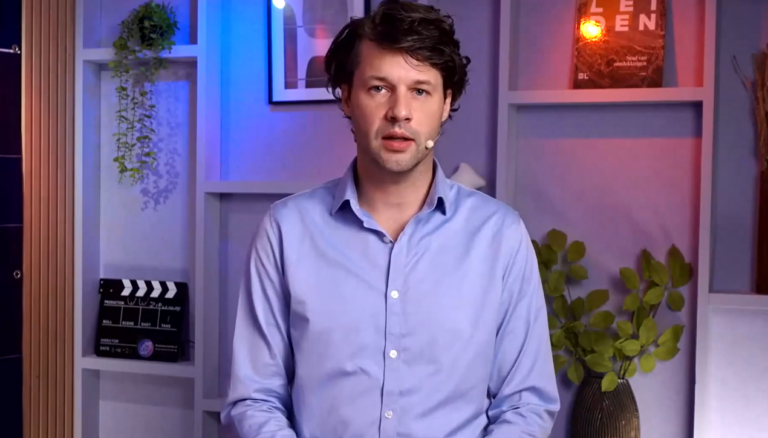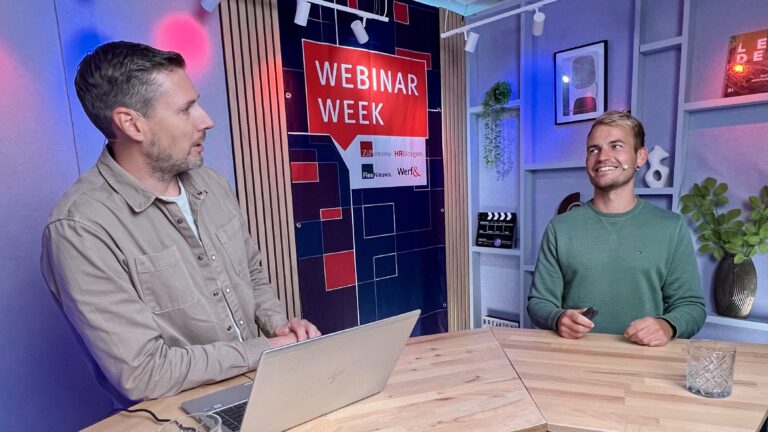
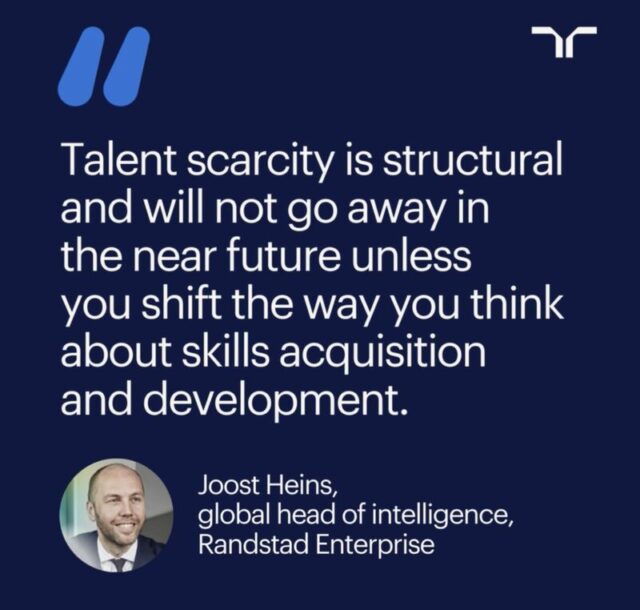
Do you want to overcome the talent shortage? Then change your mindset, says Joost Heins, global head of intelligence at Randstad. Despite the shrinking working population, the talent is certainly still there, he says. You simply need to learn to look at it differently. Look at skills and human potential, for example, rather than experience alone.
But how exactly do you look at skills? This is where the concept of ‘Talent Intelligence‘ comes in. For Randstad Enterprise’s latest Global In-demand Skills research, Heins and his team examined data from nearly 130 million candidates and more than 5 million vacancies across 23 markets, and aligned it with the top 9 most in-demand skills clusters. This produced, among other things, the impressive graph below, which can also be adjusted via an interactive dashboard, depending on your sector and region, for example.
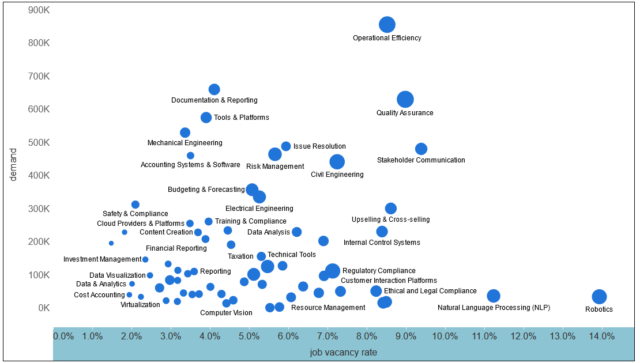
The graph not only shows which skills are most in demand, but also how much supply there is for each skills cluster. You can view the data by skills cluster and geographical market, and filter by three dimensions: availability of sub-skills, talent with recent application activity, and the proportion of talent based on the preferred type of employment contract (permanent or contract). This applies to occupational groups such as AI & automation, audit & compliance, cloud computing, customer service, data science & analytics, and marketing, content & advertising, for example.
Read this article in full
Become a Werf& member for unlimited access to all articles, research and exclusive insights into the labour market.
No obligations Cancel anytime Secure payment