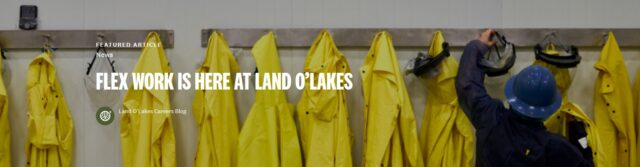
At the American dairy co-operative Land O’Lakes, employees no longer have to fit themselves around a fixed rota. The company allowed employees in so-called flexible roles to specify the days and times they want to work, after which the company builds a shift around them. The programme began as a small experiment at the end of 2021 and now operates at several of the 60 American production sites, with a roll-out to all 140 locations planned. Most flexible workers work between 16 and 30 hours a week, with shifts tailored to their own availability rather than the other way round.
Turnover among flexible workers is 12 percentage points lower than among full-time colleagues.
Chief HR officer Julie Sexton recently told Fortune that flexibility was the theme that kept recurring, regardless of an employee’s role, location or generation. ‘If everyone says flexibility is important, we need to dare to challenge that paradigm.’ The result is clear. Vacancies for flexible roles attract around 25% more views and applications than regular full-time roles. Turnover among flexible workers is 12 percentage points lower than among full-time colleagues. For a sector that has struggled with staff shortages and high turnover in manufacturing for years, that is a major competitive advantage.
Read this article in full
Become a Werf& member for unlimited access to all articles, research and exclusive insights into the labour market.
No obligations Cancel anytime Secure payment
Related event

Arbeidsmarkttrends 2027-2030
We zijn uitverkocht. Maar goed nieuws!Arbeidsmarkttrends 2027-2030 is volgeboekt. Goed nieuws: op 28 januari 2027 organiseren we een tweede editie, met dezelfde sprekers en hetzelfde programma. Zorg dat je er alsnog bij bent.Bekijk de editie van 28 januariAl jaren geven de beste sprekers en specialisten een arbeidsmarktupdate en een doorkijkje naar de arbeidsmarkt van de […]
Odido