The growth figures can only be described as impressive. In 2024, ‘only’ fewer than 5% of active Dutch jobseekers used A.I. in their search for work. In 2025, this has risen to 11.1% – more than doubling, therefore. Among people who have recently changed jobs, A.I. use also rose rapidly: from 4.5% to 10.8%. These are not marginal shifts. This is a behavioural change. If this continues, 20% will already be reached this year, with a top-three position among jobseekers’ sources of orientation in prospect for 2027.
If this continues, 20% A.I. use among jobseekers will already be reached this year.
Yet this growth curve tells only part of the story. Because when you compare data from Intelligence Group across 28 European countries, it becomes clear that the Netherlands is not even leading the way in candidates’ use of A.I. It is Croatia that tops the list among both active jobseekers and people who found a new job last year. The rankings also show that the dividing lines do not follow the often-expected axis of ‘wealthy digital Northern Europeans’ versus the rest. Latvia, Bulgaria and Slovenia, for example, also score well above the European average in both groups.
Read this article in full
Become a Werf& member for unlimited access to all articles, research and exclusive insights into the labour market.
No obligations Cancel anytime Secure payment
Related event
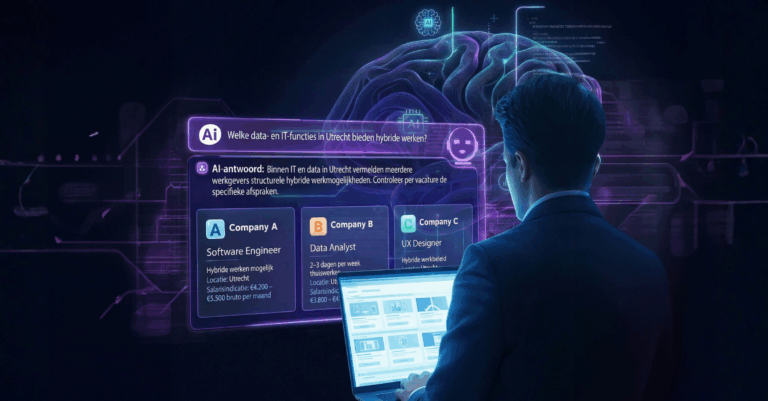
Seminar GEO: maak je klaar voor de AI-baanzoeker
AI-zoekmachines zoals ChatGPT en Perplexity veranderen hoe kandidaten werkgevers vinden en vergelijken. In plaats van lijstjes met links krijgen mensen directe antwoorden en advies. Dat schuift verkeer weg bij klassieke SEO en jobboards, en richting AI-gedreven zoekgedrag.In dit seminar leer je hoe je jouw werkenbij-site, vacatureteksten en employer content zo inricht dat AI-modellen je organisatie […]
Rotterdam