The average hourly rate for highly educated flexible workers in the Netherlands has recently exceeded the 100-euro threshold for the first time, according to the latest edition of the Talent Monitor, a joint publication by labour market data specialist Intelligence Group and HR tech service provider HeadFirst Group. At central government, however, it is even higher, at an average of 108 euros per hour. It is therefore hardly surprising that the share of flexible workers among higher professional education and university graduates at this hiring organisation has only increased over the past three years, from 6% in 2022 to 13% in the first quarter of 2025, despite the cabinet’s longstanding intentions.
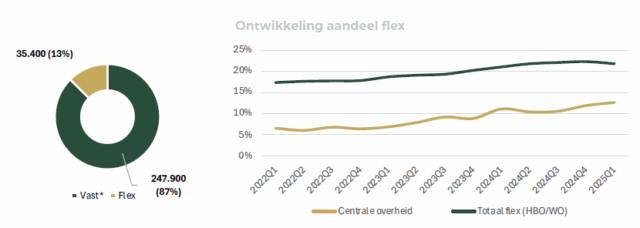
The increase at central government is all the more striking because, according to the figures, lower levels of government do appear to be succeeding in reducing the percentage of flexible workers (slightly), from 13% to 12%. A month ago, the annual report on central government operations, published as part of Accountability Day, also made it clear that the Dutch government last year spent a record amount of 3.7 billion euros on hiring consultants, interim managers and, above all, IT professionals. The costs of external hiring therefore rose by no fewer than 400 million euros compared with 2023.
Read this article in full
Become a Werf& member for unlimited access to all articles, research and exclusive insights into the labour market.
No obligations Cancel anytime Secure payment

Vertage
Vertage is de nieuwe naam van HeadFirst Group in Nederland en het wereldwijde merk achter Striive, HeadFirst, Sterksen, StarApple en ProUnity. Vertage zet zich…