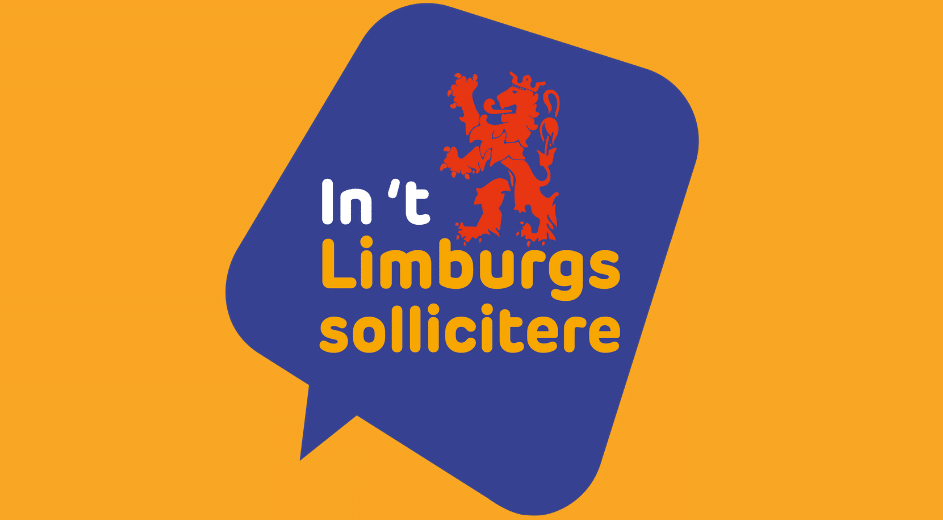
It naturally brought to mind the 1982 hit by the Janse Bagge Bend, the first ever Dutch top 10 hit in Limburgish. It was, however, a sombre song about unemployment and endlessly writing letters. In 2026, De Zorggroep is turning that around. Anyone who wishes can write their covering letter or email in everyday Limburgish, or send a video or audio message in the dialect. Even the initial interview can be conducted entirely in the regional language. Applications are submitted via a dedicated page on the careers website.
So… have you written yet?
So… have you written yet?, the page asks, in a direct reference to the hit from 44 years ago. The organisation, the largest care provider in North and Central Limburg, emphasises that this is an invitation, not a requirement. Venlo, Roermond or Venray dialect: all are welcome, and those who do not speak a Limburgish dialect are equally welcome to apply. According to De Zorggroep, what matters is who someone is and what they want to do for others, regardless of their background or language.
Not a requirement
‘It is certainly not a requirement,’ recruitment adviser Rick Daniels explains in a video by Omroep Venlo. ‘It is more of a playful initiative to give Limburgish greater prominence.’ It was no coincidence that the initiative went live on 11 November, traditionally the opening of the carnival season, or, as it is known locally, the carnival season. ‘I think it can make applying less daunting for many people,’ says Daniels. ‘People will feel more at ease, especially during the interview.’
The initiative reflects the comeback dialects seem to be making.
The initiative reflects the comeback dialects seem to be making. Speaking a dialect can also be an advantage for applicants, particularly in care. A familiar word can reassure clients or bring back memories. Carnival is also a lively part of life there: care homes receive visits from carnival princes and their aides and hold carnival afternoons. According to Daniels, an initial conversation in a familiar language makes applying less nerve-racking. ‘And that gives us a more accurate picture of the applicant. So it is always positive.’
Dialect as a language of care
The impact of dialect in care has also been studied. Jolien Makkinga and Leonie Cornips, professor of language culture at Maastricht University, conducted research in a care home. Speaking dialect was found to have a clearly positive effect on residents. A questionnaire conducted via the Meertens Institute also showed that 85% of 241 respondents from Limburg speak dialect every day. Of those, 79% prefer dialect in a care setting because it makes them feel at home.
There is also a sizeable pool of speakers to recruit from. Limburgish has around 800,000 speakers and has been recognised as a regional language since 1997. According to estimates cited by NOS this spring, around half of Limburg’s residents speak Limburgish at home. The province itself launched the Speak Limburgish with me campaign in June to encourage residents to speak dialect more often in public. One idea is that people can show they speak Limburgish by making an L with their fingers.
An accent (still) costs money
De Zorggroep’s initiative is striking, because speaking a dialect often works against you in the labour market. A few years ago, labour economist Jan van Ours (Tilburg University) calculated that dialect speakers earn at least 5% less than speakers of Standard Dutch. The further the dialect is from Standard Dutch, the greater the pay gap. The difference remained after he adjusted for education level.
Dialect speakers earn at least 5% less than speakers of Standard Dutch.
Sociologist Gerbert Kraaykamp (Radboud University) found that people who grow up speaking a regional language spend an average of one year less in education and more often end up in lower-status jobs. He attributes this to prejudice rather than direct discrimination. When NOS asked people about the issue at the time, it received around 150 emails describing personal experiences. An actor from Ulft said he had been forced to choose: either change his accent or stop getting work. He went to a speech therapist.
A persistent pattern internationally too
Research from abroad points in the same direction. A meta-analysis by researchers from institutions including Freie Universität Berlin and Ulm University combined 22 studies involving a total of 3,615 participants. Applicants who spoke a regional dialect or had an accent associated with an ethnic or migrant background were rated as less competent and hired less often than candidates who gave exactly the same answers in the standard language. One uncomfortable detail: HR professionals were no less biased than laypeople.
Applicants who speak a dialect are, on average, rated as less competent.
An Australian meta-analysis by the University of Queensland, covering 27 studies and 4,576 participants, adds a qualification. The researchers found no bias between regional varieties, such as American and British English. Bias against foreign accents, however, was strong. Women with a non-standard accent also fared worse than women with a standard accent, whilst men were rated equally.
Britain has been measuring it for years
In the United Kingdom, accent bias has long been part of the diversity debate. The Accent Bias in Britain research project by Queen Mary University of London and the University of York showed that a deeply rooted hierarchy of accents exists. There was good news too, however: lawyers and recruiters at large law firms were largely able to set aside their bias when assessing real answers from job interviews.
In the United Kingdom, accent bias has long been part of the diversity debate.
The 2022 Speaking Up report by the Sutton Trust shows that problems remain common in practice. A quarter of professionals say they have been mocked, criticised or singled out at work because of their accent. Among early-career employees from northern England, the figure is as high as 40%. The recommendations are specific: train recruiters, treat accent as a diversity issue and ensure that a range of accents can be heard within the organisation.
Gimmick or way to lower barriers?
Recruiting in dialect is not entirely new, and neither is the link with carnival. In February 2023, around the time of carnival, NS launched 3 recruitment sites in dialect, the first ever as far as is known. The still-active site komdegijwerkebijns.nl was aimed at people from Brabant, wirkebiens.nl at aspiring train conductors in Limburg and wearknbiens.nl at people looking for a railway job in Twente. Only the home pages were translated: after the first click, everything was back in Dutch.
Employers abroad also sometimes turn to regional languages.
Employers abroad also sometimes turn to regional languages. In 2020, installation company Frankenberger in the Bavarian town of Wolfratshausen posted a job advert in Bavarian, stipulating that the new colleague should not be a ‘Zwidawurzn‘, or a difficult person. According to German media, 2 companies from Lower Bavaria and the Bavarian Forest have also used dialect in their recruitment. For now, we conclude with the words of the Limburg care organisation: ‘Bye, see you at De Zorggroep!‘
Watch recruitment adviser Rick Daniels discuss the initiative on Omroep Venlo:
Read also
Related event
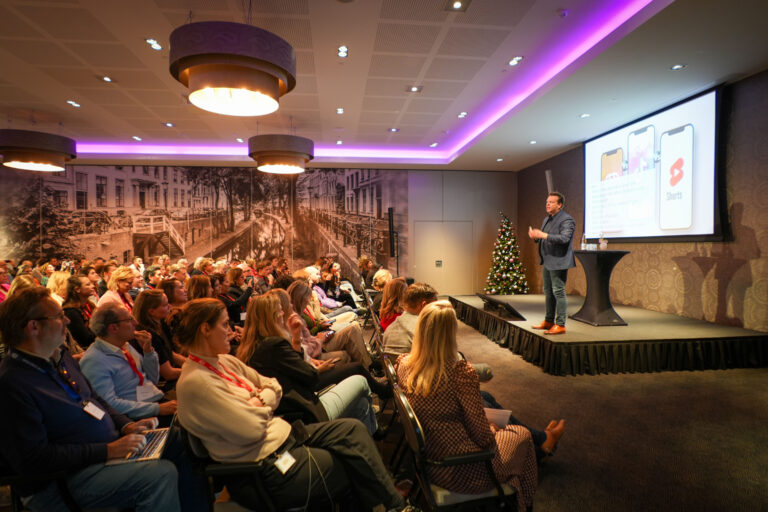
Arbeidsmarkttrends 2027-2030
We zijn uitverkocht. Maar goed nieuws! Arbeidsmarkttrends 2027-2030 is volgeboekt. Goed nieuws: op 28 januari 2027 organiseren we een tweede editie, met dezelfde sprekers en hetzelfde programma. Zorg dat je er alsnog bij bent. Bekijk de editie van 28 januari Al jaren geven de beste sprekers en specialisten een arbeidsmarktupdate en een doorkijkje naar de […]
Odido