You could hardly have missed it: on Friday 16 October, the Intelligent Community Forum (ICF) named the province of Limburg the smartest region in the world. The jury particularly praised the collaboration between government, businesses and knowledge institutions across the 4 Brightlands campuses, an initiative that the province of Limburg helped establish in 2014. Limburg came ahead of finalists from, among others, Brazil, Canada and Taiwan.
The province has been working for several years on making its own employees proud of what they do, and helping them show it.
A good moment to look at the people behind that award. Whilst the region is in the global spotlight, the province has been working on something closer to home for several years: making its own employees proud of what they do, and helping them show it. In close collaboration with Eindhoven-based employer branding agency Goals, the province developed the ‘Provincial Professional‘ campaign over recent years. Recruiter Youri Bessems and content editor Laurens Eijsink explain how what began as a labour market campaign ultimately grew into an internal movement.
> Limburg has just been named the smartest region in the world. How did that go down with you?
Eijsink: ‘It was almost a surprise. But a very pleasant one. We did not really dare to dream that we would genuinely become the smartest region in the world. What you especially see is that a great many colleagues immediately share the news. And they also highlight their own project.’
> Even though people from Limburg are known for being modest.
Eijsink: ‘That is absolutely true. We have also spoken to other provinces about how they experience this, for example when it comes to colleagues even posting a message internally. There really is a cultural difference. But you notice that the pride is there. Especially now, with this award. But more broadly, of course, there is plenty of reason to be proud of our projects.’
> How did all this begin internally?
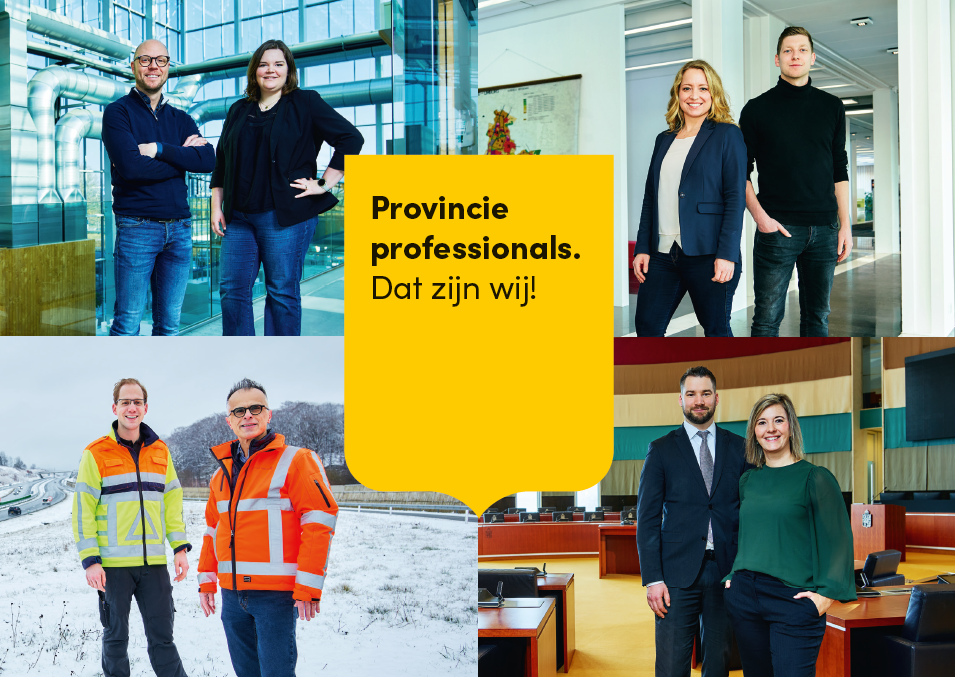
Eijsink: ‘Until 4 years ago, the province did not really have an employer brand at all. But we did notice that we needed to become more visible externally, because many people do not know exactly how a province works. We deliberately wanted a campaign jointly supported by communications, HR and recruitment. And one that was not only outward-facing, but also genuinely fostered ambassadorship among our own people.’
> Why did you bring in an external agency?
Eijsink: ‘We quickly realised: we cannot do this alone. It requires people, it requires hours. And specific expertise. As a public-sector organisation, we have to put assignments above a certain value out to tender. That is what we did. And Goals came out strongest.’
‘It has truly become a collaboration between the different departments.’
Bessems: ‘I only joined at a later stage myself, as I have only worked for the province for 2 years, but recruitment was involved in this process from the very beginning. It has truly become a collaboration between the different departments.’

> How great was your recruitment need?
Bessems: ‘Over the past 2 years, we have had between 150 and 200 vacancies a year. We are an organisation of more than 1,100 colleagues, and internal mobility is encouraged. Every vacancy is advertised internally for the first 2 weeks. If a colleague fills that role, another role becomes vacant. So those 150 to 200 vacancies do not mean our workforce is growing that rapidly, but they do justify a campaign.’
> Where did it start in terms of content?
Eijsink: ‘First, a great deal of research was carried out into how different employees experience working for the province, and where we still needed to make improvements. It showed very clearly that this pride exists. People genuinely knew what they were working for. But there was nothing yet to hold on to. The overarching framework was missing. Goals developed that with us, based on their Magnet Score , first formulating the EVP, which genuinely connects with the organisation’s DNA, with the Provincial Professional. That theme was then implemented throughout the entire candidate and employee journey, from vacancy texts and onboarding to the organisational plan for 2030.’
> Why is a ‘provincial professional’ so much more than a ‘civil servant’?
Bessems: ‘Because it appeals more to that sense of pride. It is now genuinely embedded in the way we work. The Provincial Professional has also become the starting point for the organisational development plan. That also says something about how it has been embraced by management. The term now appears everywhere. In vacancy texts, but also, for example, in the director’s speech when addressing colleagues, or at staff meetings. That helps you identify with it as an individual too.’
‘Everyone here at the province contributes every day to a more beautiful, sustainable and innovative Limburg.’
Eijsink: ‘You are addressed in that way from the very beginning. When you read the vacancy, when you are called, when you are hired, in your first messages, in your welcome pack. Throughout the entire process, you start to feel like a provincial professional. It is about being proud of what you do. Everyone here at the province contributes every day to a more beautiful, sustainable and innovative Limburg. And we can show that a little more.’
> Were the external campaign and its internal translation 2 separate tracks?
Eijsink: ‘We combined them from the outset, focusing both on outward branding and internal retention. That meant the campaign genuinely had to be embraced by our own employees. The stories shared externally were stories from our own colleagues. And we shared them internally first, when launching the campaign, before they went external. That made people feel truly part of the campaign.’
> How did you get colleagues to start sharing themselves?
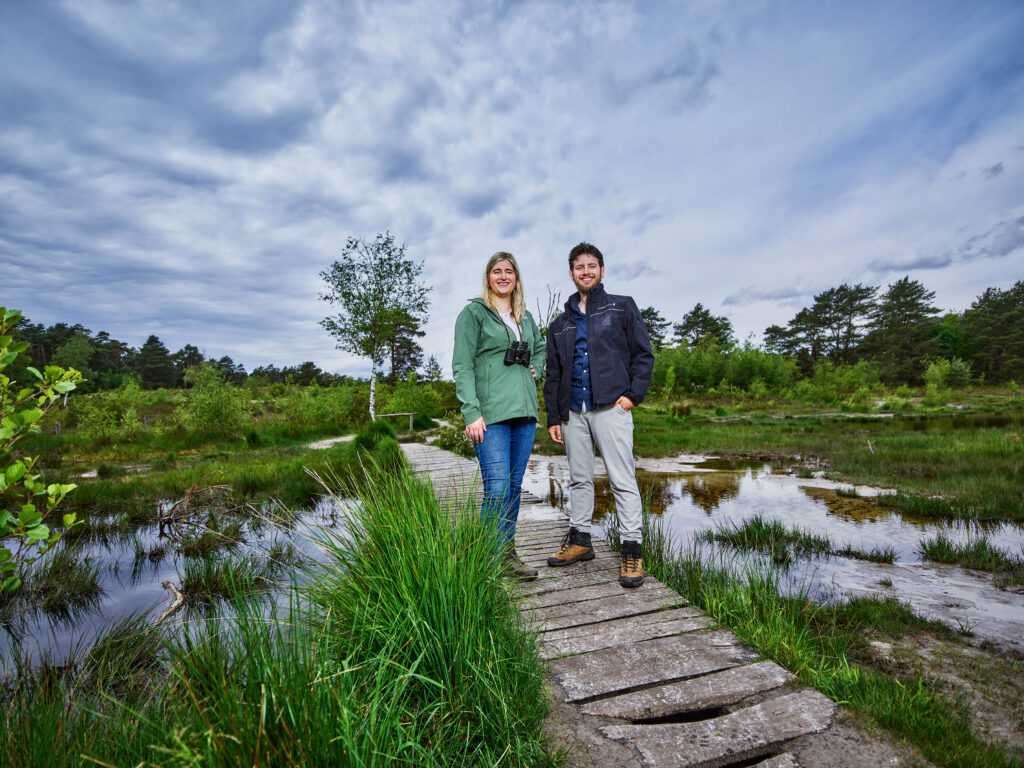
Eijsink: ‘Mainly by supporting them and giving them confidence. We set up a video corner where people could leave a message themselves about what working for the province means to them. We offered photo shoots in the appropriate house style. And you saw the campaign’s yellow background everywhere: on WhatsApp profiles, LinkedIn and the intranet. A very subtle way of bringing the campaign out into the world. You could immediately see: that person works for the province.’
> What has it delivered on the recruitment side?
Eijsink: ‘At the start of the campaign, we also had to adapt the entire application process. Back then, we had a shortage of candidates; now, we sometimes even have a surplus. We no longer close vacancies after a fixed period, but as soon as we have a certain number of high-quality applicants. Because we are increasingly clear about who we are, we attract better applicants, and more quickly too.’

‘Many people did not really know beforehand what a province does. As a regional authority, you sit between the municipality and the national government. Most people do not have the province on their radar at all as an employer. Explaining that clearly and accessibly was already very important. And the fact that our own employees spoke enthusiastically about their work on social media made an enormous contribution to that.’
> Where are you now?
Bessems: ‘Since the beginning of this year, Goals’ support has been phased down. We consciously chose to continue the campaign in-house, with the existing project group from HR and communications. Laurens has partly been given other responsibilities, so his colleague Simone Smeets now forms the project team with me. The paid online campaign continues, and Simone monitors it: what is performing well, where do we invest more money, which platform do we switch on or off?’
‘Twice a year, we launch a new story about what colleagues are working on at that time.’
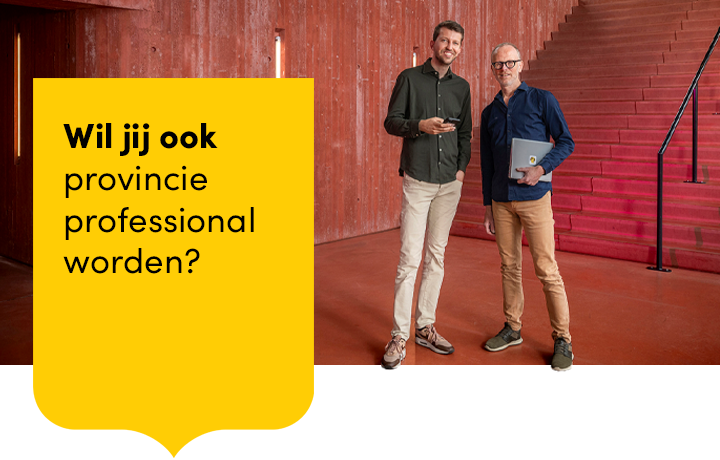
‘In addition, we keep the stories current. The agreement is that we launch a new story twice a year about what colleagues are working on at that time. The latest one, for example, is about 2 colleagues exploring how AI can support us as provincial professionals in the future. It shows that we are not merely dusty civil servants writing policy, but are also engaged with developments taking place worldwide.’
> What does the ambassador programme involve?
Bessems: ‘Every LinkedIn post that a provincial professional creates and shares themselves costs us nothing and quickly generates more reach than posts we distribute from the organisation. It is an oil slick that needs to keep spreading further. We do notice that many colleagues are proud of their work but still find it difficult to write a LinkedIn post about it. Or to give a 2-minute elevator pitch: what exactly do you do, and how do you make a difference for Limburg?’
‘A great many people want to do it; they just need a little help getting over that threshold.’
‘That is why we are now setting up internal ambassador training, to give colleagues practical tools. A great many people want to do it; they just need a little help getting over that threshold. We can support them well with that.’
> But that is more difficult than allocating extra media budget.
Bessems: ‘That is right. It is very easy to say: we will put a few thousand euros more into Instagram and then we will have more reach. Getting people on board is something else. Behavioural change may sound rather weighty, but it is about helping someone dare to display certain behaviour.’
‘People are more likely to trust a message from an employee than a message from an organisation.’
Eijsink: ‘But that is enormously valuable, especially at this time. Trust is very important, and people are more likely to trust a message from an employee than a message from an organisation.’
> What has surprised you most over the past few years?
Eijsink: ‘How much you can achieve by encouraging that ambassadorship. You see its impact throughout the organisation.’
‘The last time people could have their photograph taken, there was a queue for half an hour.’
Bessems: ‘What has surprised me is how widely supported it is. Not only by our 2 departments, but also by the management team and by the colleagues involved in the stories. It does not feel like a communications and HR party; it genuinely belongs to everyone. That really does seem to be a success factor.

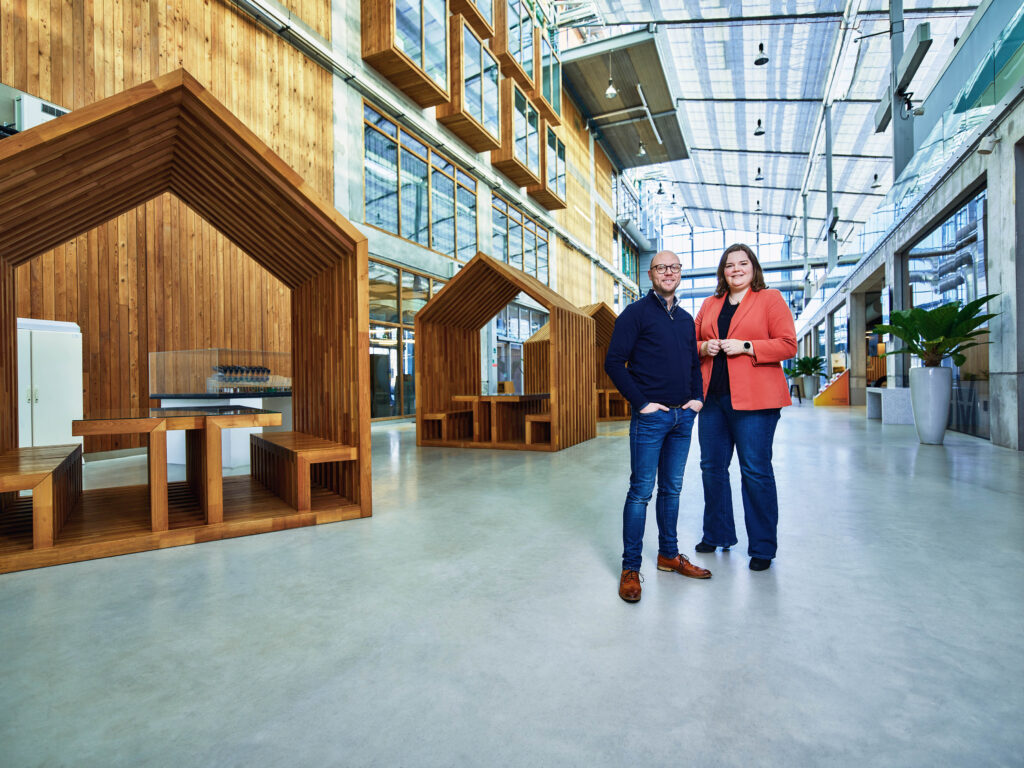
‘We have now organised 2 or 3 occasions where colleagues could have a new profile photograph taken with the campaign background. The last time, at our reception, there was a queue for half an hour. At one point, we had to say: everyone, we need to close the queue. So there will certainly be more opportunities for that.’
‘Proud colleagues are free advertising for what those 1,100 people in that concrete building alongside the Maas do.’
‘Ultimately, you want a provincial professional to proudly explain what they do as well, at a birthday party or to a neighbour. It is all free advertising for what those 1,100 colleagues in that concrete building alongside the Maas do. And when someone is looking for a new job, they may think: I will take a look at the province. Because they are not just boring grey civil servants sitting behind a computer all day. Fortunately, that is working better and better.’
Read also
Related event

Masterclass Employer branding
Neem een voorsprong met een sterk werkgeversmerk. Om nieuw talent binnen te halen én om te verbinden met jouw huidig talent. Ontdek in 1 dag alle ins & outs over employer branding. Van ontwikkelen tot uitbouwen. Duurzame voorsprong creëren op de arbeidsmarkt? In de krapper wordende arbeidsmarkt maakt een sterk werkgeversmerk het verschil. Maar hoe bouw […]
Rotterdam
Goals
Wie bouwt aan een dreamteam, zorgt dat employer branding niet ophoudt bij de voordeur. Want werving is zinloos als je talent zich niet ontplooit. Of binnen de k…