Municipal recruitment is under considerable pressure. Many municipalities (and other public bodies) face similar recruitment challenges and are looking for similar candidates. So why not join forces more often? The Association of Netherlands Municipalities has been discussing it for several years. And there are certainly already successful initiatives in this area, including staff exchanges and joint mobility centres.
More than half of the municipal recruiters who shared their experiences with The Talentpool Community during a recent webinar said that collaboration was on the agenda. Yet that collaboration does not always take concrete shape. Why is that? And what opportunities are being missed as a result?
The biggest recruitment challenges
First of all, there are still significant shortages in the labour market, including – or perhaps especially – in the municipal sector. According to the latest Municipal workforce monitor 73% of municipalities experienced staff shortages last year. The A&O fonds Gemeenten identifies spatial planning, housing and ICT as the main areas where vacancies remain difficult to fill. Many municipalities need the same expertise and therefore compete for similar candidates.
Municipalities must also account for experienced staff leaving. Nearly a third of employees are 55 or older. This calls for, among other things, timely replacement and knowledge transfer. At the same time, according to a survey by A&O fonds Gemeenten, insufficient opportunities for progression are a major reason why many younger employees leave.
Municipalities are relatively often looking for full-time staff, which can cost them candidates who do not want to work full-time.
Job conditions can also limit recruitment. In its latest Vacancy monitor for the first half of 2026, SEO Economic Research notes that employers are relatively often looking for full-time staff in the 3 most sought-after occupational groups. These are spatial planning and the environment, building and civil engineering, and automation/ICT. Municipalities can therefore easily miss out on candidates who want to work fewer hours.
Is competition getting in the way?
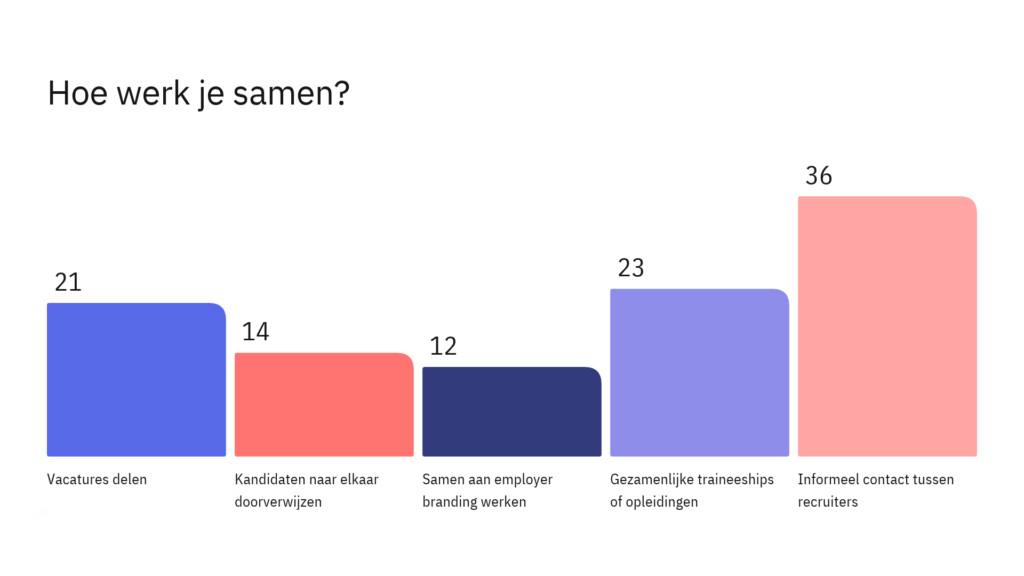
Municipal recruiters are already in touch with one another. The poll shows, for example, that there is frequent contact, often informal. Many municipalities share vacancies and also organise joint traineeships and training programmes (such as in the Talentenregio, a partnership of 27 regional and local government organisations in Overijssel, Gelderland, Flevoland and Drenthe). Yet referring candidates who apply is mentioned less often. What is stopping them from taking that step too?
A lack of time and capacity are often cited as reasons. Municipalities need to fill their own vacancies, and collaboration also requires attention. They sometimes see one another as competitors because they are looking for the same people. That may make sharing candidates less appealing.
A shared need for staff can make referrals worthwhile.
But what happens to suitable candidates you do not hire yourself? Suppose 5 good candidates apply for a vacancy and you can only hire 1. That leaves 4 people who might be suitable for a similar vacancy at another municipality. Without a referral, that municipality has to find a way to reach them itself, whilst a fellow recruiter has already met them. That shared need for staff can make referrals worthwhile.
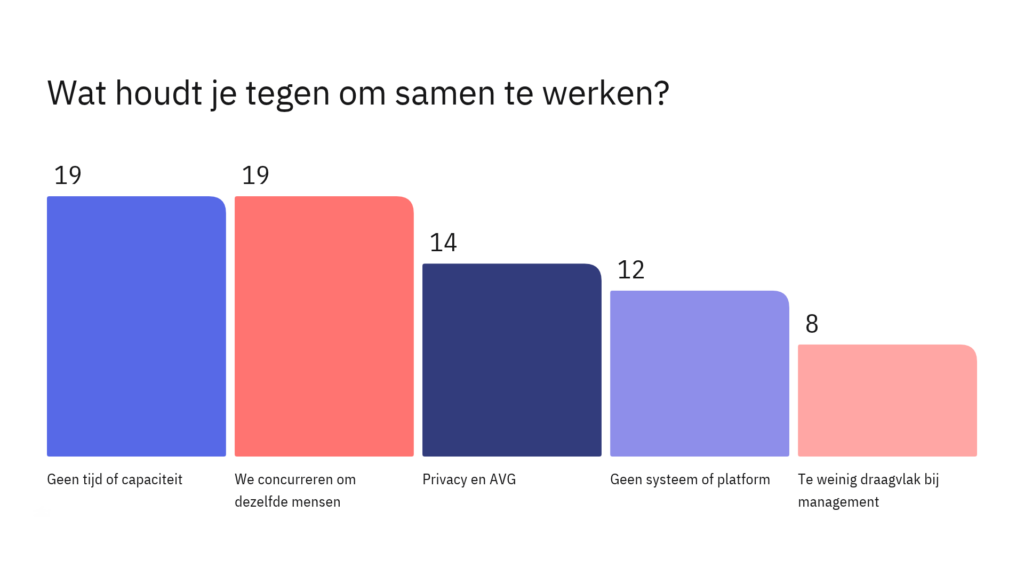
For that to work, offering a candidate a further opportunity must of course be simple and straightforward. Alongside a lack of time, recruiters still often cite privacy concerns and the absence of a suitable system or platform as obstacles. Simply agreeing to collaborate more is therefore not enough. There must also be a practical way to bring candidates to the attention of other municipalities, provided they choose and are willing to do so.
Once one municipality takes the first step…
Recruiters do, it turns out, have contacts with one another. The willingness to collaborate – and even to share candidates – is on the agenda. Now municipalities need to act on it. As long as each municipality recruits and selects only for its own vacancies, opportunities to help one another will be missed – and shortages will persist longer than necessary. After all, a suitable candidate you do not hire could be the employee another municipality is looking for.
‘The willingness to collaborate is on the agenda. Now it is time to act on it.’
One of the newer initiatives in this area is the Gemeente Pool, a tool provided by The Talentpool Community that enables municipalities to build a network together. It allows them to offer candidates a further opportunity after they have been unsuccessful, making it easy to connect with talent put forward by other municipalities. ‘This gives collaboration a concrete place in the recruitment process,’ says Quinten van der Elst (The Talentpool Community).
Want to know more?
Contact The Talentpool Community about the Gemeente Pool:
Related event
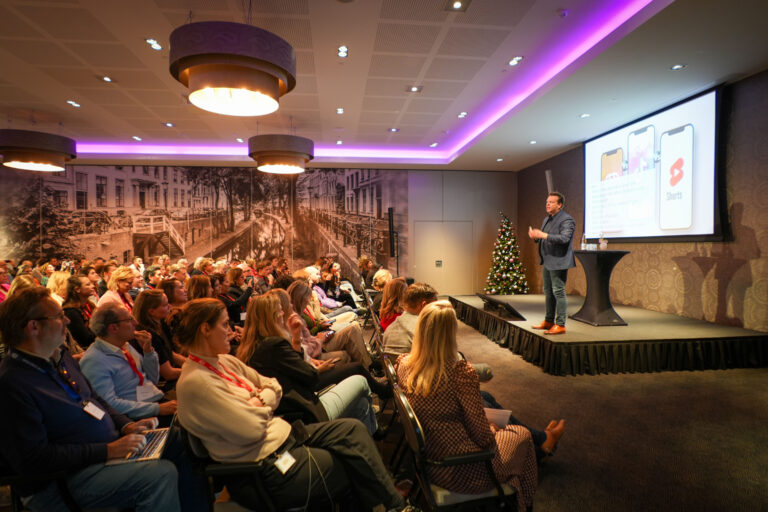
Arbeidsmarkttrends 2027-2030
We zijn uitverkocht. Maar goed nieuws! Arbeidsmarkttrends 2027-2030 is volgeboekt. Goed nieuws: op 28 januari 2027 organiseren we een tweede editie, met dezelfde sprekers en hetzelfde programma. Zorg dat je er alsnog bij bent. Bekijk de editie van 28 januari Al jaren geven de beste sprekers en specialisten een arbeidsmarktupdate en een doorkijkje naar de […]
Odido
The Talentpool Community
Matchingtech én afgewezen kandidaten: zo wil The Talentpool Community de arbeidsmarkt transparanter maken.